If you’re aiming to reduce alcohol consumption without complete abstinence, nalmefene might be for you. According to the Pennsylvania Department of Drug and Alcohol Programs (DDAP) 2020 Annual Report, 31.4% of individuals in the state receiving nalmefene as part of their alcohol dependence treatment showed a significant reduction in alcohol use after six months
This opioid receptor antagonist works by blocking the brain’s reward response to alcohol, helping reduce cravings and control drinking. You take 18 mg of nalmefene 1-2 hours before you plan to drink, giving you flexibility based on your drinking patterns.
Common side effects like nausea and headaches usually subside over time, but rare severe effects require medical supervision. However, there are alternatives for alcohol use disorder, including Naltrexone, Acamprosate, and Disulfiram.
What Is Nalmefene?
Nalmefene, sold under the brand name Revex in the U.S., is an opioid antagonist primarily used in the treatment of alcohol use disorder (AUD).
Nalmefene works by blocking opioid receptors in the brain, reducing the pleasurable effects of alcohol, and decreasing the urge to drink.
Unlike other opioid antagonists, such as naltrexone, nalmefene has a longer half-life and a lower risk of liver toxicity, making it a suitable option for managing AUD.
According to a report by the Substance Abuse and Mental Health Services Administration (SAMHSA) from 2020, 18.5% of treatment facilities in Pennsylvania offered nalmefene (Selincro®) as part of their alcohol dependence treatment. By helping individuals control their drinking behavior, nalmefene supports long-term recovery and reduces the likelihood of relapse.
What Is the Mechanism of Action of Nalmefene?
The mechanism of action of Nalmefene is blocking opioid receptors (mu, delta, and kappa) to reduce the brain’s reward response to alcohol. Nalmefene acts as an antagonist at mu- (μ) and delta- (δ) opioid receptors, which are involved in the endorphin-mediated reinforcement of alcohol consumption.
By preventing alcohol-induced activation of these receptors, Nalmefene inhibits the release of endorphins, reducing dopamine release in the nucleus accumbens, a key structure in the brain reward system. This modulation reduces the pleasurable and reinforcing effects of alcohol, leading to a decreased urge to drink.
Is Nalmefene Used Off-Label For Other Conditions?
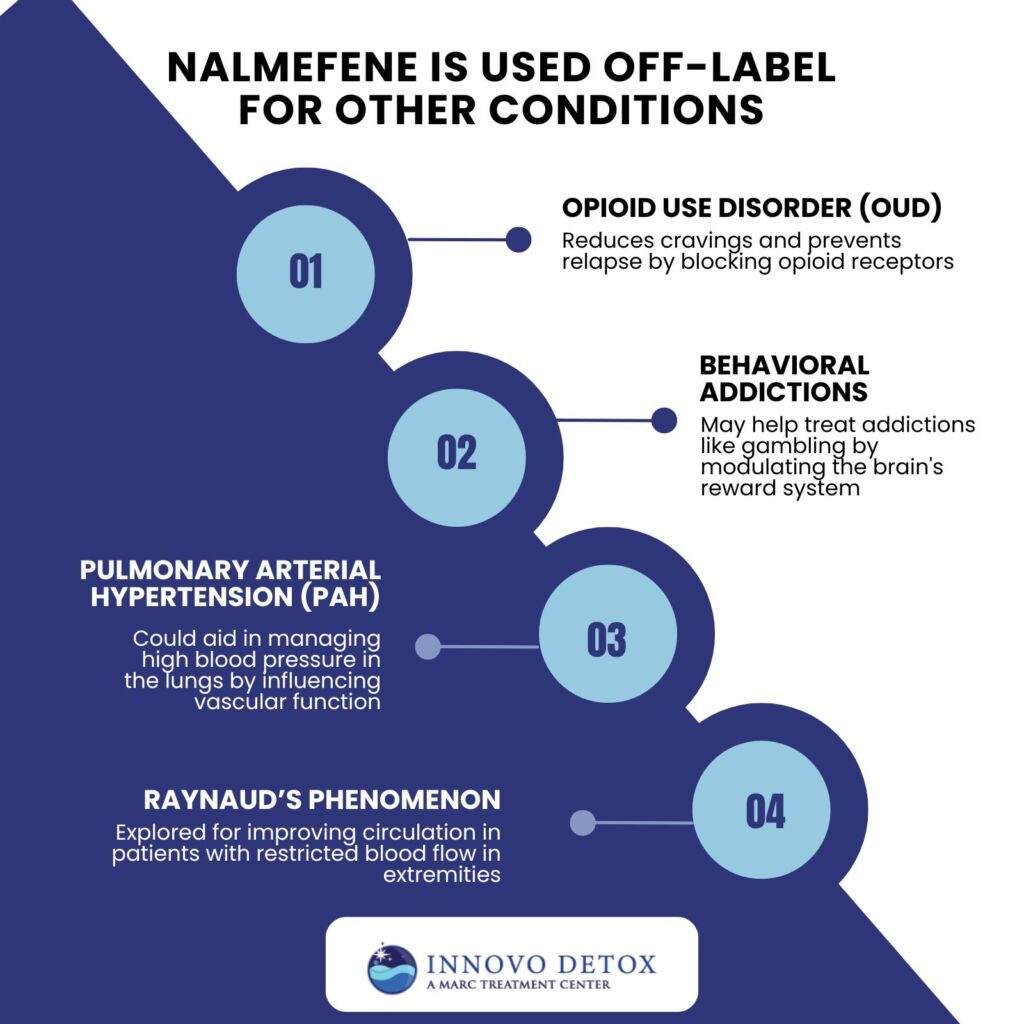
Nalmefene is used off-label for other conditions, including opioid use disorder (OUD), behavioral addictions like gambling addiction, and certain vascular conditions such as pulmonary arterial hypertension (PAH) and Raynaud’s phenomenon. Although these uses are not yet widely approved, clinical studies continue to explore Nalmefene’s efficacy in these areas.
Ways nalmefene is used off-label for other conditions are:
- Opioid Use Disorder (OUD): As an opioid receptor antagonist, Nalmefene has been explored as a treatment option for OUD. Its ability to block opioid receptors helps reduce cravings and prevent relapse in individuals recovering from opioid addiction.
- Behavioral Addictions: Preliminary research suggests that Nalmefene is beneficial in treating certain behavioral addictions, such as pathological gambling. By modulating the brain’s reward system, Nalmefene potentially reduces the reinforcing effects of addictive behaviors.
- Raynaud’s Phenomenon: Nalmefene has been investigated for its potential to improve circulation in patients with Raynaud’s phenomenon, a condition where blood vessels in the fingers and toes overreact to cold temperatures or stress.
What Is the Recommended Dosage of Nalmefene?
The recommended dosage of Nalmefene is one 18 mg tablet taken on an as-needed basis, ideally 1 to 2 hours before an anticipated drinking episode, for the reduction of alcohol consumption in individuals with alcohol dependence.
Dosage adjustments are necessary based on individual responses. If significant side effects, such as nausea, dizziness, or insomnia, occur, patients require dosage titration or closer monitoring to assess tolerability.
Nalmefene is not recommended for patients with severe hepatic or renal impairment or those experiencing acute withdrawal symptoms.
How is Nalmefene Taken for Best Results?
Nalmefene is taken on an as-needed basis for best results, 1 to 2 hours before anticipated alcohol consumption. This targeted approach allows individuals to manage their drinking without requiring daily medication.
For optimal effectiveness, Nalmefene is taken with a full glass of water and is taken with or without food, though consuming it with a meal helps reduce nausea.
What to Do If You Missed a Dose of Nalmefene?
Do not take Nalmefene if you miss a dose, and do not plan to drink alcohol. Since Nalmefene is taken on an as-needed basis, there is no strict dosing schedule. However, if you anticipate drinking and forget to take the medication, take it as soon as you remember, preferably 1 to 2 hours before alcohol consumption.
If you have already started drinking, you should still take Nalmefene as soon as possible to help reduce alcohol cravings and consumption. Never take an extra dose to compensate for a missed one, and always follow your healthcare provider’s guidance for proper use.
What Are the Most Common Side Effects of Nalmefene?
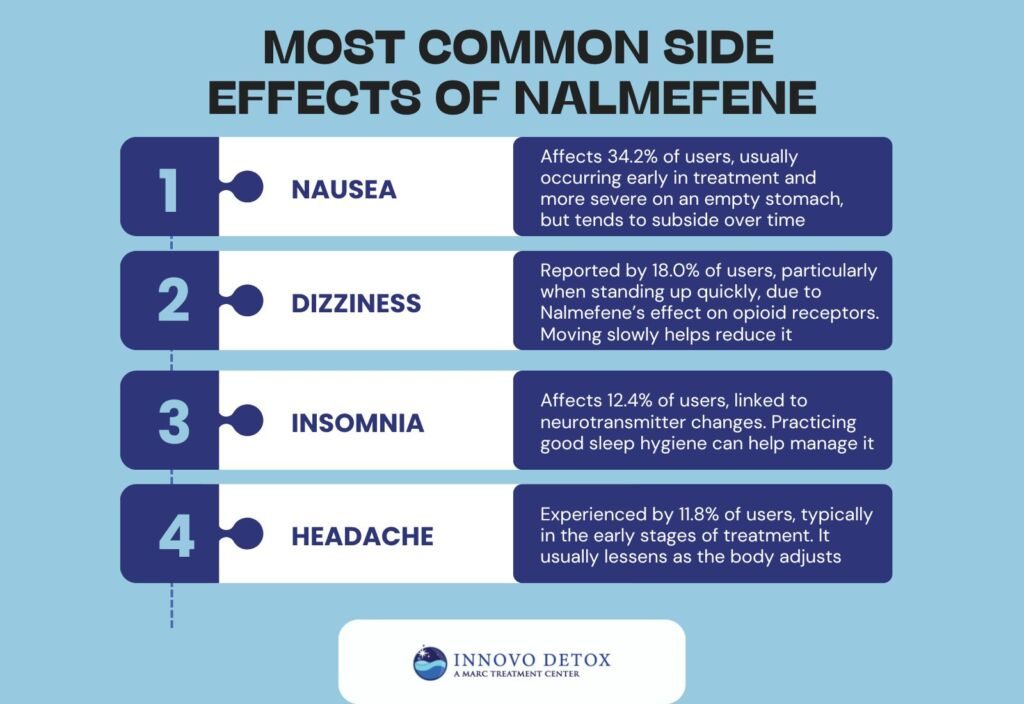
The most common side effects of Nalmefene are nausea, dizziness, insomnia, and headache, according to “Nalmefene” by Royal Free London NHS Foundation Trust. These effects are temporary and tend to improve as the body adapts to the medication.
The most common side effects of nalmefene include:
- Nausea: Nausea is the most commonly reported side effect, occurring within the first few doses. This effect is more pronounced when taken on an empty stomach, but usually subsides as treatment continues.
- Dizziness: Dizziness is frequently reported, particularly when standing up quickly. Moving slowly when changing positions helps minimize this symptom.
- Insomnia: Insomnia is a known side effect of Nalmefene, affecting sleep quality in some individuals. Proper sleep hygiene, such as maintaining a consistent bedtime and avoiding stimulants, helps manage this issue.
- Headache: Headaches are a common side effect that usually occurs in the early stages of treatment. While the exact cause is unclear, this effect diminishes over time as the body adjusts to the medication
How to Manage Nalmefene’s Side Effects?
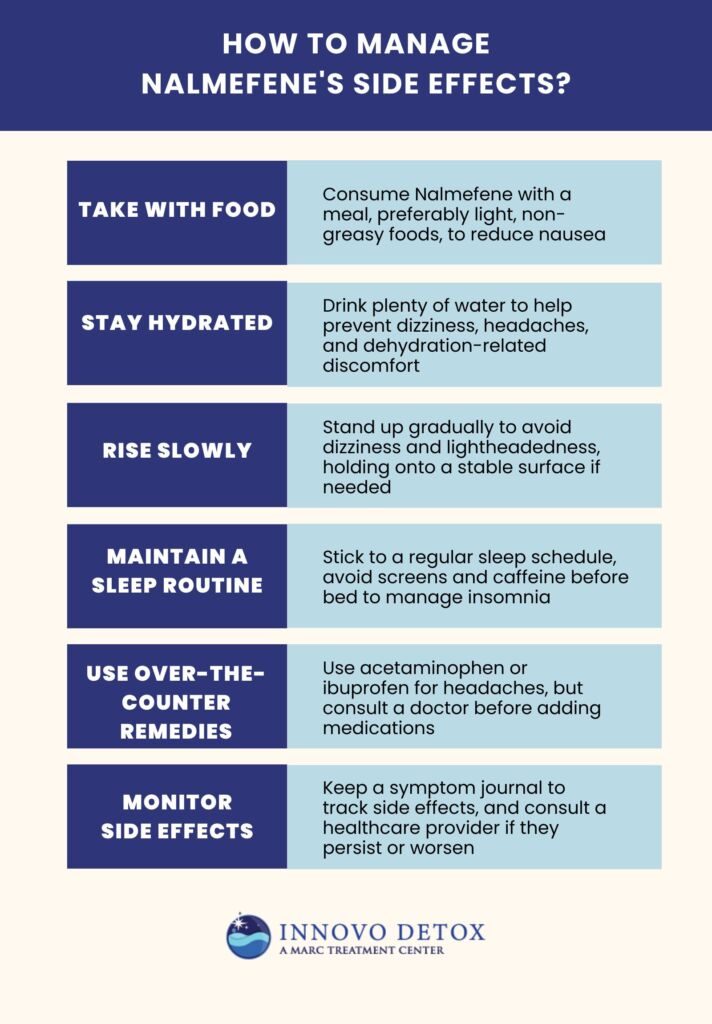
To manage Nalmefene’s side effects, patients use practical strategies such as hydration, dietary adjustments, and gradual position changes to minimize discomfort. In cases of severe or persistent symptoms, consulting a healthcare provider is recommended.
Ways to manage nalmefene’s side effects are as follows:
- Take with Food: Consuming Nalmefene with a meal instead of on an empty stomach helps prevent nausea and stomach discomfort. Opt for light, non-greasy foods to ease digestion.
- Stay Hydrated: Drinking plenty of water throughout the day helps minimize dizziness, headaches, and general discomfort. Dehydration worsens side effects, so maintaining fluid balance is important.
- Rise Slowly: Standing up gradually from sitting or lying down prevents sudden dizziness or lightheadedness. If feeling unsteady, holding onto a stable surface provides extra support.
- Maintain a Sleep Routine: Going to bed and waking up at the same time each day, reducing screen time before bed, and avoiding caffeine in the evening help manage sleep disturbances associated with Nalmefene.
- Use Over-the-Counter Remedies Wisely: Acetaminophen or ibuprofen can relieve mild headaches, but always consult a doctor before taking additional medications to avoid interactions.
- Monitor Side Effects: Keeping a symptom journal helps track patterns and identify triggers. If side effects persist or worsen, discussing them with a healthcare provider leads to dosage adjustments or alternative strategies.
What Are the Alternative Medications to Nalmefene for Alcohol Addiction?
The alternative medications to Nalmefene for alcohol addiction are Naltrexone, Acamprosate, and Disulfiram, all of which are FDA-approved for treating alcohol use disorder (AUD). Their effectiveness varies based on individual needs and treatment goals.
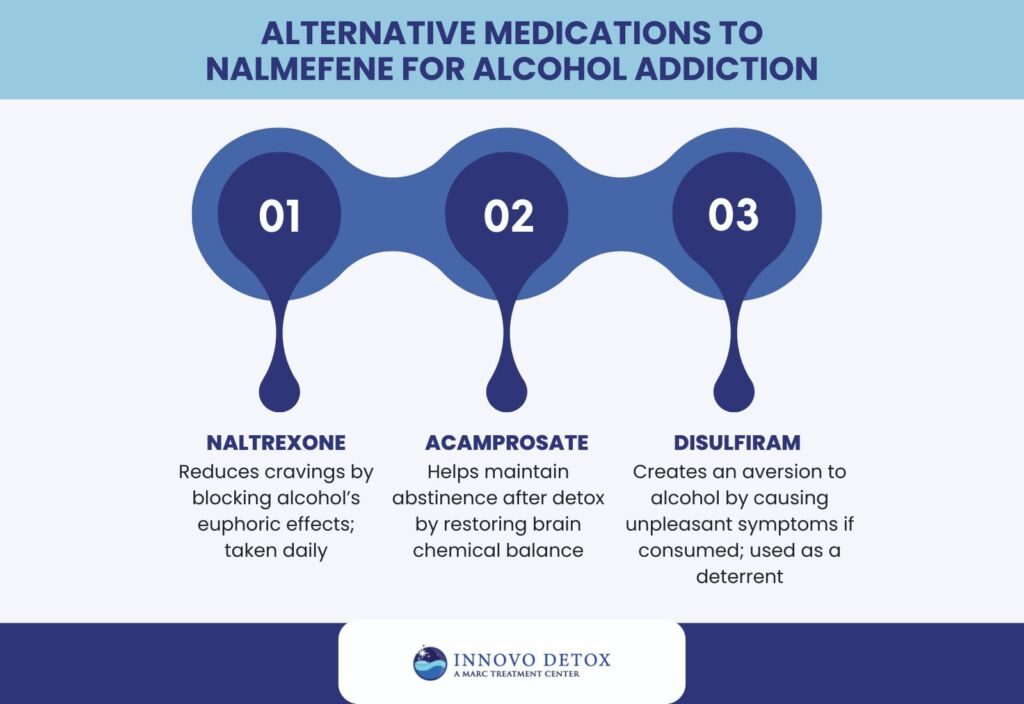
The alternative medications to nalmefene for alcohol addiction include:
- Naltrexone: Naltrexone is an opioid receptor antagonist that blocks the euphoric effects of alcohol, reducing the urge to drink. Unlike Nalmefene, it is taken daily rather than as needed.
- Acamprosate (Campral): Acamprosate works by modulating glutamate and GABA activity in the brain, restoring neurochemical balance disrupted by chronic alcohol use. Unlike Nalmefene and Naltrexone, which focus on reducing drinking, Acamprosate is primarily used to maintain abstinence after detox.
- Disulfiram (Antabuse): Disulfiram creates a strong aversion to alcohol by blocking its metabolism, leading to unpleasant effects such as flushing, nausea, vomiting, and palpitations if alcohol is consumed. Unlike Nalmefene, it does not reduce cravings but acts as a deterrent for individuals committed to abstinence. It is most effective for those who need external reinforcement to avoid alcohol.
How Does Nalmefene Differ from Naltrexone in Treating Alcohol Dependence?
Nalmefene differs from Naltrexone in treating alcohol dependence primarily in its dosing schedule, mechanism of action, and regulatory approval. While both medications are opioid receptor antagonists that reduce alcohol consumption, Nalmefene is taken on an as-needed basis before drinking, whereas Naltrexone is taken daily.
The table below shows ways nalmefene differs from naltrexone in treating alcohol dependence:
| Feature | Nalmefene | Naltrexone |
| Dosing Schedule | As-needed (before drinking) | Daily |
| Mechanism of Action | Opioid receptor antagonist with partial kappa receptor activity, reducing alcohol cravings and reinforcing negative effects of drinking | Opioid receptor antagonists block endorphin release, reducing the pleasurable effects of alcohol |
| Effectiveness | Shown to reduce heavy drinking episodes but does not enforce abstinence | Reduces alcohol cravings and consumption, prescribed for long-term maintenance |
| Regulatory Approval | Approved in Europe for alcohol dependence reduction | FDA-approved in the U.S. and other countries for alcohol dependence |
| Side Effects | More likely to cause nausea, dizziness, and insomnia, but effects lessen over time | Well-tolerated but causes nausea, fatigue, and liver enzyme elevation |
How Effective Is Nalmefene for Alcohol Addiction Treatment?
Nalmefene for alcohol addiction treatment is moderately effective in reducing heavy drinking episodes in individuals with alcohol dependence.
Clinical trials, such as the study by van den Brink W. et al. 2013, found that Nalmefene reduced heavy drinking days by 3.2 days per month and decreased total alcohol consumption by 14.3 g/day compared to placebo.
While it does not enforce abstinence, its as-needed dosing helps individuals cut down on excessive drinking after alcohol addiction treatment, making it a valuable harm-reduction tool for those unwilling or unable to quit alcohol completely.
What Is the Approval Status of Nalmefene?
Nalmefene is not FDA-approved for alcohol addiction treatment, U.S. It is currently unavailable as a prescription medication. However, it has been approved in Europe by the European Medicines Agency (EMA) since 2013.
Nalmefene is approved in some other countries, like the United Kingdom and Japan, for reducing alcohol consumption in individuals with alcohol use disorder (AUD).
Is Nalmefene Available Over the Counter in Pennsylvania, U.S.?
No, Nalmefene is not available over the counter in Pennsylvania, U.S. It is a prescription drug and has not been approved by the U.S. Food and Drug Administration (FDA) for alcohol addiction treatment.
While it is available in some countries under medical supervision, individuals in the U.S. must rely on FDA-approved alternatives like Naltrexone, Acamprosate, or Disulfiram for alcohol-dependence treatment.
Does Nalmefene Interact with Alcohol?
No, Nalmefene does not interact with alcohol adversely. However, drinking alcohol while on Nalmefene reduces the effectiveness of alcohol addiction treatment. Since Nalmefene is designed to reduce alcohol cravings and consumption, continuing to drink counteracts its intended benefits, making it less effective in promoting long-term recovery.
Who Should Not Take Nalmefene?
Individuals with certain medical conditions should not take Nalmefene due to potential risks and adverse effects. Nalmefene’s opioid antagonist properties, metabolism, and psychiatric effects lead to complications in vulnerable populations.
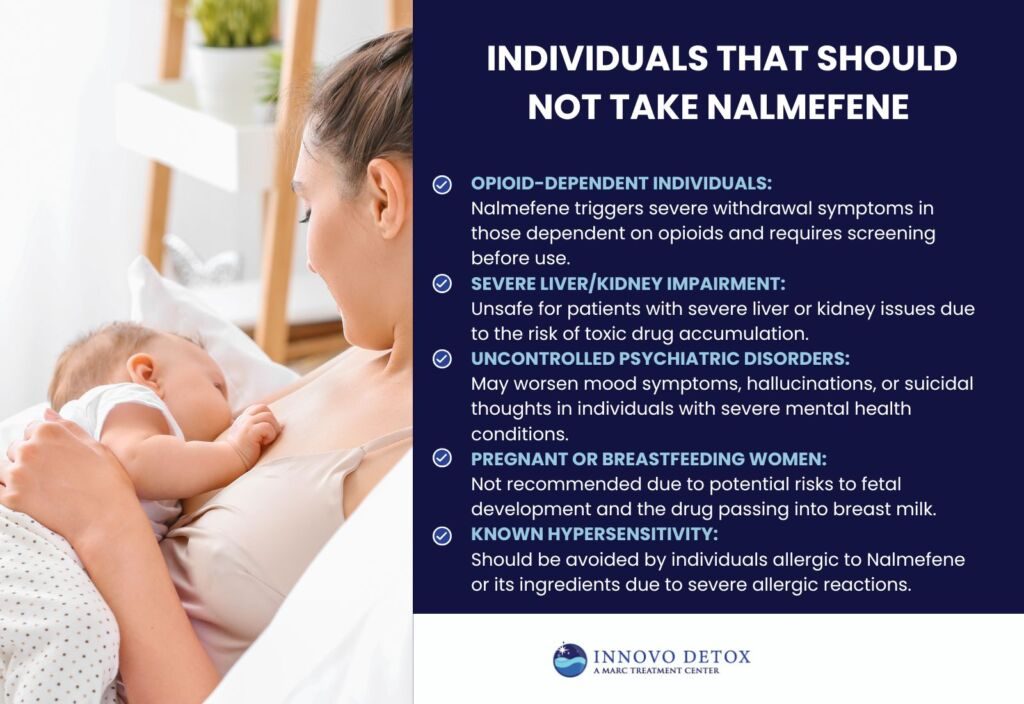
People who should not take nalmefene include:
- Opioid-Dependent Individuals: Nalmefene triggers sudden and severe opioid withdrawal symptoms, including vomiting, sweating, agitation, and pain. Since it blocks opioid receptors, individuals currently using or dependent on opioids must undergo proper screening before starting treatment.
- Individuals with Severe Liver or Kidney Impairment: Nalmefene is metabolized in the liver and excreted by the kidneys. Patients with severe hepatic impairment (Child-Pugh Class C) or renal impairment (eGFR < 30 mL/min) experience toxic accumulation of the drug, increasing the risk of liver toxicity or kidney damage.
- Patients with Uncontrolled Psychiatric Disorders: Nalmefene worsens mood symptoms, hallucinations, or suicidal thoughts in individuals with severe depression, psychotic disorders, or suicidal ideation.
- Pregnant or Breastfeeding Women: The safety of Nalmefene during pregnancy and breastfeeding is not well established. Medscape reports potential risks to fetal development in animal studies, and the drug passes into breast milk, making it unsafe for nursing infants.
- Individuals with a Known Hypersensitivity to Nalmefene: Patients with a history of severe allergic reactions to Nalmefene or its ingredients should avoid the drug. Hypersensitivity reactions, such as rash, breathing difficulties, and swelling, require emergency medical attention.
Can Nalmefene Cause Dependence?
No, Nalmefene cannot cause dependence because it is an opioid antagonist with no addictive properties. Unlike opioids, it does not produce euphoria or withdrawal symptoms upon discontinuation. However, some individuals develop a psychological reliance on Nalmefene for controlling alcohol consumption.