Alcohol addiction treatment is about helping you break free from alcohol dependence and build a life rooted in lasting recovery. It targets both the physical effects and the emotional struggles that come with addiction.
According to the Pennsylvania Department of Drug and Alcohol Programs (DDAP), an average of 5,703 annual deaths were attributable to excessive alcohol use between 2015 and 2019.
Treatment options include inpatient rehab, outpatient programmes, and partial hospitalisation — depending on your needs and lifestyle. Medications like naltrexone, disulfiram, and acamprosate ease cravings, discourage drinking, or help your brain rebalance during recovery.
Many people also benefit from mindfulness, nutritional therapy, and other supportive approaches alongside traditional treatment. But recovery doesn’t stop there — aftercare gives you the ongoing support, structure, and accountability you need to stay sober and keep moving forward, even after treatment ends.
What Is Alcohol Addiction Treatment?
Alcohol addiction treatment is a structured process that helps you overcome compulsive drinking and work toward long-term sobriety. It combines medical care, therapy, and support systems to address both the physical and emotional sides of addiction.
Treatment starts with alcohol detox to manage withdrawal safely, followed by ongoing therapies like Cognitive Behavioral Therapy (CBT), Motivational Interviewing (MI), and medications such as naltrexone, acamprosate, or disulfiram.
This combined approach helps you change harmful patterns, manage mental health challenges, and avoid relapse. According to the National Institute on Drug Abuse (2020), integrated treatments show up to 60% long-term abstinence.
Ongoing aftercare, support groups, and family therapy help reinforce your progress and keep you focused on lasting recovery.
What Are The Main Types of Alcohol Addiction Treatment?
The main types of alcohol addiction treatment are inpatient rehabilitation, outpatient treatment programs, and partial hospitalization programs (PHP). They are each designed to promote structured recovery.
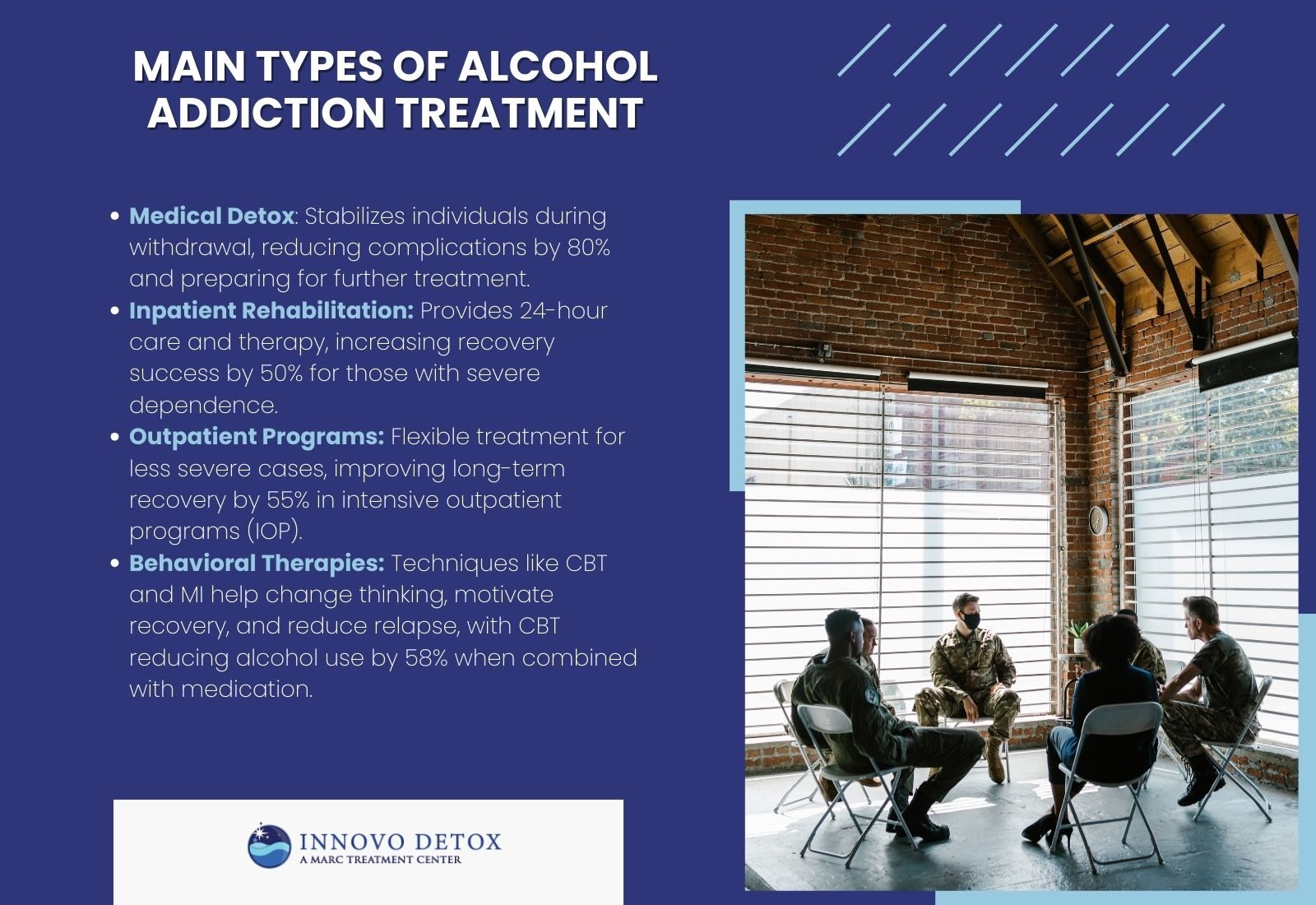
The main types of alcohol addiction treatment are explained below:
Medical Detox
Medical detox is the initial phase of alcohol addiction treatment designed to stabilize individuals experiencing alcohol withdrawal symptoms through supervised care and pharmacological treatment.
The detox phase spans 3 to 7 days and serves as a foundation for ongoing addiction therapy. While detoxification does not treat psychological dependency, it is a prerequisite for successful transition into comprehensive alcohol treatment programs and reduces early-stage relapse risk during the recovery process.
Inpatient Rehabilitation
Inpatient rehabilitation, also known as residential treatment programs, offers structured 24-hour care involving medical supervision, behavioral therapy, and therapeutic community support. These programs vary from 30-day rehab to long-term rehab, depending on the severity of the alcohol use disorder.
Inpatient programs integrate medical detox, intensive counseling & psychotherapy, group therapy, and family support in recovery, especially in cases of social isolation or lack of psychological support.
Outpatient Programs
Outpatient programs offer flexible treatment modalities for alcohol addiction that allow individuals to remain at home while receiving structured care. These include standard outpatient, intensive outpatient programs (IOP), and partial hospitalization programs (PHP).
Outpatient settings are most effective for individuals with a stable home environment and less severe dependency, providing behavioral therapy, relapse prevention strategies, and continuous psychological interventions.
Behavioral Therapies
Behavioral therapies are psychological approaches used to address the cognitive, emotional, and behavioral aspects of alcohol addiction. Techniques such as cognitive behavioral therapy (CBT) and motivational interviewing (MI) are widely adopted to change dysfunctional thinking, enhance motivation, and reduce continued alcohol use.
These therapies are delivered individually or through group therapy, extending to family therapy in cases where there is a lack of family involvement.
What Medications Are Used for Alcohol Addiction Treatment?
The medications used for alcohol addiction treatment are naltrexone, disulfiram, and acamprosate. These alcohol addiction medications are prescribed to reduce cravings, discourage alcohol consumption, and restore brain balance during recovery.
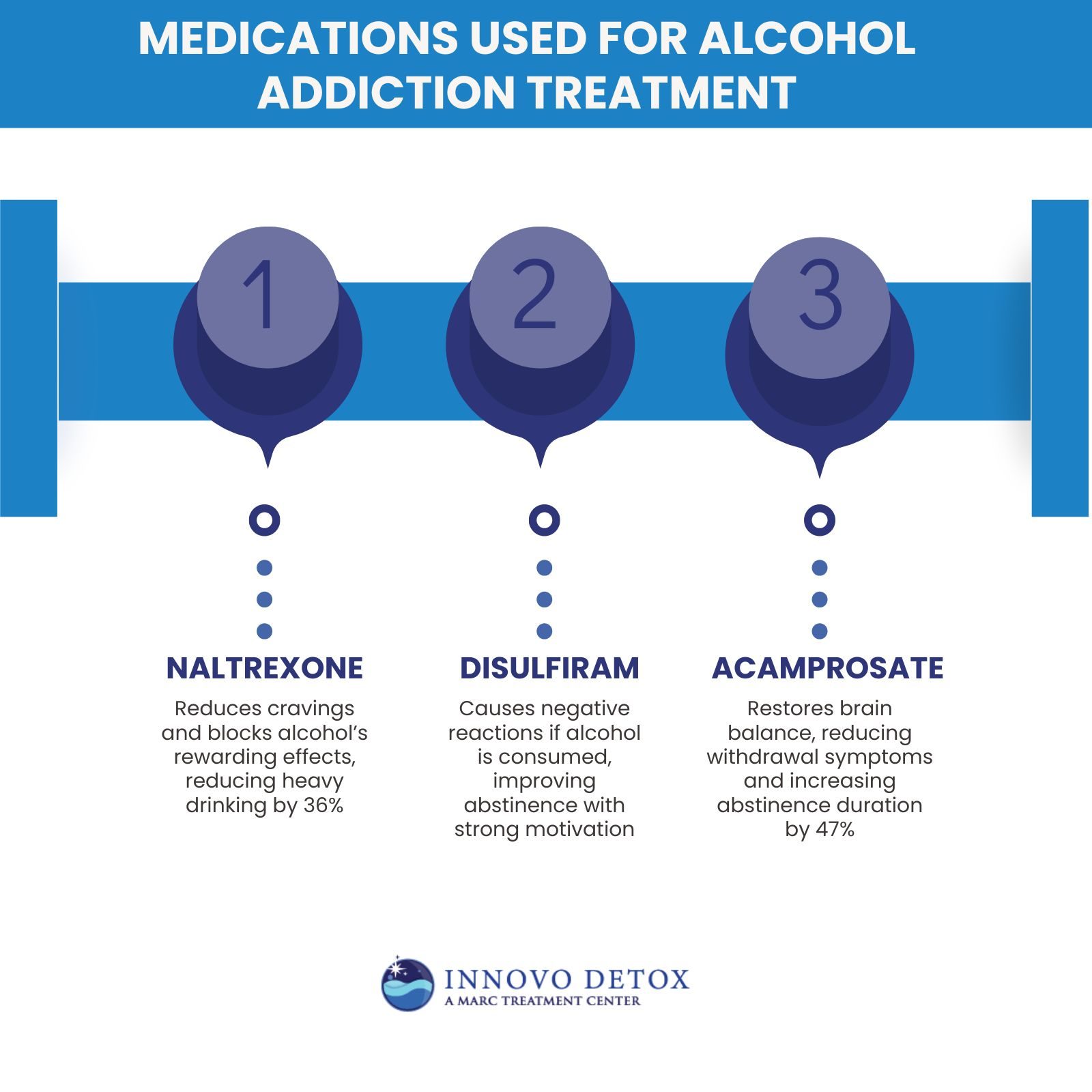
The medications used for alcohol addiction treatment are explained below:
Naltrexone
Naltrexone is an opioid receptor antagonist used in alcohol addiction treatment to reduce alcohol cravings and block the rewarding effects of continued alcohol use. This medication is administered orally or through extended-release injections as part of treatment options in both inpatient rehab and outpatient rehabilitation settings.
Naltrexone is effective when integrated into broader addiction recovery methods, particularly when combined with behavioral therapy or support groups.
Disulfiram
Disulfiram is a deterrent medication used in alcohol addiction treatment, producing adverse reactions like nausea and palpitations when alcohol is consumed. It functions by inhibiting the enzyme aldehyde dehydrogenase, leading to the accumulation of acetaldehyde when alcohol is ingested.
The medication is most effective in structured alcohol rehab settings where compliance is monitored as part of a holistic treatment option.
Acamprosate
Acamprosate is a medication used in alcohol addiction treatment to restore neurochemical balance and reduce protracted withdrawal symptoms such as anxiety, insomnia, and restlessness. Unlike disulfiram or naltrexone, acamprosate does not deter drinking directly but supports abstinence by normalizing brain function affected by chronic alcohol use.
The medication is integrated into comprehensive addiction recovery methods as part of treatment options within structured alcohol rehab environments.
Are There Alternative Approaches to Alcohol Addiction Treatment?
Yes, there are alternative approaches to alcohol addiction treatment that work alongside medical care to support your recovery more holistically. These methods focus on the mind-body connection, helping you manage cravings, stress, and emotional triggers in healthier ways.
Therapies like acupuncture target neural pathways to reduce cravings and ease tension. Yoga builds emotional balance and physical strength, while hypnotherapy helps uncover and reframe deep-rooted habits. Meditation boosts focus and emotional control, making it easier to stay grounded.
These approaches don’t replace medical treatment — they enhance it. By promoting self-awareness, emotional stability, and personal growth, they give you practical tools for long-term recovery and help create lasting, positive change in your daily life.
What Therapies are Effective for Alcohol Addiction?
The therapies effective for alcohol addiction are cognitive behavioral therapy (CBT), motivational interviewing (MI), and multidimensional family therapy (MDFT), each targeting specific psychological, behavioral, and social dimensions of alcohol use.
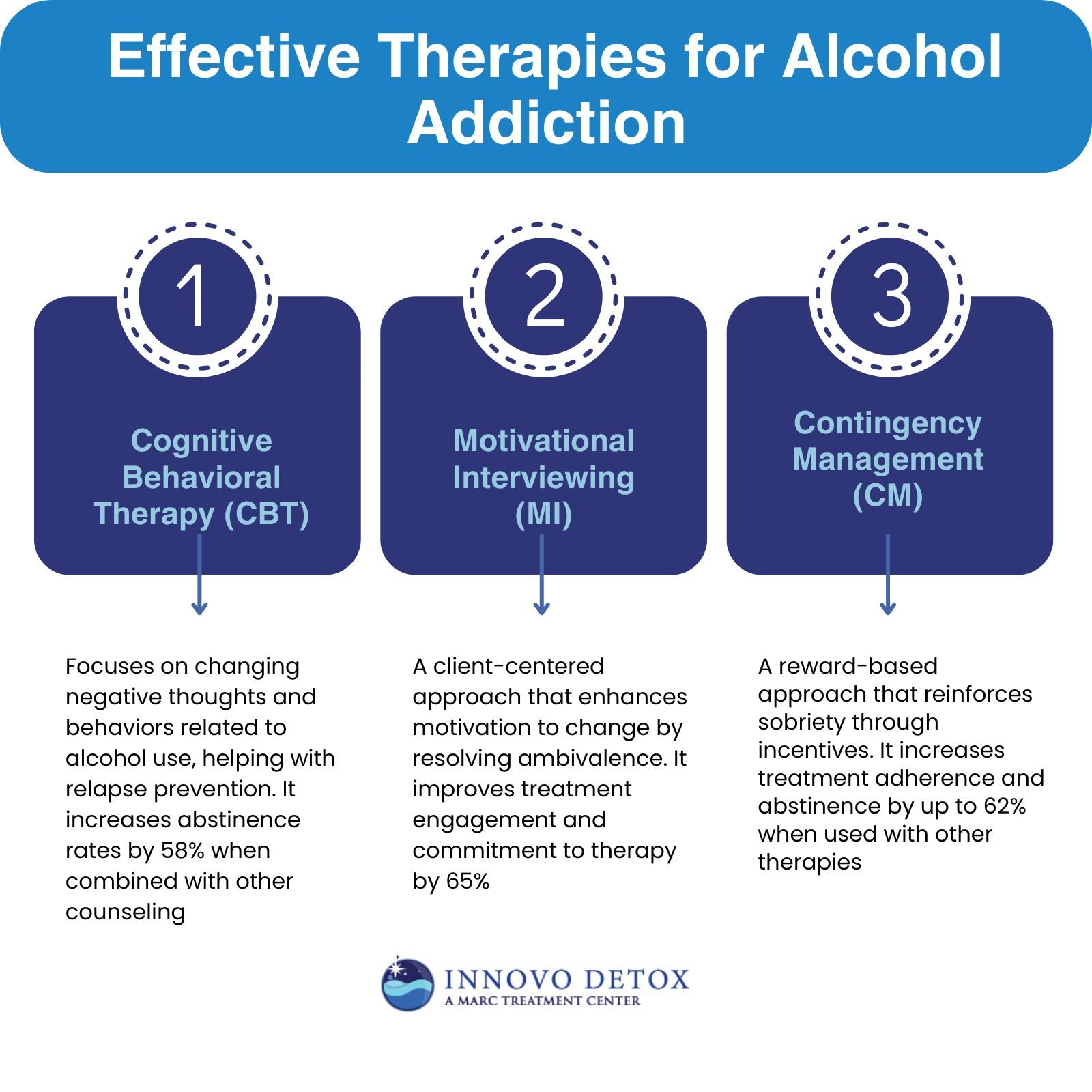
The therapies effective for alcohol addiction are explained below:
- Cognitive Behavioral Therapy (CBT): CBT is a structured behavioral treatment that focuses on identifying and altering negative thought patterns and behaviors related to alcohol use. It helps individuals develop coping mechanisms, manage triggers, and prevent relapse by promoting healthy decision-making.
- Motivational Interviewing (MI): MI is a client-centered approach that enhances intrinsic motivation to change alcohol-related behaviors by resolving ambivalence. This technique supports individuals in articulating personal goals and aligning them with recovery choices. MI is effective when used as a preparatory method before initiating structured alcoholism therapy or behavioral treatment.
- Contingency Management (CM): CM is a reward-based behavioral strategy that reinforces sobriety through positive incentives for maintaining abstinence and meeting recovery milestones. This form of behavioral treatment is combined with other therapies to maintain motivation and reduce dropout rates in alcohol addiction programs.
What Is the Difference Between Inpatient and Outpatient Alcohol Addiction Treatment?
The difference between inpatient and outpatient alcohol addiction treatment is the level of medical supervision, treatment intensity, and living arrangements during the recovery process.
The table below shows the difference between inpatient and outpatient alcohol addiction
| Factor | Inpatient Treatment | Outpatient Treatment |
| Duration | Typically ranges from 30 to 90 days or more in a residential facility | Varies from several weeks to months, with flexible scheduling |
| Cost | Higher due to 24/7 care, accommodations, and intensive services | Lower, as clients live at home and attend sessions at scheduled times |
| Supervision | Continuous medical and therapeutic supervision within a controlled environment | Limited supervision; clients are responsible for managing their own recovery outside sessions |
| Suitability | Ideal for individuals with severe addiction, co-occurring disorders, or high relapse risk | Suitable for those with mild to moderate addiction and strong external support |
How Do Support Groups Aid in Alcohol Recovery?
Support groups aid in alcohol recovery by providing peer-driven accountability, emotional encouragement, and structured guidance throughout the sobriety journey.
Organizations such as Alcoholics Anonymous (AA) operate under 12-step programs that emphasize spiritual growth, personal responsibility, and connection with a higher power. SMART Recovery offers a science-based, self-empowering framework using cognitive and behavioral techniques to promote abstinence.
These alcohol recovery communities foster ongoing connection and motivation, helping individuals reduce isolation and build lasting relationships rooted in shared experiences.
Do Sober Living Homes Help Maintain Sobriety For Alcohol Addicts?
Yes, sober living homes help maintain sobriety for alcohol addicts. It does this through structured environments that promote accountability, community support, and continued recovery after formal treatment.
These homes provide addiction recovery housing where residents are expected to adhere to rules such as abstaining from alcohol, attending support meetings, and participating in household responsibilities.
How Can Alcohol Addiction Relapse Be Prevented?
Alcohol addiction relapse can be prevented by identifying triggers, building a strong support system, and practicing stress management. These strategies increase the chances of maintaining sobriety.
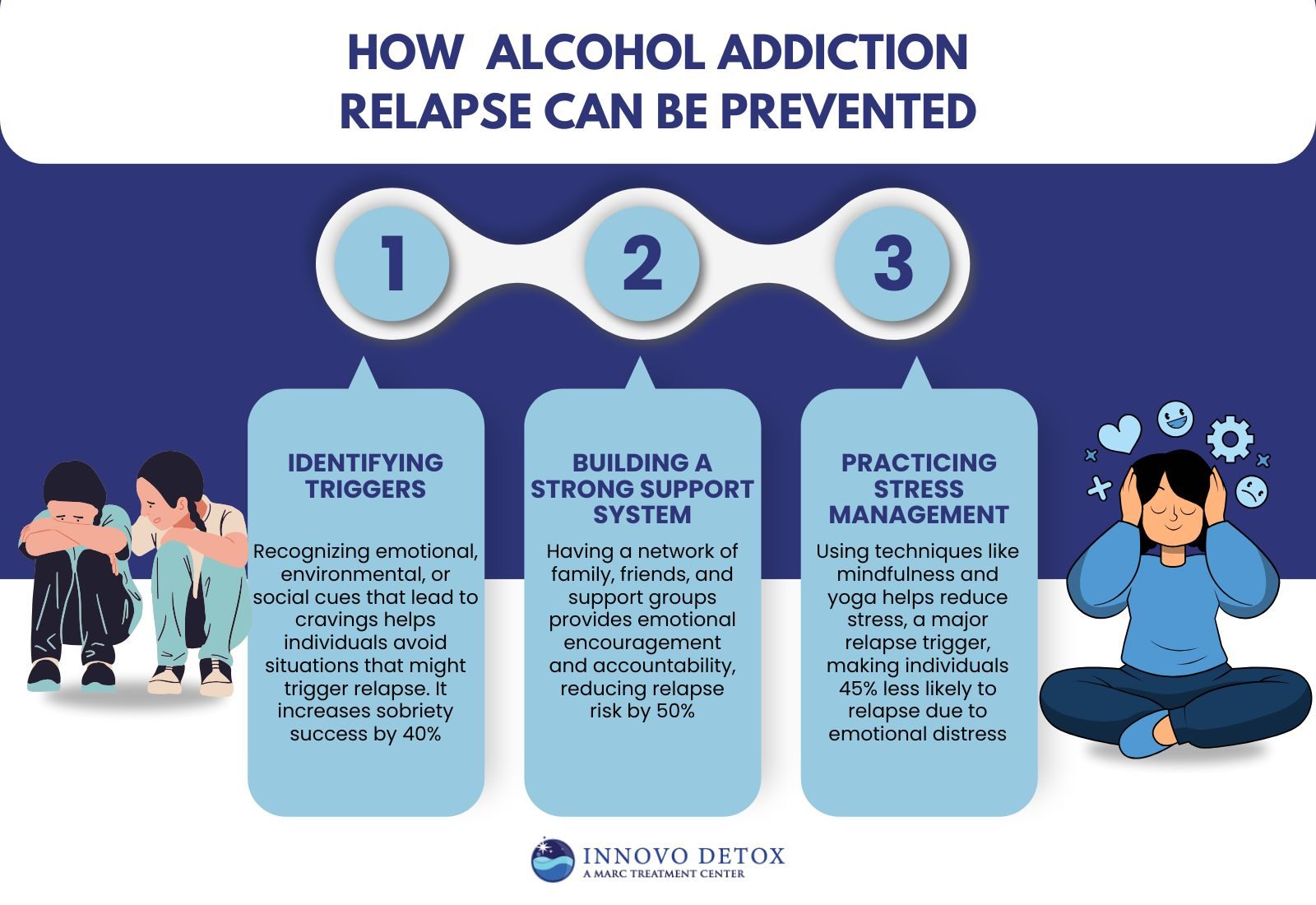
The ways to prevent alcohol addiction relapse are given below:
Identifying Triggers
Identifying triggers is a critical component of relapse prevention, as recognizing emotional, environmental, or social cues that lead to cravings or alcohol use helps individuals avoid risky situations.
Triggers such as stressful life events, certain social circles, or places associated with past drinking habits must be monitored and actively avoided during the recovery process.
Building a Strong Support System
Building a strong support system is vital in maintaining long-term sobriety and preventing relapse by providing emotional encouragement and accountability. This system includes family, friends, support groups like Alcoholics Anonymous (AA), and professionals who contribute to a recovery environment that supports the individual’s efforts.
Practicing Stress Management
Practicing stress management techniques, such as mindfulness, yoga, and deep breathing, is essential for reducing emotional distress that leads to alcohol cravings. Chronic stress is one of the most common relapse triggers, as it leads to poor decision-making and increased alcohol use.
How Effective Is Alcohol Addiction Treatment?
Alcohol addiction treatment effectiveness varies based on the type of intervention, the severity of addiction, and the presence of co-occurring mental health conditions.
According to the Pennsylvania Department of Drug and Alcohol Programs (DDAP) 2020 Annual Report, over 30,000 individuals completed substance use treatment programs in the state, with approximately 60% success rate.
However, recovery rates and rehab effectiveness are also influenced by factors such as family support, social environment, and engagement in aftercare programs, all of which play crucial roles in maintaining long-term recovery.
Why Is Aftercare Important In Alcohol Addiction Recovery?
Aftercare is important in alcohol addiction recovery because it provides continued support, reinforces new behaviors, and helps prevent relapse after formal treatment. Aftercare programs include ongoing alcohol addiction therapy, participation in support groups, and the implementation of lifestyle changes that promote long-term sobriety.
Can My Insurance Cover Alcohol Addiction Treatment in Pennsylvania?
Yes, most alcohol rehab services in Pennsylvania accept insurance, including Medicaid, Medicare, and private plans. Under the Affordable Care Act and MHPAEA, substance use treatment is a covered benefit. Out-of-pocket costs apply only when services fall outside your plan or provider network.