
Alcohol addiction therapy focuses on the mental, emotional, and behavioural aspects of alcohol use disorder. Treatment combines medication-assisted treatment (MAT), therapy, counselling, and support to help you stop drinking and stay sober.
Relapse is common when you return to drinking after a period of sobriety, triggered by stress or unresolved emotional issues. To prevent relapse and support recovery, common therapy options include Cognitive-Behavioral Therapy (CBT), Motivational Interviewing (MI), Dialectical Behavior Therapy (DBT), and 12-step Facilitation.
These therapies work to reduce cravings, improve mental health, and strengthen relationships. According to the Pennsylvania Department of Drug and Alcohol Programs (DDAP) 2020 Annual Report, 45.2% of individuals who completed state-funded alcohol addiction therapy programs maintained sobriety for at least six months post-treatment.
In addition to traditional therapy, alternatives like yoga, meditation, and online counselling also offer valuable support in your recovery journey.
What Is Alcohol Addiction Therapy?
Alcohol addiction therapy is a structured process that helps you break free from alcohol dependence. It’s designed to support your recovery by addressing the psychological and emotional roots of addiction, not just the physical symptoms.
This support is urgent—according to the National Center for Drug Abuse Statistics (NCDAS), Pennsylvania records an average of 5,703 alcohol-related deaths each year. That’s about one death for every 2,280 adults aged 18 and older, showing how serious and widespread the issue is.
Your journey through alcohol addiction therapy starts with detoxification, where your body clears out the alcohol. Once the physical side is managed, therapy shifts to helping you rebuild through counselling and behavioural interventions. These are designed to help you regain control and work towards long-term sobriety, step by step.
What Are the Different Types of Alcohol Addiction Therapy?
The different types of alcohol addiction therapy are Cognitive-Behavioral Therapy (CBT), Dialectical Behavior Therapy (DBT), Motivational Interviewing (MI), Contingency Management, Trauma-Informed Therapy, Group Counseling, Family Therapy, 12-step Facilitation, and Life Skills Therapy. Each of these approaches offers unique methods to help individuals manage their addiction and support their long-term recovery journey.
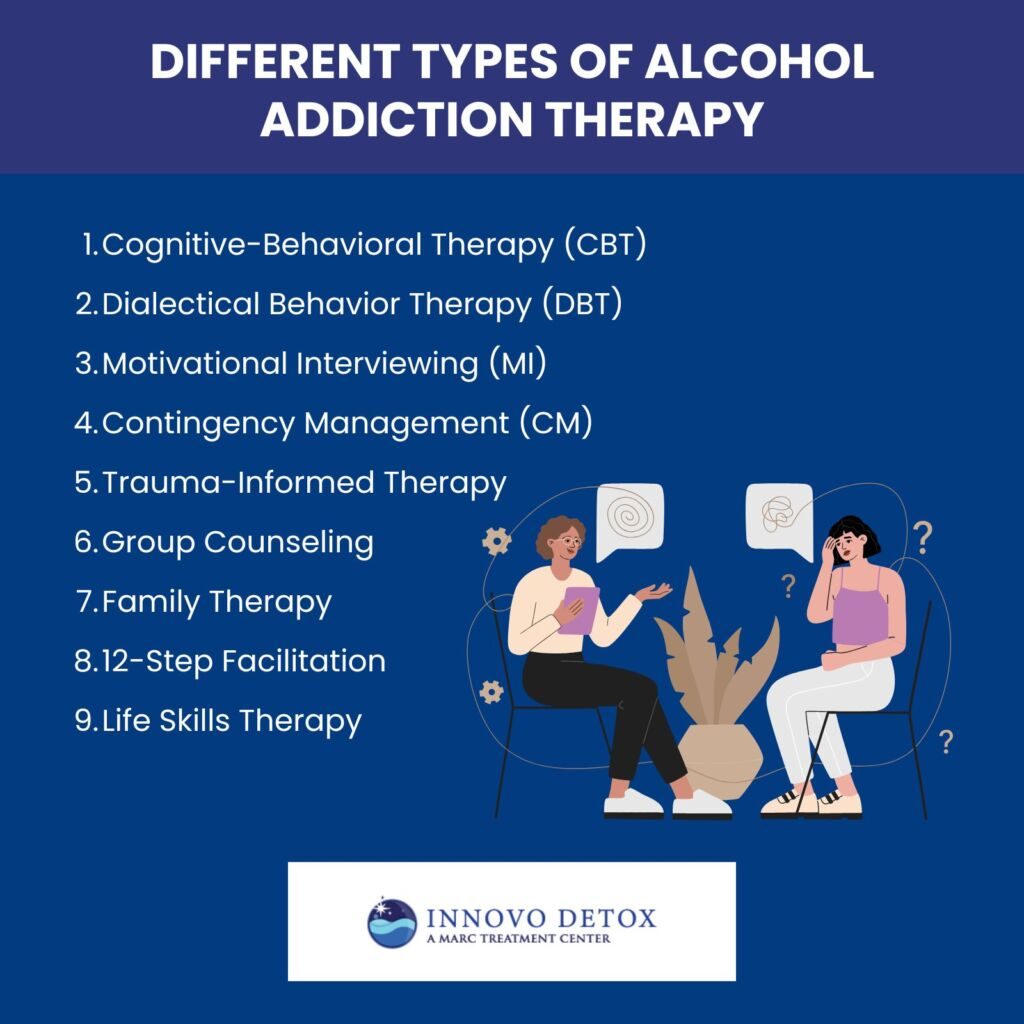
The different types of alcohol addiction therapy include:
1. Cognitive-Behavioral Therapy (CBT)
Cognitive-behavioural therapy (CBT) is a type of psychological intervention that focuses on changing harmful thought patterns and behaviors associated with alcohol addiction. CBT helps patients identify the triggers that lead to drinking, reframe negative thoughts, and build coping mechanisms to manage stress and avoid relapse.
Key benefits of CBT for alcohol addiction therapy include:
- Identifying and addressing negative thought patterns that contribute to alcohol use.
- Teaching strategies to handle high-risk situations without resorting to drinking.
- Enhancing self-awareness and emotional regulation.
- Reducing the likelihood of relapse by providing coping tools for triggers.
- Improving long-term outcomes in maintaining sobriety.
2. Dialectical Behavior Therapy (DBT)
Dialectical Behavior Therapy (DBT) is a type of cognitive-behavioral treatment that blends traditional thinking-based strategies with mindfulness and acceptance. It gives you tools to manage your emotions, handle stress, and build stronger relationships.
Core techniques in DBT include mindful awareness, emotional regulation, distress tolerance, and interpersonal effectiveness. These skills help you stay grounded, especially during high-stress moments that could lead to relapse.
3. Motivational Interviewing (MI)
Motivational Interviewing (MI) is a supportive, goal-focused therapy that helps you find your own reasons to quit alcohol. Instead of pushing you, it guides you through any doubts or mixed feelings you may have about changing your drinking habits.
Through open conversation, MI helps you explore how alcohol fits into your life and whether it aligns with your personal values and goals. It’s not about guilt or pressure — it’s about helping you build confidence and commit to recovery on your own terms.
4. Contingency Management
Contingency Management (CM) is a practical, reward-based therapy that helps you stay sober by recognising and reinforcing your progress. It works by offering small incentives for positive actions, like staying alcohol-free or showing up consistently to therapy.
These rewards — whether it’s a voucher, a prize, or even cash — give you something to look forward to as you hit each milestone. It’s a way to stay motivated and feel acknowledged as you move through your recovery journey.
5. Trauma-Informed Therapy
Trauma-informed therapy understands that your past experiences, especially trauma, can play a big role in your alcohol addiction. It focuses on giving you a safe, supportive space where you don’t feel judged or retraumatised.
If you’ve lived through things like abuse, loss, or serious accidents, this approach helps you gently face and work through that pain. Instead of avoiding it, you’ll learn healthier ways to cope, process emotions, and start healing — not just from addiction, but from what’s underneath it.
6. Group Counseling
Group counseling gives you the chance to connect with others who understand what you’re going through. In a supportive group setting, you’ll talk openly about your challenges and hear from people facing similar struggles with alcohol.
Being part of a group creates a sense of community and accountability. You’re not doing this alone — you’re surrounded by others who want to grow, heal, and support each other’s recovery. Over time, it helps reduce feelings of isolation, builds your confidence in sharing, and reminds you that you truly belong somewhere safe.
7. Family Therapy
Family therapy brings your loved ones into the recovery process so healing doesn’t happen alone. When alcohol addiction affects one person, it often impacts the whole family, sometimes through codependency, poor communication, or enabling without realizing it.
This type of therapy helps you and your family rebuild trust, set healthier boundaries, and work through past pain together. It creates a stronger, more supportive environment around you — one that makes a real difference in staying sober long-term.
8. 12-Step Facilitation
12-step Facilitation Therapy brings the core ideas of Alcoholics Anonymous (AA) into your recovery journey. It gives you a clear, structured path built around shared principles, personal reflection, and a spiritual element — all aimed at helping you grow and stay sober.
By attending regular meetings and connecting with others who’ve walked the same path, you get support, mentorship, and a real sense of community. With over 2 million members across the U.S., AA offers a space where you’re never alone in your recovery.
9. Life Skills Therapy
Life skills therapy helps you rebuild the practical side of life after addiction. It’s not just about staying sober — it’s about learning how to handle everyday challenges with confidence and stability.
Through this therapy, you’ll work on real-world skills like managing money, finding a job, setting boundaries, and building emotional strength. These tools give you a solid foundation, so you’re not just recovering — you’re preparing for a better, more independent life.
What Are the Key Benefits of Alcohol Addiction Therapy?
The key benefits of alcohol addiction therapy are improved mental health, increased chances of long-term sobriety, and the development of healthier coping mechanisms. Through structured interventions, therapy helps individuals address the root causes of their addiction.
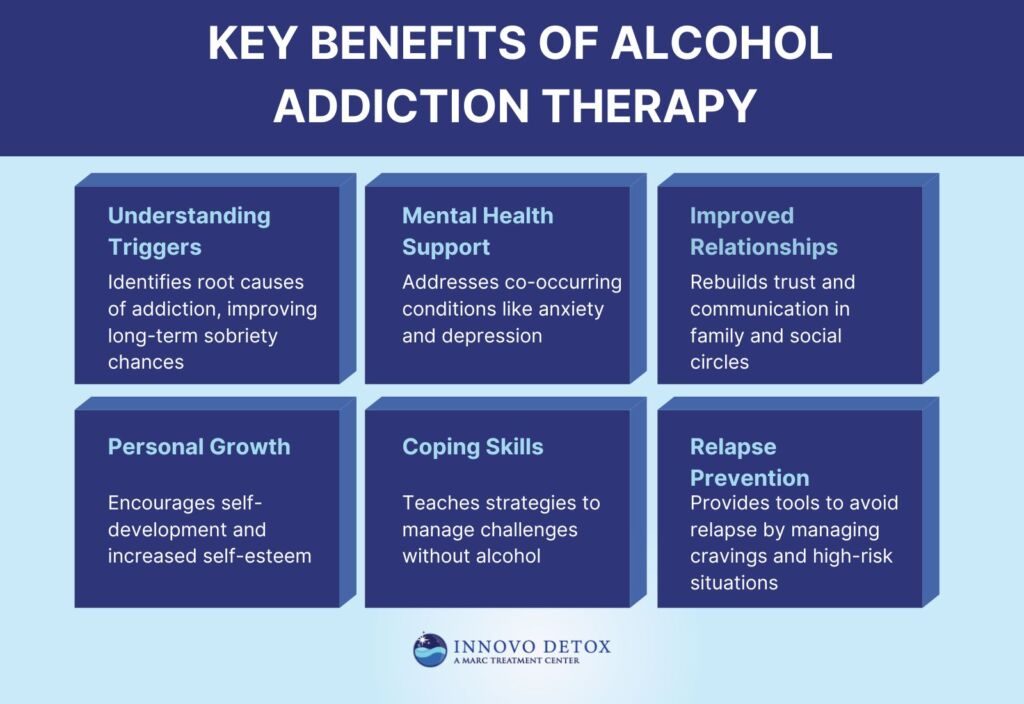
The key benefits of alcohol addiction therapy include:
- Understanding the root causes and triggers of addiction: Therapy helps individuals uncover the underlying factors contributing to their alcohol addiction, such as past trauma or mental health disorders.
- Enhancing mental health: Alcohol addiction therapy addresses co-occurring mental health conditions, such as anxiety or depression, which contribute to the addiction.
- Improving relationships: Through therapy, individuals rebuild trust and communication within their family and social circles.
- Supporting personal growth: Therapy not only focuses on overcoming addiction but also encourages individuals to explore their potential and set new goals for personal development. This includes career aspirations, self-care practices, and engaging in activities that bring fulfillment.
- Developing coping skills: One of the primary goals of addiction therapy is to teach individuals how to handle life’s challenges without resorting to alcohol. Techniques like Cognitive-Behavioral Therapy (CBT) or Dialectical Behavior Therapy (DBT) help individuals develop resilience through effective coping strategies.
- Preventing relapse: Therapy provides individuals with the tools and strategies needed to avoid relapse, such as identifying high-risk situations and managing cravings. Through continuous support, individuals learn to implement these strategies in real-life situations, reducing the likelihood of returning to alcohol use.
What Is the Success Rate of Alcohol Addiction Therapy?
The success rate of alcohol addiction therapy is generally high, with studies showing significant improvements in recovery outcomes. According to the Pennsylvania Department of Drug and Alcohol Programs (DDAP) 2020 Annual Report, 45.2% of individuals who completed state-funded alcohol addiction therapy programs maintained sobriety for at least six months post-treatment.
What Are the Holistic and Alternative Approaches to Alcohol Addiction Therapy?
The holistic and alternative approaches to alcohol addiction therapy are acupuncture, yoga, meditation, and nutritional therapy. These therapies focus on treating the whole person—mind, body, and spirit—by promoting physical and emotional well-being to support long-term recovery.
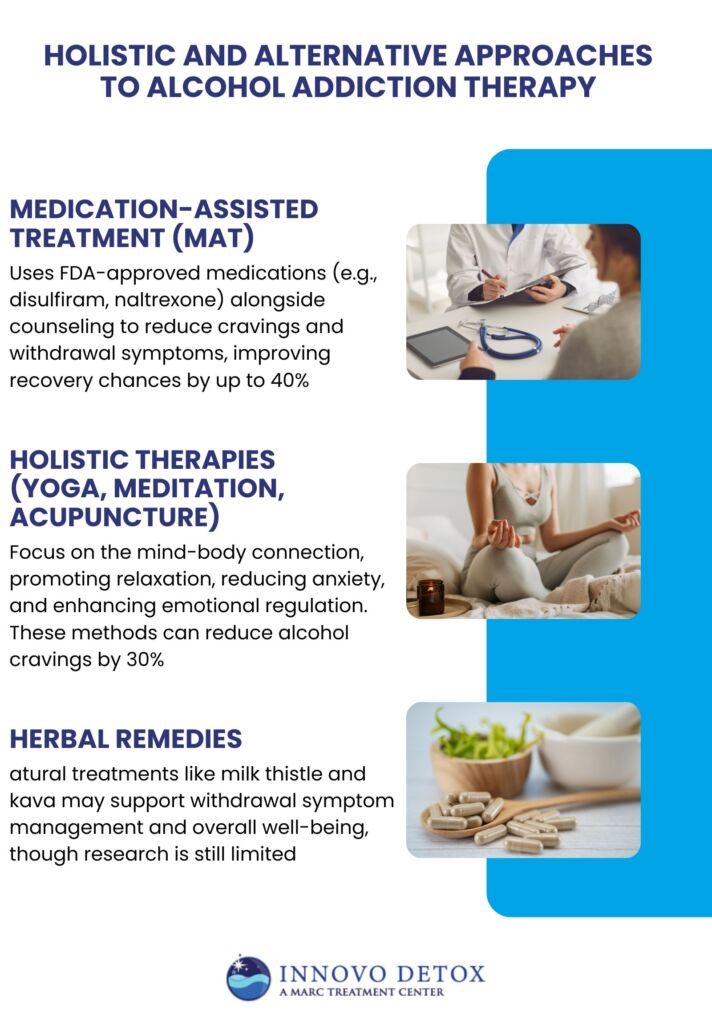
The holistic and alternative approaches to alcohol addiction therapy:
- Medication-Assisted Treatment (MAT): Medication-Assisted Treatment (MAT) is a well-established alternative that uses FDA-approved medications, such as disulfiram or naltrexone, alongside counseling to treat alcohol addiction. MAT helps reduce cravings and withdrawal symptoms, improving retention in therapy and increasing the likelihood of sustained recovery.
- Holistic therapies (yoga, meditation, and acupuncture): Holistic therapies, including yoga, meditation, and acupuncture, focus on treating the mind-body connection by promoting relaxation and stress relief. These therapies are used alongside traditional treatments to enhance emotional regulation, reduce anxiety, and build resilience, which is crucial for long-term recovery.
- Herbal remedies: Herbal remedies, such as milk thistle and kava, are sometimes used as adjunct treatments to alcohol addiction therapy for their purported liver-protective or calming effects. While the research is still limited, these remedies complement standard treatments by providing natural alternatives for managing withdrawal symptoms and promoting overall well-being.
What Are the Teletherapy Options for Alcohol Addiction Recovery?
The teletherapy options for alcohol addiction recovery are video counseling, phone therapy, and text-based support platforms. These options offer flexibility and accessibility, allowing individuals to receive support remotely and at their convenience.

The teletherapy options for alcohol addiction recovery include:
- Video Therapy: Video therapy offers real-time, face-to-face sessions with licensed therapists via secure digital platforms. It replicates many aspects of in-person care while providing accessibility for those who are unable to attend physical sessions.
- Online Support Groups: Online support groups connect individuals in recovery through structured virtual meetings where they share personal experiences, coping strategies, and emotional support. These groups foster a sense of community and reduce the isolation linked to addiction.
- Mobile Therapy Apps: Mobile therapy apps provide tools such as craving tracking, mood monitoring, guided reflections, and relapse prevention plans, offering continuous support at the user’s convenience. These apps are especially useful for individuals who prefer self-guided care or need support outside of therapy hours.
How to Choose the Right Alcohol Addiction Therapy?
To choose the right alcohol addiction therapy, individuals should consider the severity of their addiction, any co-occurring mental health disorders, and their personal preferences for treatment format. Consulting a licensed addiction specialist helps match the individual with the most effective approach for their specific needs.
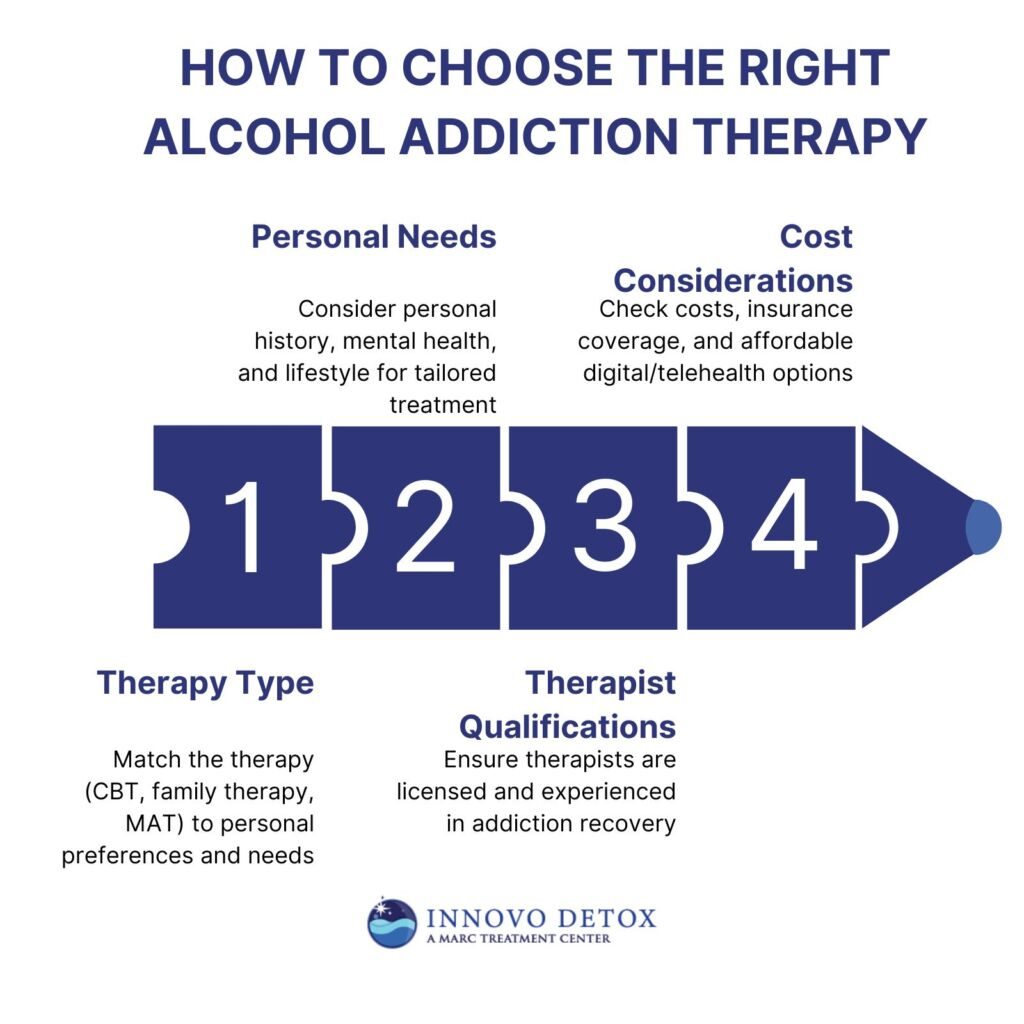
Tips to choose the right alcohol addiction therapy are explained below:
- Therapy Type: The choice of therapy type—such as Cognitive-Behavioral Therapy, family therapy, or medication-assisted treatment (MAT)—should match the individual’s clinical needs and personal preferences. Evidence-based therapies are most effective for long-term recovery and relapse prevention.
- Personal Needs: Personal history, co-occurring mental health conditions, and lifestyle factors must guide the therapy decision. For example, someone with trauma benefits more from trauma-informed therapy, while someone with a busy schedule prefers virtual or remote options.
- Therapist Qualifications: Therapists should be licensed, experienced in addiction recovery, and trained in the specific therapeutic approach being used. Credentials such as LCSW, LMFT, or CADC, along with certifications in addiction counseling, ensure clinical competence.
- Cost Considerations: Therapy costs vary based on setting (inpatient vs. outpatient), session frequency, and whether services are covered by insurance. Evaluating financial options, including sliding scale fees and insurance coverage, helps prevent treatment dropout due to financial strain.
How to Find a Qualified Therapist for Alcohol Addiction?
To find a qualified therapist for alcohol addiction, begin by identifying professionals who specialize in addiction treatment and align with your specific recovery goals. Ensure the therapist is licensed.
Tips to find a qualified therapist for alcohol addiction in Pennsylvania include:
- Certifications and Licensing: Look for a therapist who is licensed in your state and holds credentials such as LCSW, LPC, LMFT, or CADC. These certifications ensure that the therapist has completed formal training and adheres to clinical standards.
- Board Certification: Prefer therapists who are board-certified in addiction counseling or psychology, as this reflects a higher level of professional competence. Board certification also shows they meet ongoing education and practice requirements.
- Experience in Addiction Therapy: Select someone with a track record in treating alcohol addiction and, ideally, co-occurring mental health disorders. Therapists with years of practice in recovery environments bring insight into relapse prevention and client motivation.
- Specialization in Treatment Approaches: Choose a therapist trained in specific, evidence-based therapies such as CBT, DBT, or medication-assisted treatment (MAT). This ensures they tailor treatment to your behavioral patterns and recovery needs.
- Cultural Fit and Communication Style: The therapist’s approach should resonate with your values, communication style, and comfort level. A strong therapeutic alliance significantly increases engagement and long-term recovery outcomes.
How Long Does Alcohol Addiction Therapy Take?
Alcohol addiction therapy takes between 30 days and 12 months, depending on the treatment setting and individual circumstances. Inpatient programs last 30 to 90 days and provide intensive support, while outpatient therapy extends over several months, allowing individuals to integrate recovery into daily life.
The recovery timeline is influenced by factors such as the severity of the addiction, the presence of co-occurring mental health disorders, and the specific type of therapy used. Continued follow-up and aftercare services are also critical to sustaining recovery beyond the initial treatment phase.
Does Insurance Cover Alcohol Addiction Therapy in Pennsylvania?
Yes, insurance covers alcohol addiction therapy in Pennsylvania under most health plans. The Affordable Care Act mandates that substance use treatment, including inpatient and outpatient services, be included as essential health benefits.
Coverage varies based on the provider, plan type, and network restrictions and includes out-of-pocket costs like copays or deductibles. To confirm eligibility, contact the treatment center to verify your insurance.
How to Prevent Relapse and Maintain Recovery After Therapy?
To prevent relapse and maintain recovery after therapy, individuals should continue using coping strategies learned during treatment, attend support groups, and engage in ongoing therapy or aftercare programs. Staying connected to a strong support system and avoiding high-risk triggers significantly improve the chances of preventing alcohol relapse.
Ways to prevent relapse and maintain recovery after therapy include:
- Join support groups: Participating in support groups like Alcoholics Anonymous or SMART Recovery provides ongoing peer support, emotional accountability, and encouragement from others in recovery. These groups help individuals maintain structure, reduce isolation, and stay focused on their goals.
- Maintain healthy lifestyle habits: Engaging in regular physical activity, eating nutritious meals, and keeping a consistent sleep schedule stabilizes mood and reduces the physical stress that triggers relapse. Healthy routines support emotional balance and create a sense of normalcy during the recovery process.
- Practice mindfulness techniques: Incorporating mindfulness practices such as meditation, deep breathing, and guided visualization strengthens emotional regulation and decreases impulsivity. These practices reduce the risk of relapse by improving awareness of cravings and increasing tolerance to discomfort.
- Engage in ongoing therapy: Continuing therapy after primary treatment offers sustained support, personalized guidance, and ongoing adaptation of coping strategies. It helps individuals process new challenges and reinforce progress made during early recovery.


