
Alcohol abuse is a widespread behavioural health disorder with harmful drinking habits that disrupt your daily functioning. It leads to physical, psychological, and social harm. According to data from the Pennsylvania Department of Health (2021), there were over 46,000 alcohol-related emergency department visits across the state, with adults aged 21–44 accounting for 60% of these cases.
The main risk factors of alcohol abuse include binge drinking, early exposure to alcohol, genetic predisposition, family history of addiction, mental health disorders, and environmental influences. Signs and symptoms of alcohol abuse range from frequent intoxication and cravings to more severe indicators such as blackouts, withdrawal symptoms, and declining health.
Treatment options you should consider for alcohol abuse include detoxification, inpatient or outpatient rehabilitation, medications, behavioural therapies, and support networks.
What Is Alcohol Abuse?
Alcohol abuse refers to a pattern of drinking that causes damage to health, disrupts functioning in daily life, or leads to legal and interpersonal consequences. It includes repeated alcohol use that fails to fulfill major obligations at work, school, or home, use in physically hazardous situations, and continued drinking despite persistent problems caused or worsened by alcohol.
The Diagnostic and Statistical Manual of Mental Disorders (DSM–5) classifies alcohol abuse under Alcohol Use Disorder (AUD) and considers it a chronic, relapsing brain condition. Individuals exhibiting at least one of four behavioural issues, such as drinking despite social issues or using alcohol in risky situations, fall into the classification of alcohol abuse.
How Much Alcohol Consumption Is Considered Alcohol Abuse?
Exceeding four drinks per day for men or three drinks per day for women alcohol consumption is considered alcohol abuse. According to the Pennsylvania Youth Survey (PAYS), 2021, PA Commission on Crime and Delinquency, in 2021, 23.5% of Pennsylvania high school students reported drinking alcohol in the past 30 days, with 11.3% engaging in binge drinking (5+ drinks in a short period).
This classification reflects physiological and metabolic differences between genders. Women have lower levels of alcohol dehydrogenase, the enzyme responsible for breaking down alcohol, which causes higher blood alcohol levels with fewer drinks.
When Does Alcohol Abuse Become Chronic
Alcohol abuse becomes chronic when you persist in alcohol use for 12 months or longer and meet at least two diagnostic criteria outlined for Alcohol Use Disorder (AUD).
The condition escalates from mild to chronic based on the number and intensity of symptoms. Two to three symptoms indicate a mild case, four to five a moderate one, and six or more a severe or chronic disorder. When abuse extends beyond one year and affects brain structure, behaviour, and health, the classification moves from episodic to chronic.
What Are The Risk Factors Of Alcohol Abuse?
The risk factors of alcohol abuse include binge or heavy drinking, early exposure, genetic predisposition, family history, traumatic experiences, and mental health conditions. These factors contribute to increased vulnerability by influencing behaviour, environment, or biological susceptibility.
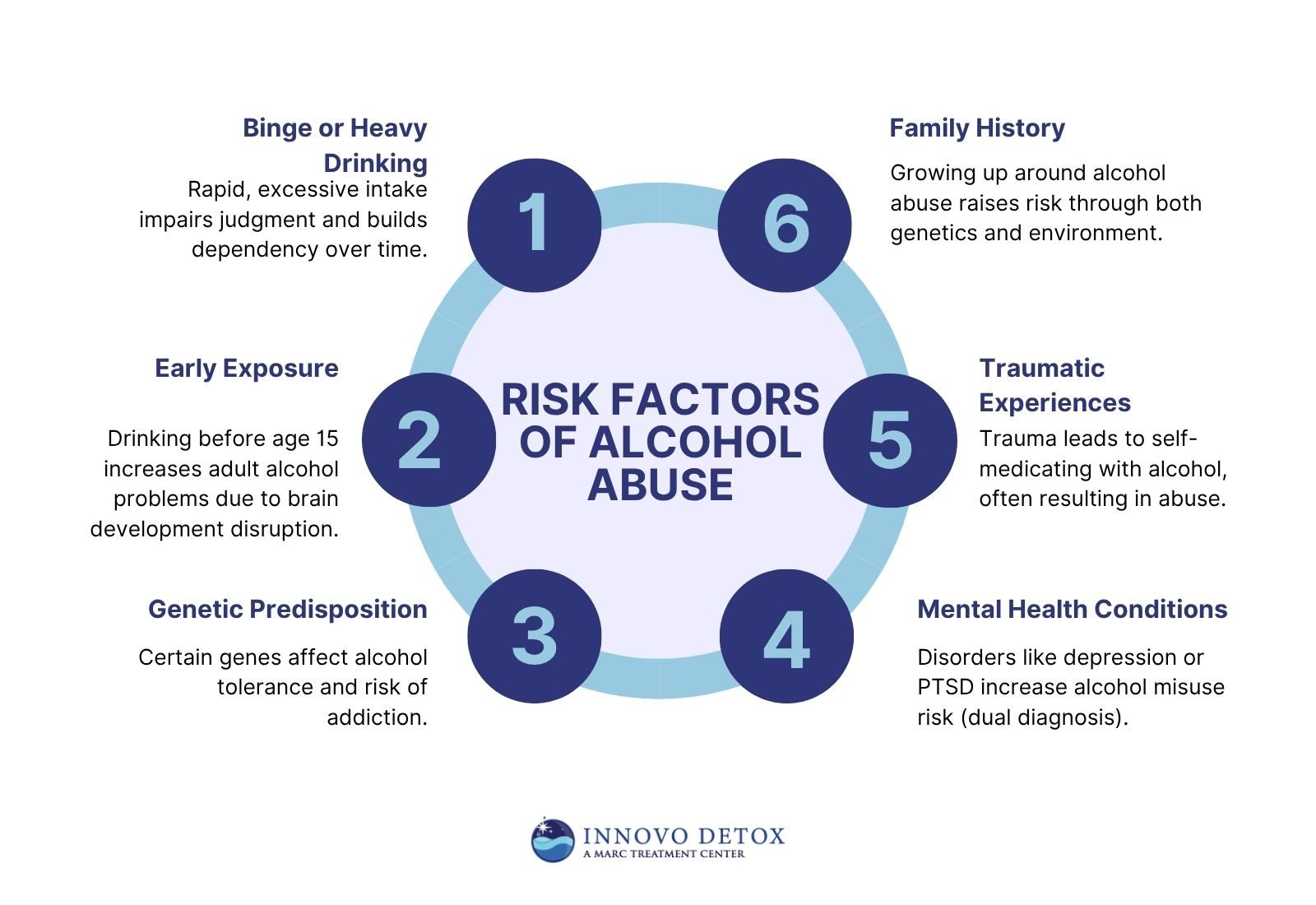
The risk factors of alcohol abuse are explained below:
- Binge or Heavy Drinking: Binge drinking involves consuming a large amount of alcohol in a short time. It causes spikes in blood alcohol concentration, which disrupt brain regulation of judgment and self-control. Repeated episodes build tolerance and dependency, leading to habitual abuse.
- Early Exposure: Exposure to alcohol during adolescence alters brain development. It increases risk-taking behaviour and lowers resistance to peer influence. Youth who begin drinking before age 15 are four times more likely to develop alcohol problems in adulthood.
- Genetic Predisposition: Genetic variations affect alcohol metabolism and brain response. Individuals with specific gene variants, such as ADH1B and ALDH2, have altered tolerance levels. A family linkage to alcohol-related traits increases susceptibility.
- Family History: Growing up in a household with alcohol-dependent individuals normalises excessive drinking behaviour. Children of alcohol-abusing parents face double the risk due to combined genetic and environmental influences.
- Traumatic Experiences: Childhood abuse, neglect, or exposure to violence creates emotional distress. Alcohol is used as a coping tool, reinforcing patterns of avoidance and self-medication, which evolve into abuse.
- Mental Health Conditions: Depression, anxiety, PTSD, and other psychiatric disorders elevate the use of alcohol as self-treatment. The co-occurrence of mental illness and alcohol misuse is termed dual diagnosis and requires integrated treatment.
What Are The Signs And Symptoms Of Alcohol Abuse?
The signs and symptoms of alcohol abuse are frequent or excessive drinking, alcohol cravings, neglecting responsibilities, drinking in risky situations, withdrawal symptoms, alcohol tolerance, blackouts, and mood swings. These indicators represent both behavioural and physiological disruptions, showing how alcohol abuse progressively affects daily functioning, decision-making, and overall health.

Common signs and symptoms of alcohol abuse include:
- Frequent or Excessive Drinking: This involves consuming alcohol regularly and in large quantities. The behaviour extends beyond social or moderate limits, causing routine intoxication. It shows impaired control and signal escalating dependency.
- Alcohol Cravings: Cravings are strong urges or compulsions to consume alcohol. These occur even during work, school, or emotionally neutral moments. Cravings reflect brain changes tied to reward and stress circuits and precede relapse.
- Neglecting Responsibilities: Persistent alcohol use interferes with obligations at work, home, or school. Missed deadlines, poor performance, and neglect of duties point to prioritising alcohol over vital tasks.
- Drinking in Risky Situations: Consuming alcohol before driving, using machinery, or during high-stakes social situations increases physical harm. Repeated engagement despite known dangers reflects impaired risk assessment.
- Withdrawal Symptoms: Shaking, sweating, irritability, nausea, and anxiety after stopping alcohol indicate withdrawal. These symptoms show physical dependence and brain adaptation to alcohol presence.
- Alcohol Tolerance: Higher quantities of alcohol are needed to achieve the same effect. Increased tolerance shows the body’s reduced sensitivity, which raises consumption levels and health risks.
- Blackouts: Temporary memory loss during or after drinking episodes suggests neurotoxicity. Blackouts impair cognitive functioning and are early signs of brain damage due to alcohol exposure.
- Mood Swings: Rapid shifts in mood, irritability, aggression, and depression emerge as alcohol disrupts neurotransmitter levels. Emotional instability worsens with sustained use and strained relationships.
What Are The Effects Of Alcohol Abuse?
The effects of alcohol abuse are injuries, violence, cancer, liver disease, cardiovascular problems, brain damage, and risky sexual behaviours. These effects span physical, psychological, and social domains, reflecting alcohol’s systemic toxicity and its capacity to impair health and quality of life across all age groups.

The effects of alcohol abuse are explained below:
- Injuries: Alcohol lowers coordination and reaction time, leading to accidents such as falls, drownings, and vehicle crashes. Impaired judgment during intoxication results in a higher frequency of emergency room visits and trauma admissions.
- Violence: Alcohol alters impulse control and increases aggression. It plays a documented role in domestic violence, assaults, and homicide cases. Victims and perpetrators alike are more likely to be intoxicated during violent incidents.
- Cancer: Alcohol is a known carcinogen. Chronic use increases the risk of breast, liver, colorectal, and oesophageal cancers. Ethanol and its metabolite acetaldehyde directly damage DNA and disrupt cellular repair processes.
- Liver Disease: Alcoholic hepatitis, fibrosis, and cirrhosis develop from sustained liver inflammation. These conditions emerge from long-term toxic overload and are irreversible in advanced stages.
- Cardiovascular Problems: Alcohol raises blood pressure and weakens the heart muscle. Conditions such as arrhythmias, cardiomyopathy, and stroke have a higher incidence among long-term heavy drinkers.
- Brain Damage: Long-term use reduces brain volume and impairs communication between neurons. Alcohol-related brain damage leads to memory loss, poor coordination, and permanent cognitive dysfunction.
- Risky Sexual Behaviours: Alcohol impairs decision-making, leading to unprotected sex, multiple partners, and increased risk of sexually transmitted infections. It also raises vulnerability to sexual assault.
What Are The Treatment Options For Alcohol Abuse?
The treatment options for alcohol abuse are detox, inpatient or outpatient rehab, medications, behavioural therapies, and support systems. Each method addresses different dimensions of alcohol dependence, from physical withdrawal to psychological behaviour change.

The treatment options for alcohol abuse are:
- Detox: Detox is the medically supervised process of clearing alcohol from the body. It includes constant monitoring, fluid replacement, and medication management to reduce withdrawal symptoms. Detox stabilises the individual before long-term treatment begins and prevents severe complications like seizures or delirium tremens.
- Inpatient or Outpatient Rehab: Rehabilitation programs provide structured environments for recovery. Inpatient rehab involves 24-hour care in a residential setting, while outpatient rehab allows you to attend treatment sessions while living at home.
- Medications: Approved medications like disulfiram, naltrexone, and acamprosate help reduce cravings and prevent relapse. These treatments adjust brain chemistry altered by chronic alcohol use. Medications are used alongside counselling and support systems for higher effectiveness.
- Behavioural Therapies: Cognitive-behavioural therapy (CBT), motivational enhancement therapy, and contingency management are common approaches. These therapies identify triggers, restructure negative thinking, and reinforce positive behaviours. They improve long-term recovery by building emotional resilience.
- Support Systems: Support groups such as Alcoholics Anonymous (AA), family involvement, and peer mentoring provide emotional encouragement. These systems reduce isolation, promote accountability, and offer practical guidance through shared experiences.
Timely Alcohol addiction treatment not only reduces harm but restores health and stability. With structured treatment and consistent follow-up, individuals regain control and achieve sustained recovery.
What Is The Statistic Of Alcohol Abuse In Pennsylvania?
According to a report by the Substance Abuse and Mental Health Services Administration (SAMHSA) titled “Behavioural Health Barometer: Pennsylvania, Volume 6,” 2020, approximately 491,000 individuals aged 12 or older in Pennsylvania reported alcohol use disorder in the past year. This equates to roughly 4.9% of the state population.
The prevalence is highest among adults aged 18–25, but rising patterns among middle-aged individuals have also been recorded. Factors such as economic hardship, prescription drug overlap, and limited access to behavioural health services contribute to elevated misuse rates in certain counties.
How To Diagnose Alcohol Abuse
To diagnose alcohol abuse involves clinical evaluation using standardised diagnostic criteria. Medical professionals assess behavioural patterns, physical health, and psychological state through structured interviews and validated screening tools.
Common instruments include the Alcohol Use Disorders Identification Test (AUDIT), the CAGE questionnaire, and the Diagnostic and Statistical Manual of Mental Disorders (DSM–5) criteria. These tools determine the presence, frequency, and severity of alcohol-related problems over a specified period.
The DSM–5, developed by the American Psychiatric Association, outlines 11 specific symptoms of Alcohol Use Disorder (AUD), ranging from increased tolerance to continued use despite consequences.
Can Alcohol Abuse Be Prevented?
Yes. Alcohol abuse can be prevented through early intervention, education, and behavioural strategies. Prevention focuses on reducing your exposure to risk factors and strengthening protective behaviours before patterns of harmful use emerge.
Tips and strategies to prevent alcohol abuse are:
- Education on Alcohol Risks: Introduce structured education programs in schools and communities. These increase awareness of alcohol’s health risks and counter misinformation about its effects.
- Parental Involvement: Parental supervision and communication reduce underage drinking. Strong family support systems protect against early experimentation and long-term misuse.
- Limit Access to Alcohol: Regulating alcohol outlet density, pricing, and sales hours reduces availability. Strict ID enforcement and compliance checks discourage underage purchases.
- Promote Healthy Coping Skills: Teaching stress relief techniques like physical activity or journaling replaces alcohol with constructive outlets. Schools and workplaces reinforce these behaviours.
- Early Screening and Intervention: Primary care and counselling services use tools like AUDIT to detect risky drinking. Early engagement lowers progression to dependency.
How Does Alcohol Abuse Affect Pregnant Women
Alcohol abuse affects pregnant women by causing serious harm to both the mother and the developing fetus. It increases the risk of miscarriage, premature birth, low birth weight, and placental complications. Alcohol crosses the placenta, exposing the fetus to blood alcohol concentrations nearly equal to those of the mother, which disrupts normal cell development and organ formation.
These effects occur at any stage of pregnancy, including early weeks when women do not know they are pregnant.
The most severe outcome is Fetal Alcohol Syndrome (FAS), a lifelong condition resulting from prenatal alcohol exposure. FAS causes facial deformities, growth deficiencies, and central nervous system abnormalities. It also leads to cognitive impairments, behavioural issues, and poor academic performance.
What Is The Difference Between Alcohol Abuse And Alcohol Dependence?
Alcohol abuse and alcohol dependence are different in definition, severity, and physical impact. While abuse is behavioural and situational, dependence represents a chronic condition that affects brain chemistry and requires structured intervention for recovery.
Alcohol abuse refers to repeated drinking that causes harm to responsibilities, relationships, or safety, but without the presence of physical addiction. It involves behaviour that disrupts normal functioning but does not necessarily include withdrawal or tolerance.
Alcohol dependence includes physical and psychological reliance on alcohol. It features compulsive drinking, loss of control, increased tolerance, and withdrawal symptoms when alcohol use stops.


