

The Alcohol, Smoking, and Substance Involvement Screening Test (ASSIST), developed by the World Health Organization (WHO), screens for alcohol, tobacco, cannabis, opioids, stimulants, and other drugs using eight structured questions covering frequency, dependence, and health or social impact.
ASSIST helps identify low, moderate, or high-risk use, offering tailored intervention guidance based on your score. It is used in primary care, mental health clinics, schools, and workplaces, either clinician-administered or self-administered via paper or digital formats.
Its strengths lie in early detection, clear risk classification, and suitability for diverse and low-resource settings. Scientifically validated, ASSIST supports both individual treatment planning and large-scale public health efforts.
What Is the Alcohol, Smoking, and Substance Involvement Screening Test (ASSIST)?
The ASSIST is a comprehensive substance use screening tool developed by the World Health Organization (WHO) to identify risky patterns of substance use and guide early intervention.
Designed as a multi-drug assessment, it evaluates a person’s involvement with various substances, including alcohol, tobacco, cannabis, cocaine, amphetamines, inhalants, sedatives, hallucinogens, and opioids.
According to the Centers for Disease Control and Prevention (CDC), Pennsylvania’s alcohol poisoning death rate stands at 6.5 per 1 million people.
This tool is particularly useful in identifying individuals at risk of substance use disorders, allowing for early intervention and harm reduction strategies. For individuals struggling with alcohol dependence, recognizing the symptoms of alcohol withdrawal is important in seeking timely medical support and preventing severe complications.
Why Was ASSIST Developed by WHO?
ASSIST was developed by WHO because of the urgent need for a standardized, evidence-based screening tool to identify and address substance use disorders globally. As part of a WHO initiative, it was designed to support public health screening by detecting risky substance use patterns early and guiding appropriate interventions.
By providing a structured global substance use assessment, ASSIST enables healthcare providers to intervene before substance use escalates, reducing the long-term health and social consequences of addiction.
What Are the Components of the ASSIST Screening Tool?
The components of the ASSIST screening tool include substance categories, frequency and impact of use, dependence-related behaviors, and associated health and social consequences. ASSIST is designed to provide a structured screening approach
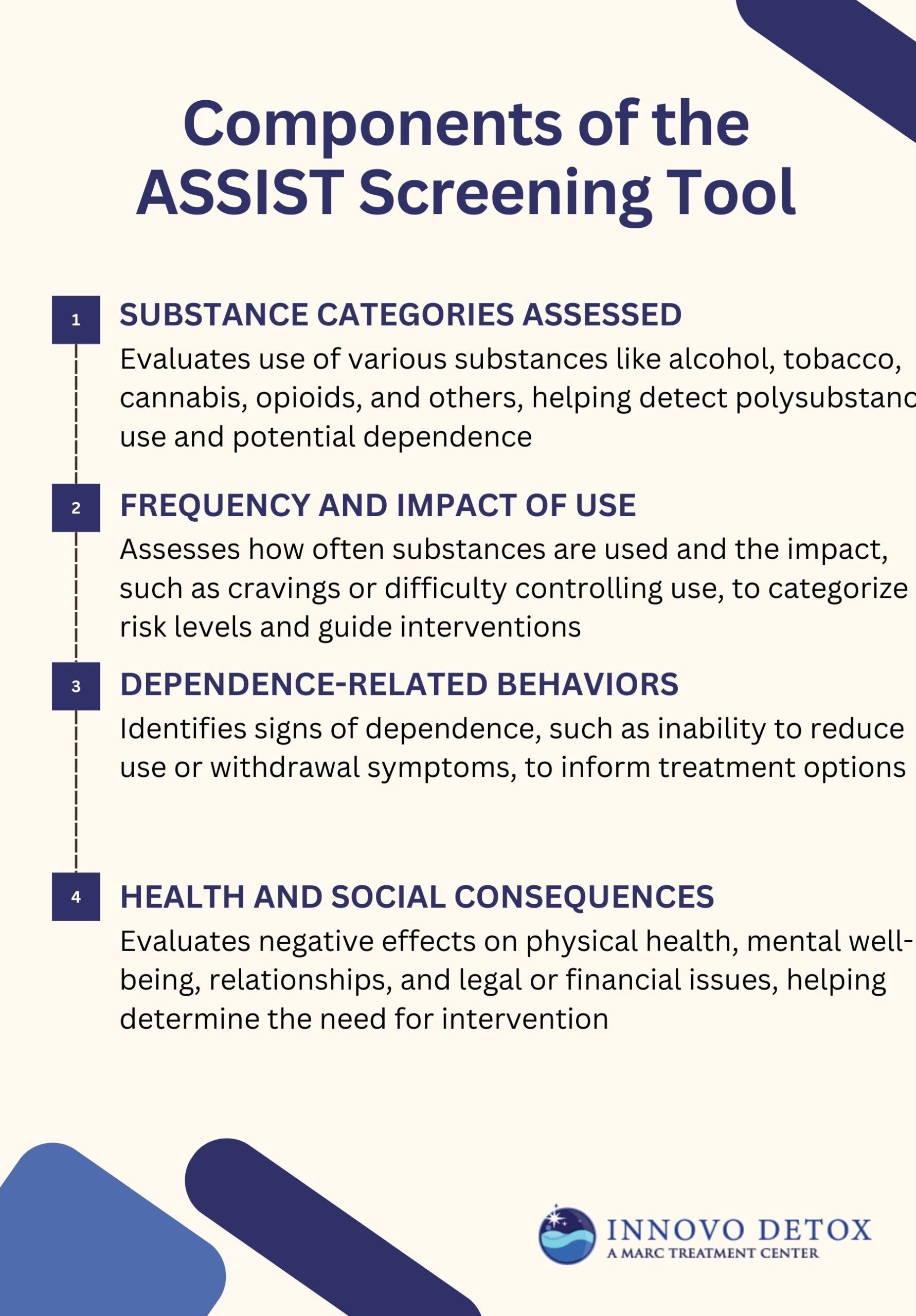
Substance Categories Assessed
The ASSIST evaluates an individual’s use of various substances, including alcohol, tobacco, cannabis, opioids, cocaine, amphetamines, inhalants, sedatives, and hallucinogens. By covering a wide range of substances, it ensures a comprehensive substance use assessment, identifying both legal and illegal drug use.
Frequency and Impact of Use
ASSIST assesses how an individual uses substances, ranging from never to daily or almost daily. It also examines the impact of use, such as difficulty in controlling intake, strong cravings, or the need for larger amounts to achieve the same effect. Understanding frequency and impact helps categorize individuals into low, moderate, or high-risk groups, guiding appropriate interventions.
Dependence-Related Behaviors
The screening tool identifies signs of dependence, such as inability to reduce use, withdrawal symptoms, and neglect of responsibilities due to substance use. Dependence is a key indicator of substance use disorder, and recognizing these behaviors enables healthcare providers to recommend treatment strategies, including counseling or medical detoxification.
Health and Social Consequences
ASSIST evaluates the negative health and social effects of substance use, including physical health issues, mental distress, relationship problems, and legal or financial difficulties. By assessing these consequences, the tool helps determine the severity of substance-related harm and the need for intervention.
How Many Questions Are in the ASSIST Test?
There are eight questions in the ASSIST test designed to provide a structured screening of an individual’s substance use patterns, risks, and consequences. Each question in the ASSIST questionnaire targets a specific aspect of substance use, ensuring a comprehensive risk assessment.
- Lifetime Use: Identifies whether a person has ever used any substances, establishing a baseline for assessment.
- Frequency of Use in the Past 3 Months: Evaluates recent substance use patterns, helping determine current risk levels.
- Craving or Strong Desire to Use: Assesses psychological dependence and urges to consume substances.
- Problems Due to Use: Examines whether substance use has caused health, financial, or interpersonal issues.
- Failure to Meet Responsibilities: Identifies functional impairment, such as missed work or school due to substance use.
- Concern from Others: Measures external concern, including feedback from family, friends, or healthcare professionals about substance use.
- Attempts to Cut Down: Assesses efforts to reduce or quit substance use, indicating awareness of its negative impact.
- Injection Drug Use: Screens for risky behaviors associated with intravenous drug use, which increase the risk of infections and other serious health conditions.
How Does ASSIST Differ from ASSIST-FC?
ASSIST-FC differs from ASSIST in its format, focus areas, and intended use for specific populations. While the original ASSIST is a comprehensive substance use screening tool designed for general populations, ASSIST-FC (ASSIST-Focused on Frequency and Concerns) is a simplified version that emphasizes focused screening of substance use frequency and related concerns.
The ASSIST questionnaire assesses multiple aspects of substance use, including dependence symptoms and social consequences, whereas ASSIST-FC simplifies the assessment by concentrating on patterns of use and associated risks. This adaptation makes ASSIST-FC more suitable for primary healthcare settings, where quick and efficient risk assessment is needed.
How Is the ASSIST Test Administered (How It Works)?
The ASSIST test is administered through a structured interview conducted by a healthcare professional or self-reported in some settings. ASSIST works by asking individuals a series of eight questions about their substance use history, frequency, dependence symptoms, and related health or social consequences. Each response is assigned a numerical score, which is then totaled to determine the level of risk assessment.
The ASSIST results are categorized as low, moderate, or high risk. Based on the screening process, individuals receive customized feedback: low-risk users require no intervention, moderate-risk users benefit from brief counseling, and high-risk users are recommended for specialized treatment.
This substance use evaluation ensures that individuals receive appropriate guidance to address their substance use behaviors.
How Does ASSIST Categorize Substance Use Risk?
The ASSIST test categorizes substance use risk into low, moderate, and high-risk levels based on scoring thresholds derived from an individual’s responses.
Low-risk users score in the 0 to 10 range for alcohol and 0 to 3 range for other substances, indicating minimal or no harmful use, requiring no intervention. Moderate-risk individuals, scoring between 11 to 26 for alcohol and 4 to 26 for other substances, exhibit patterns of use that lead to health or social consequences, warranting brief intervention and education.
High-risk users score 27 or above, suggesting substance dependence or severe problems, requiring specialized treatment such as counseling or rehabilitation.
Can ASSIST Be Self-administered?
Yes, ASSIST can be self-administered in certain settings, particularly through digital versions and self-screening questionnaires.
Self-administration is feasible in environments where individuals feel more comfortable disclosing substance use privately, such as online health platforms or structured patient-led assessments in clinics.
Self-administered ASSIST produces results comparable to interviewer-led assessments, making it an effective tool for preliminary substance use evaluation. The limitations of self-administered ASSIST include the potential for underreporting or misunderstanding questions, which affect accuracy.
Therefore, while self-screening is a valuable first step, a follow-up with a healthcare professional ensures proper interpretation and guidance.
What Formats Are Available for the ASSIST Test?
The ASSIST test is available in paper-based and digital formats, ensuring broad accessibility across different healthcare and self-screening settings. These variations allow for flexible screening methods.
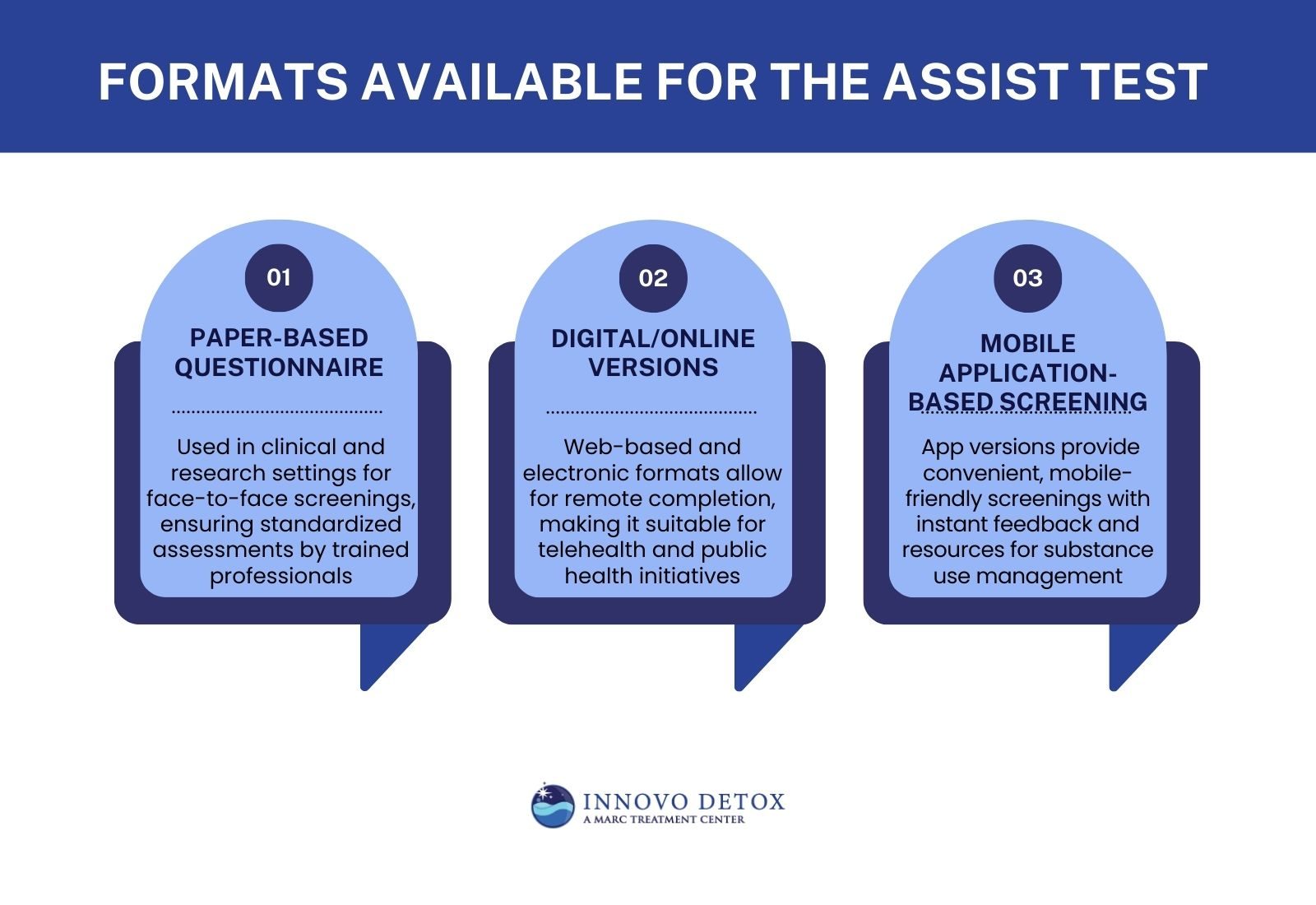
- Paper-Based Questionnaire: The traditional paper-based ASSIST is widely used in clinical and research settings, allowing healthcare professionals to conduct face-to-face screenings. This format is ideal for structured interviews and ensures a standardized assessment when administered by trained professionals.
- Digital/Online Versions: The digital adaptation of ASSIST includes web-based and electronic formats that enable individuals to complete the assessment remotely. Online versions improve test accessibility and facilitate self-screening, making them suitable for telehealth and public health campaigns.
- Mobile Application-Based Screening: Some organizations have developed mobile-friendly versions of the ASSIST test, allowing users to assess their substance use through apps on smartphones or tablets. These versions enhance convenience and engagement, providing instant feedback and resources for substance use management.
Where Is ASSIST Commonly Used (Application)?
The ASSIST screening tool is commonly used in primary care settings, mental health clinics, addiction treatment centers, and research studies to identify and address substance use issues.
In primary care, it serves as an early detection tool, allowing healthcare providers to assess substance use risks during routine checkups.
Mental health clinics integrate ASSIST to evaluate co-occurring substance use disorders, ensuring comprehensive patient care. Facilities like Innovodetox utilize it in addiction treatment programs to guide interventions for individuals seeking alcohol addiction treatment and recovery services.
Public health programs and research studies rely on ASSIST to collect data on substance use trends, shaping policies and prevention strategies worldwide.
Can ASSIST be Used in Schools or Workplaces?
Yes, the ASSIST test can be used in schools and workplaces as part of early intervention programs to identify and address substance use concerns. In school-based prevention, counselors and educators administer ASSIST to assess students at risk for substance use and provide necessary support through counseling and education.
In workplaces, Employee Assistance Programs (EAPs) utilize ASSIST as a workplace screening tool to help employees manage substance use issues before they impact job performance.
Is ASSIST Suitable for Adolescents?
Yes, the ASSIST test is suitable for adolescent screening, but age-specific concerns must be considered, as substance use patterns and risks differ from adults. While ASSIST provides valuable insights into substance use risk among youth, alternative screening tools like the CRAFFT questionnaire are preferred for younger populations due to their focus on early experimentation and behavioral consequences.
What Are the Benefits of ASSIST?
Common benefits of the ASSIST test include its ability to screen for multiple substances, assess both risky and dependent use, and provide structured intervention recommendations. It is widely used in healthcare and public health settings due to its effectiveness in detecting substance-related risks and guiding appropriate interventions.
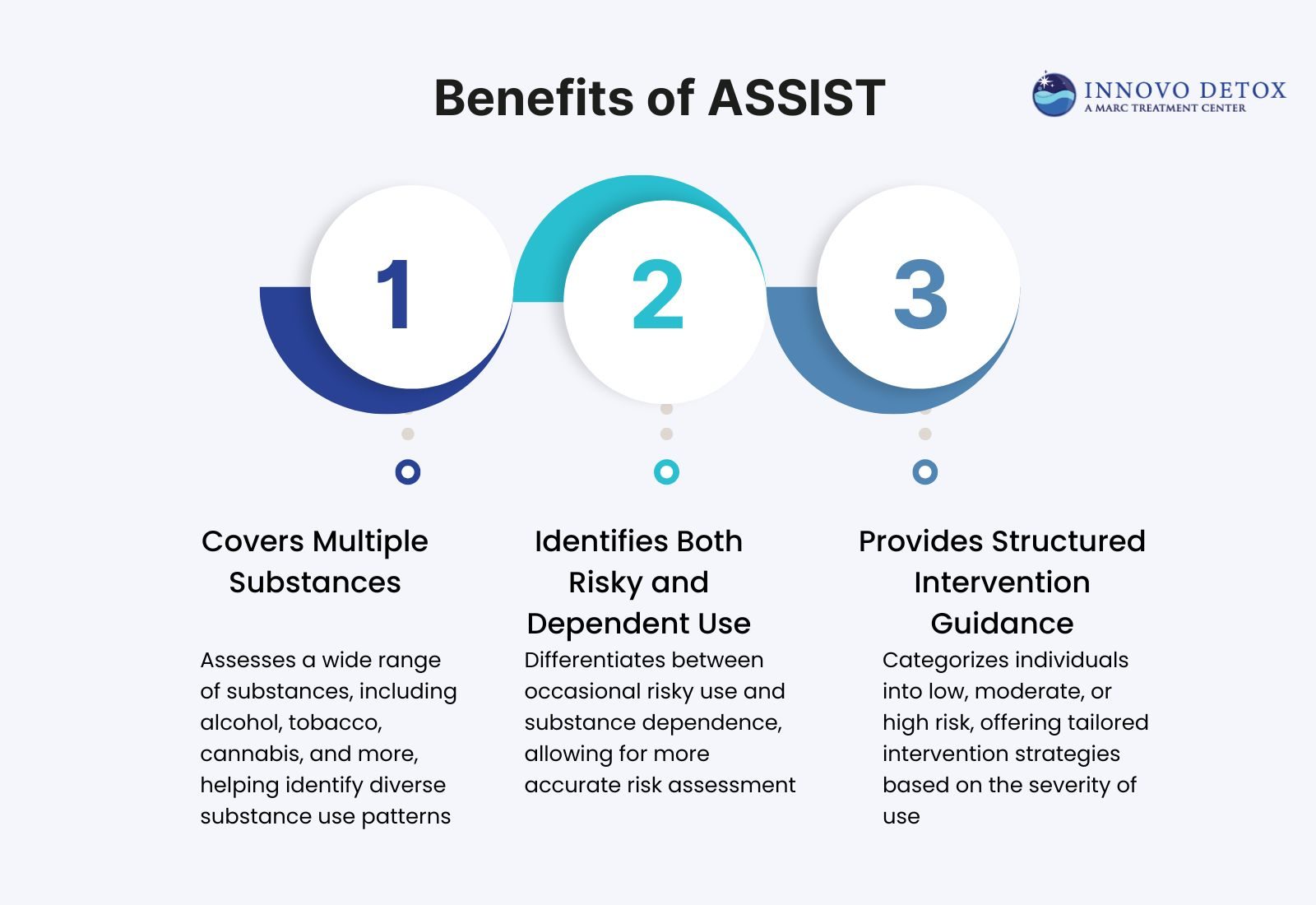
Covers Multiple Substances
Unlike some screening tools that focus on specific drugs, ASSIST assesses a wide range of substances, including alcohol, tobacco, cannabis, opioids, stimulants, and other drugs. This comprehensive evaluation helps healthcare providers identify patterns of use across different substances.
Identifies Both Risky and Dependent Use
The ASSIST test distinguishes between occasional risky use and substance dependence, enabling a more accurate risk assessment. This allows for targeted interventions based on the severity of an individual’s substance use.
Provides Structured Intervention Guidance
Based on scoring thresholds, ASSIST categorizes users into low, moderate, or high risk and provides clear intervention strategies, ranging from brief counseling to specialized treatment referrals. This structured approach ensures that individuals receive the appropriate level of care.
Is Assist Legally Used In Pennsylvania?
Yes, ASSIST is legally used in Pennsylvania. Its application aligns with best practices in behavioral health and is supported by state and federal guidelines for substance use screening.


