
Alcohol dependence occurs when you develop alcohol tolerance, withdrawal symptoms, and a lack of control over your drinking behavior, despite the negative consequences it brings. In Pennsylvania, approximately 6.1% of adults aged 18 or older reported having an alcohol use disorder in 2022, according to the Substance Abuse and Mental Health Services Administration.
Genetic factors, environmental stressors, and mental health disorders influence the main causes of alcohol dependence. However, the treatment for alcohol dependence includes a combination of medications and behavioral therapies.
What Is Alcohol Dependence?
Alcohol dependence is a medically recognized condition where a person develops a physical and psychological need for alcohol.
It goes beyond casual drinking or social use; individuals with alcohol dependence experience intense alcohol cravings, lose control over how much they drink, and continue using alcohol despite harmful consequences.
This pattern of compulsive drinking is tied to changes in brain chemistry, particularly involving neurotransmitters like GABA and dopamine, which regulate stress, pleasure, and inhibition. Repeated alcohol exposure disrupts these systems, reinforcing psychological dependence and creating a cycle of chronic alcohol use.
Recognizing that alcohol addiction is not a lack of willpower but a diagnosable medical condition is critical. According to the Substance Use Epidemiology Report by the Pennsylvania Department of Health in 2022, approximately 5.6% of adults in the state met the criteria for alcohol dependence or abuse, highlighting the urgency for proper intervention.
What Is the Difference Between Alcohol Dependence, Alcohol Abuse, and Addiction?
The difference between alcohol dependence, alcohol abuse, and alcohol addiction lies in their severity, symptoms, and impact on daily life. Alcohol abuse refers to a pattern of drinking that leads to problems at work, school, or in relationships, but without a strong physical compulsion.
In contrast, alcohol dependence includes both a physical dependence on alcohol (e.g., withdrawal symptoms and tolerance) and a psychological dependence, where the individual feels they need alcohol to function normally.
Alcohol addiction, used interchangeably with dependence in clinical settings, emphasizes the behavioral aspect, such as craving alcohol, loss of control, and continued alcohol use despite harm.
While these terms overlap, dependence is generally considered a more advanced stage of abuse, and addiction encompasses the chronic, relapsing nature of the condition. In Pennsylvania, about 6.1% of adults were classified as having an alcohol addiction based on DSM-5 criteria, according to the 2022 Behavioral Health Barometer by SAMHSA.
What Are the Signs and Symptoms of Alcohol Dependence?
The signs and symptoms of alcohol dependence are physical, behavioral, psychological, and social. These include increased tolerance, withdrawal symptoms, cravings, neglecting responsibilities, and a compulsive desire to drink despite negative consequences.
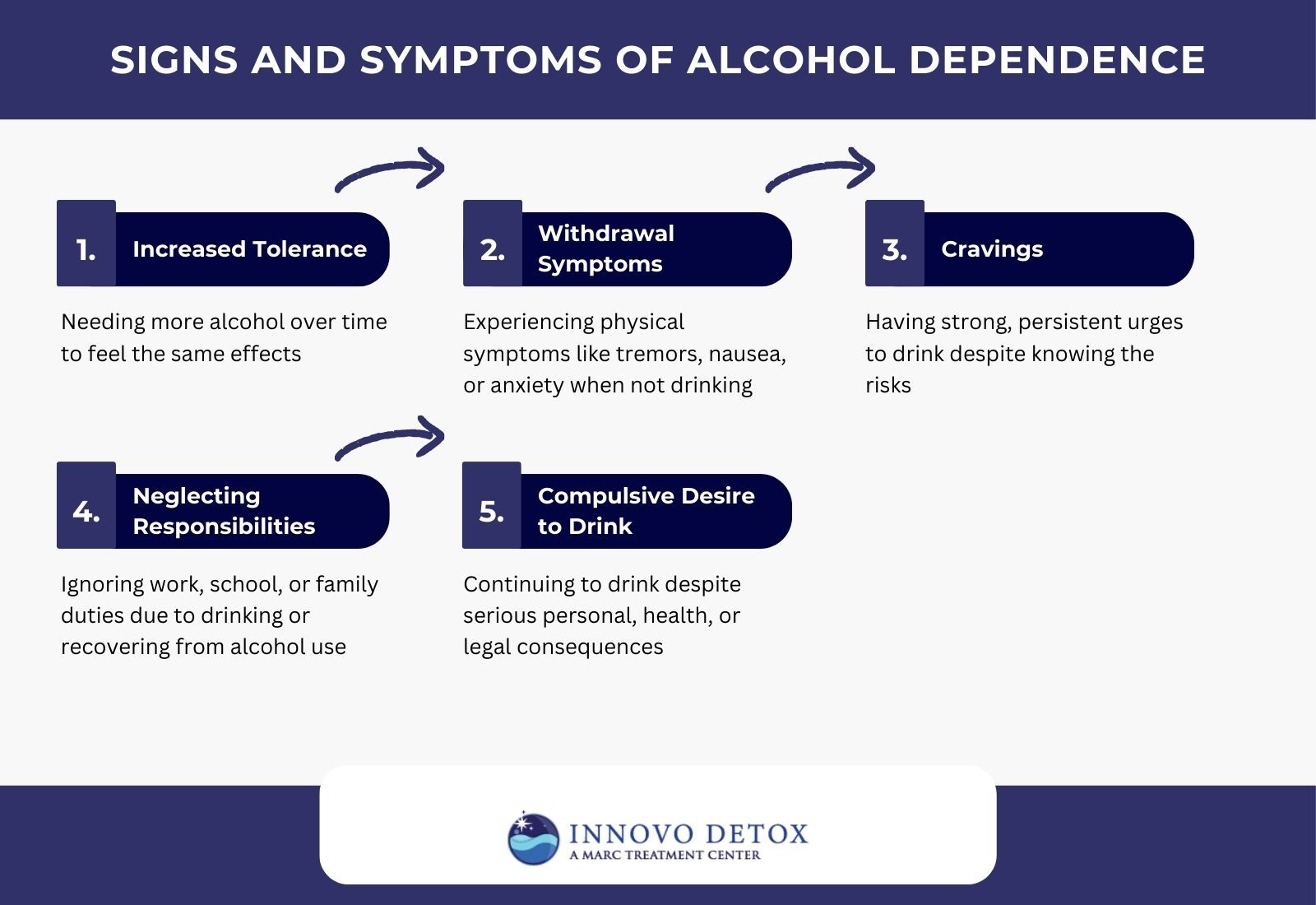
The signs and symptoms of alcohol dependence are explained below:
- Increased Tolerance: As alcohol dependence progresses, you need more alcohol to achieve the same effect. This is due to the body’s adaptation to regular alcohol intake, which reduces its response to the substance.
- Withdrawal Symptoms: When alcohol use is suddenly stopped, you experience symptoms such as sweating, tremors, nausea, anxiety, and insomnia. These withdrawal symptoms reflect the body’s physical dependence on alcohol.
- Cravings: People with alcohol dependence frequently report a strong and persistent urge to drink, even when they are aware of the harm it causes. This craving leads to compulsive drinking and is a central feature of alcohol addiction.
- Neglecting Responsibilities: You begin to ignore work, school, and family duties in favor of drinking or recovering from its effects. This disruption in daily life is a behavioral indicator of alcohol dependence.
- Compulsive Desire to Drink: Despite health risks, damaged relationships, or legal issues, people with alcohol dependence continue drinking uncontrollably. This reflects the loss of voluntary control over alcohol intake.
What Are the Symptoms of Alcohol Withdrawal?
The symptoms of alcohol withdrawal are tremors, anxiety, insomnia, and in severe cases, seizures or hallucinations. These symptoms begin within hours of reducing or stopping alcohol intake and are a clear indicator of physical dependence on alcohol and alcohol withdrawal.
According to the Pennsylvania Department of Drug and Alcohol Programs (Alcohol and Substance Use Trends in PA, 2022), approximately 42% of individuals admitted for alcohol-related treatment experienced moderate to severe withdrawal symptoms upon intake.
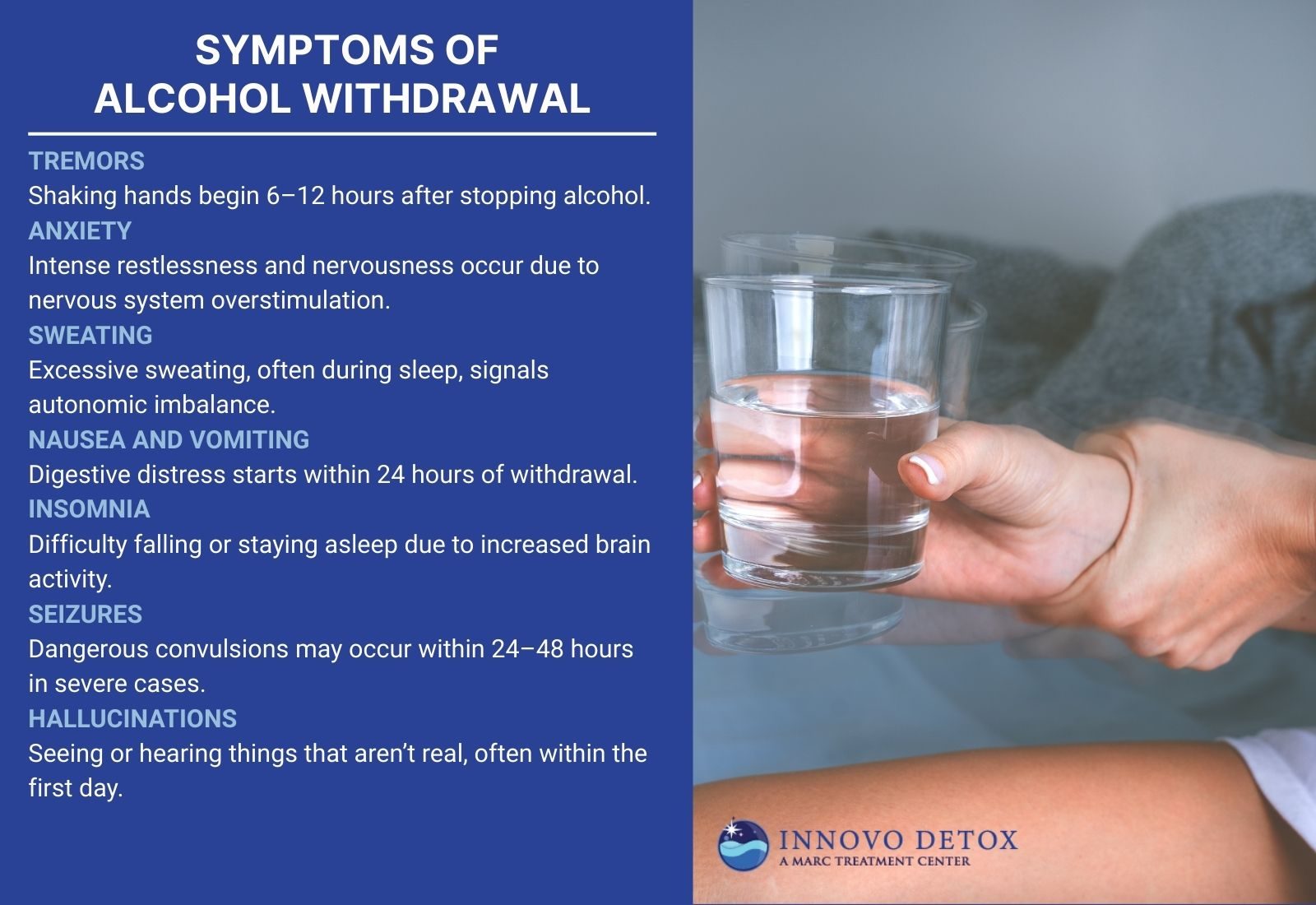
The symptoms of alcohol withdrawal are explained below:
- Tremors: One of the earliest signs of withdrawal, tremors begin within 6 to 12 hours after the last drink. These involuntary shakes, especially in the hands, indicate the nervous system’s overreaction to the absence of alcohol.
- Anxiety: Individuals in withdrawal feel intensely anxious or restless, even in calm environments. This occurs because alcohol depresses the central nervous system, and its sudden removal triggers overstimulation.
- Insomnia: Sleep disturbances are common during withdrawal, lasting for several nights. Even if physically tired, individuals find it hard to fall or stay asleep due to heightened brain activity.
- Seizures: In more severe cases, withdrawal leads to seizures, particularly in individuals with long-term chronic alcohol use. These seizures occur within 24 to 48 hours and are life-threatening without medical supervision.
- Hallucinations: Some individuals experience visual or auditory hallucinations, seeing or hearing things that aren’t there. This severe symptom usually develops 12 to 24 hours after cessation and signals acute alcohol withdrawal.
How do Healthcare Professionals diagnose Alcohol Dependence?
Healthcare professionals diagnose alcohol dependence through clinical interviews, behavioral assessments, and the application of standardized diagnostic criteria, primarily the DSM-5.
Under the DSM-5, alcohol dependence falls under Alcohol Use Disorder (AUD), which is diagnosed when a person meets at least two of eleven criteria within a 12-month period—these include tolerance, withdrawal symptoms, craving alcohol, and continued alcohol use despite consequences.
Healthcare providers assess both physical and psychological patterns to determine the severity, which is mild, moderate, or severe.
What Causes Alcohol Dependence?
The causes of alcohol dependence are genetic predisposition, environmental influences, and repeated alcohol exposure that alters brain chemistry. Factors such as family history, early drinking, trauma, and social pressure contribute to the development of alcohol addiction and long-term dependence.
According to the Pennsylvania Youth Survey Report by the Pennsylvania Commission on Crime and Delinquency (2022), individuals who begin drinking before age 15 are four times more likely to develop alcohol dependence later in life.

The causes of alcohol dependence are explained below:
- Genetic Predisposition: A family history of alcohol use disorder significantly increases the risk of developing alcohol dependence.
- Early Exposure to Alcohol: Drinking at a young age interferes with brain development and increases the risk of long-term alcohol use disorder.
- Environmental Influences: Growing up in an environment where alcohol use is normalized or heavily promoted contributes to dependency. Peer pressure, lack of parental supervision, and socioeconomic challenges are major drivers.
- Mental Health Conditions: Individuals with anxiety, depression, or PTSD use alcohol to self-medicate, increasing their risk of alcohol addiction.
What Are the Effects of Alcohol Dependence?
The effects of alcohol dependence are liver damage, cognitive impairment, relationship breakdowns, financial difficulties, and increased risk of accidents or injury. These consequences stem from the long-term impact of chronic alcohol use on both the brain and body, as well as the disruption it causes in social and occupational functioning.

The effects of alcohol dependence are as follows:
- Liver Damage: Long-term alcohol use overworks the liver, leading to conditions such as fatty liver, hepatitis, and cirrhosis. These diseases reduce the liver’s ability to filter toxins, which can be life-threatening if untreated.
- Cognitive Impairment: Alcohol disrupts neurotransmitters in the brain and damages neural pathways, affecting memory, attention, and decision-making. Over time, individuals experience persistent brain fog or the early onset of dementia.
- Relationship Breakdowns: Alcohol dependence causes emotional volatility, neglect, and conflict in personal relationships.
- Financial Difficulties: Ongoing alcohol purchases, healthcare costs, and job loss due to poor performance or absenteeism drain personal finances. This financial strain adds stress, further fueling alcohol use.
- Increased Risk of Accidents or Injury: Alcohol impairs coordination and judgment, raising the likelihood of falls, car crashes, and workplace accidents.
How Is Alcohol Dependence Treated?
Alcohol dependence is treated by a combination of behavioral therapy, medication, and support groups, aiming to help individuals reduce or stop alcohol consumption. A combination of these alcohol addiction treatments increases the chances for sobriety.
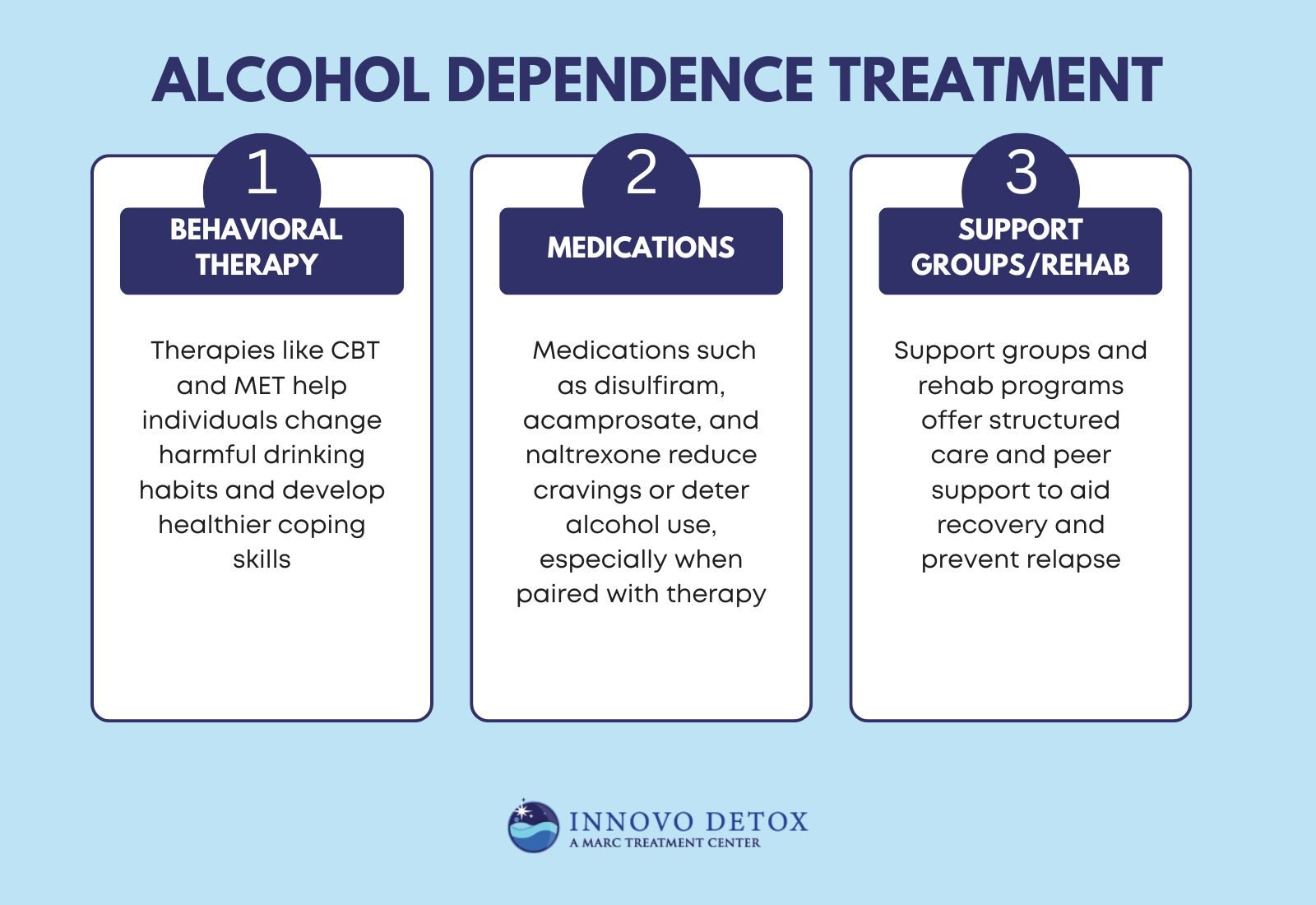
The ways alcohol dependence is treated include the following:
- Behavioral Therapy: Behavioral therapies, such as Cognitive Behavioral Therapy (CBT) and Motivational Enhancement Therapy (MET), are designed to help individuals identify and change problematic drinking behaviors.
- Medications: Several medications help individuals manage alcohol dependence by reducing cravings or inducing adverse reactions to drinking. Disulfiram, acamprosate, and naltrexone are commonly prescribed to either reduce alcohol consumption or make drinking unpleasant.
- Support Groups and Rehabilitation Programs: Support groups like Alcoholics Anonymous (AA) provide a peer-driven environment where individuals share experiences, receive encouragement, and stay accountable in their recovery journey.
What Are the Risks Associated With Unsupervised Alcohol Withdrawal?
The risks associated with unsupervised alcohol withdrawal include severe symptoms such as seizures, delirium tremens (DTs), and even death.
Withdrawal from alcohol causes dangerous complications like dehydration, electrolyte imbalances, and increased heart rate, making medical supervision crucial for safety.
According to the National Institute on Alcohol Abuse and Alcoholism in Alcohol Withdrawal Syndrome: A Guide to Diagnosis and Management (2019), untreated withdrawal leads to life-threatening conditions in 5% of severe cases, underlining the importance of professional monitoring during detoxification.
How Can Alcohol Dependence Be Prevented?
Alcohol dependence can be prevented through early education, healthy coping strategies, and support systems. By addressing risk factors such as early drinking and mental health issues, individuals reduce their chances of developing alcohol addiction.
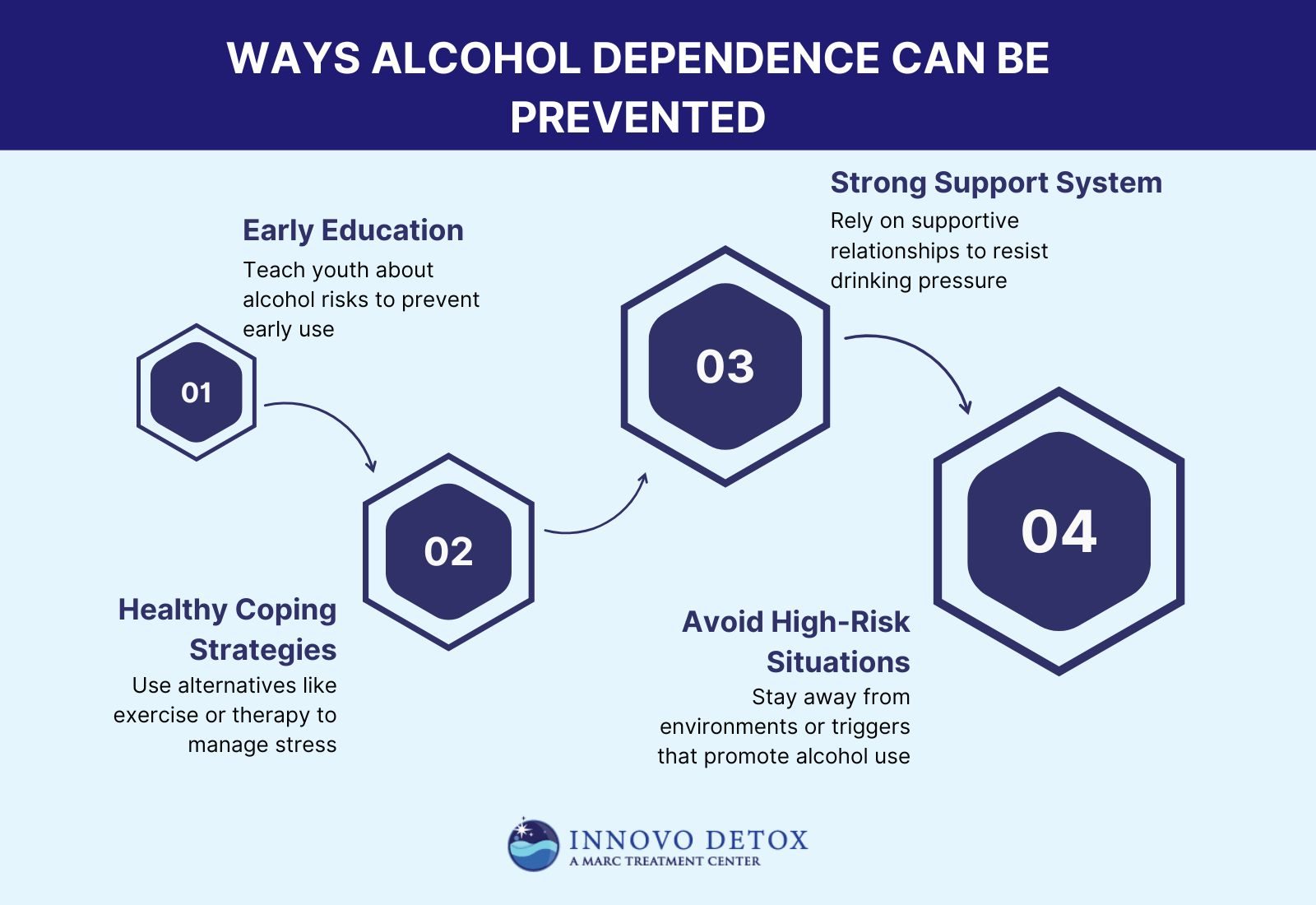
Ways alcohol dependence can be prevented include the following:
- Early Education: Teaching individuals, especially young people, about the risks of alcohol use deters early initiation. Education on the consequences of alcohol use disorder and the dangers of binge drinking helps reduce the likelihood of alcohol misuse.
- Developing Healthy Coping Strategies: Individuals should learn how to manage stress, anxiety, and depression without relying on alcohol.
- Building a Strong Support System: Having a supportive family, friends, or peers helps individuals resist pressure to drink and provides encouragement during difficult times. Support groups, such as Alcoholics Anonymous, offer ongoing help for those at risk.
- Avoiding High-Risk Situations: Steering clear of social environments that encourage heavy drinking, such as parties or bars, helps individuals maintain control.
How Do I Find Alcoholics Anonymous Support Groups in Pennsylvania?
You can find Alcoholics Anonymous (AA) support groups in Pennsylvania by accessing AA websites, hospitals, and treatment centers. AA groups are available in many locations, and there are several ways to locate a meeting near you.
Ways to find Alcoholics Anonymous support groups near you include:
- AA Website and Online Directory: The official AA website provides an online directory where individuals can search for meetings by location. This directory allows you to find nearby in-person or virtual meetings based on your city, state, or country.
- Local Hospitals and Treatment Centres: Many hospitals and addiction treatment centers offer AA meetings or refer individuals to nearby support groups. These institutions have partnerships with local AA chapters, making it easy to connect.
- Community Centres and Religious Institutions: Many community centers, churches, and other religious institutions host AA meetings as part of their outreach programs. These meetings are open to anyone seeking help, regardless of religious affiliation.
- Mental Health Professionals and Therapists: Healthcare providers, including therapists, counselors, and social workers, recommend AA meetings. They provide information on times, locations, and types of meetings that best suit your needs.
What Are the Diagnostic Criteria for AUD?
The diagnostic criteria for Alcohol Use Disorder (AUD) are outlined in the Diagnostic and Statistical Manual of Mental Disorders (DSM-5) and are based on a set of behavioral and physical symptoms. To be diagnosed with AUD, an individual must meet at least two of the following eleven criteria within a 12-month period:
The diagnostic criteria for AUD include the following:
- Drinking more or longer than intended
- Unsuccessful efforts to cut down or control drinking
- Spending a significant amount of time obtaining, using, or recovering from alcohol
- Craving or a strong desire to drink
- Drinking resulting in failure to fulfill major role obligations at work, school, or home
- Continuing to drink despite interpersonal or social problems caused by alcohol
- Giving up or reducing important activities in favor of drinking
- Drinking in situations where it is physically hazardous (e.g., driving, operating machinery)
- Developing a tolerance (needing more alcohol to achieve the desired effect)
- Experiencing withdrawal symptoms when not drinking
- Drinking despite knowing it is causing or worsening physical or psychological problems
The severity of AUD is classified based on the number of criteria met: mild (2-3 criteria), moderate (4-5), and severe (6 or more). Early diagnosis is essential for effective treatment and reducing the risk of long-term damage.
Can Alcohol Dependence Lead to Other Substance Abuse?
Yes, alcohol dependence can lead to the abuse of other substances. Individuals with alcohol use disorder develop cross-addictions, particularly to drugs such as opioids, marijuana, or prescription medications, as a means of self-medication or due to overlapping risk factors.
In Pennsylvania, the 2023 National Survey on Drug Use and Health (NSDUH) indicates that approximately 9.4% of individuals aged 12 or older reported a past-year drug use disorder, with 10.1% of adults aged 18 or older experiencing alcohol use disorder.
Is Alcohol Dangerous During Pregnancy?
Yes, alcohol is dangerous during pregnancy. Consuming alcohol during pregnancy leads to fetal alcohol spectrum disorders (FASDs), which cause lifelong physical, cognitive, and behavioral problems in the child.
Can Alcohol Dependence Cause Fetal Alcohol Syndrome?
Yes, alcohol dependence can cause fetal alcohol syndrome (FAS). Drinking alcohol during pregnancy, especially in the first trimester, interferes with fetal development, leading to growth defects, facial abnormalities, and intellectual disabilities.


