
Disulfiram is a prescription medication used to help you stay alcohol-free. It’s one of the oldest FDA-approved treatments for alcohol use disorder (AUD) and works best when combined with counselling or support.
Disulfiram creates a strong deterrent by blocking the enzyme ALDH, causing an intense reaction, like nausea, flushing, or rapid heartbeat, if you drink. This response makes alcohol physically unbearable, helping you stay committed to sobriety.
According to the same NCDAS report, Ohio experiences an average of 5,739 annual deaths attributable to excessive alcohol use.
Typical dosage starts at 500 mg daily, then drops to 250 mg for maintenance. Because it affects your liver, you’ll need regular check-ups. Some side effects include fatigue or a metallic taste, but serious risks exist, especially with alcohol.
Alternatives like Naltrexone, Acamprosate, or Nalmefene offer different approaches without that harsh reaction.
What Is Disulfiram?
Disulfiram is an FDA-approved prescription drug used to treat alcohol dependence by discouraging alcohol consumption. Chemically known as tetraethylthiuram disulfide, Disulfiram works by interfering with alcohol metabolism, causing unpleasant reactions when alcohol is consumed.
It is marketed under the brand name Antabuse and is prescribed to individuals recovering from alcoholism as part of a comprehensive treatment plan that includes counseling and behavioral therapy.
Disulfiram disrupts alcohol metabolism, leading to adverse physiological effects when alcohol is consumed, which helps deter drinking.
The FDA initially approved Disulfiram in 1951 for alcoholism treatment, and it continues to play a significant role in medication-assisted treatment (MAT) for alcohol use disorder (AUD).
What Is the Mechanism of Action of Disulfiram?
The mechanism of action of Disulfiram is based on its ability to inhibit aldehyde dehydrogenase (ALDH), an enzyme necessary for alcohol breakdown in the liver. This inhibition causes a buildup of acetaldehyde, a toxic substance that triggers intense discomfort, including nausea, vomiting, headaches, and palpitations when alcohol is consumed.
This adverse reaction helps condition individuals to abstain from drinking, reinforcing sobriety by altering alcohol metabolism regulation.
How Does Disulfiram Affect the Body When Alcohol Is Consumed?
Disulfiram affects the body when alcohol is consumed by triggering an intense physiological reaction known as the Disulfiram-alcohol reaction (DAR). This reaction occurs within 10 to 30 minutes after alcohol intake and lasts for several hours, creating a strong deterrent against drinking.
Disulfiram affects the body when alcohol is consumed in the following ways:
- Nausea and Vomiting: When alcohol is ingested, Disulfiram leads to a rapid accumulation of acetaldehyde, a toxic byproduct of alcohol metabolism. The accumulation of acetaldehyde is the primary cause of these adverse effects, making alcohol consumption highly uncomfortable and potentially dangerous.
- Flushing and Sweating: One of the most immediate effects of the Disulfiram-alcohol reaction is a sudden dilation of blood vessels, leading to intense facial flushing and excessive sweating. This reaction begins about 10 minutes after alcohol enters the body and lasts for over an hour, significantly contributing to alcohol aversion
- Severe Headache: The increased levels of acetaldehyde disrupt cerebral blood flow, leading to migraine-like headaches that range from moderate to severe. Some individuals also experience blurred vision, dizziness, or light sensitivity, further reinforcing the harmful effects of alcohol consumption.
- Heart Palpitations and Chest Pain: Disulfiram causes significant cardiovascular effects, including rapid or irregular heartbeats, chest tightness, and palpitations. In extreme cases, severe cardiovascular reactions require immediate medical attention.
- Low Blood Pressure and Dizziness: The vasodilatory effects of acetaldehyde buildup cause a sudden drop in blood pressure (hypotension), leading to dizziness, lightheadedness, and fainting.
How Long Does Disulfiram Stay in Your System?
Disulfiram stays in the system for up to 2 weeks after the last dose because it irreversibly inhibits aldehyde dehydrogenase (ALDH), preventing the body from effectively metabolizing alcohol until new enzymes are produced.
Even after stopping the medication, its effects persist, making alcohol consumption dangerous during this period. Disulfiram has a half-life of 60 to 120 hours, meaning it takes several days to break down, and residual amounts remain stored in fatty tissues, further prolonging its presence.
How Do You Remove Disulfiram from Your Body?
You remove Disulfiram from your body by allowing time for natural metabolism, as the drug is not quickly eliminated. Since Disulfiram binds irreversibly to ALDH, the body must naturally produce new enzymes over time, meaning there is no immediate way to accelerate its clearance.
What Are the Uses of Disulfiram?
The uses of Disulfiram include its FDA-approved role in treating alcohol use disorder (AUD) by creating an aversive reaction to alcohol, which helps prevent relapse. As part of medication-assisted treatment (MAT), it has been shown to reduce alcohol consumption in motivated individuals significantly.
Beyond AUD, research is exploring Disulfiram’s potential in treating cocaine dependence, cancer, and infectious diseases due to its effects on enzymatic pathways and cellular metabolism.
Are There Off-Label Uses for Disulfiram?
Yes, there are off-label uses for Disulfiram, including experimental treatments for cocaine addiction, Lyme disease, and cancer. Disulfiram’s role in these areas remains investigational and is not yet a standard clinical treatment.
What Is the Recommended Dosage of Disulfiram?
The recommended starting dose of Disulfiram is 500 mg per day for 1 to 2 weeks, followed by a maintenance dose of 250 mg per day. According to clinical guidelines from the American Society of Addiction Medicine (ASAM), dosage is adjusted based on weight, liver function, and individual tolerance levels.
The table below shows the recommended dosage of disulfiram:
| Dosage Stage | Daily Dosage | Duration | Considerations |
| Initial Dose | 500 mg | 1 to 2 weeks | Maximum 500 mg/day; assess tolerance |
| Maintenance Dose | 250 mg | Long-term | Typical range: 125 to 500 mg/day based on response |
| Adjustments | 125 to 500 mg | Case-by-case | Based on weight, liver function, and side effects |
What Should You Do If You Miss a Dose of Disulfiram?
Do not take a double dose if you miss a dose of Disulfiram. If you remember soon after the scheduled time, take it as quickly as possible. However, if it is close to the next scheduled dose, skip the missed dose and continue with the regular schedule.
What Are the Side Effects of Disulfiram?
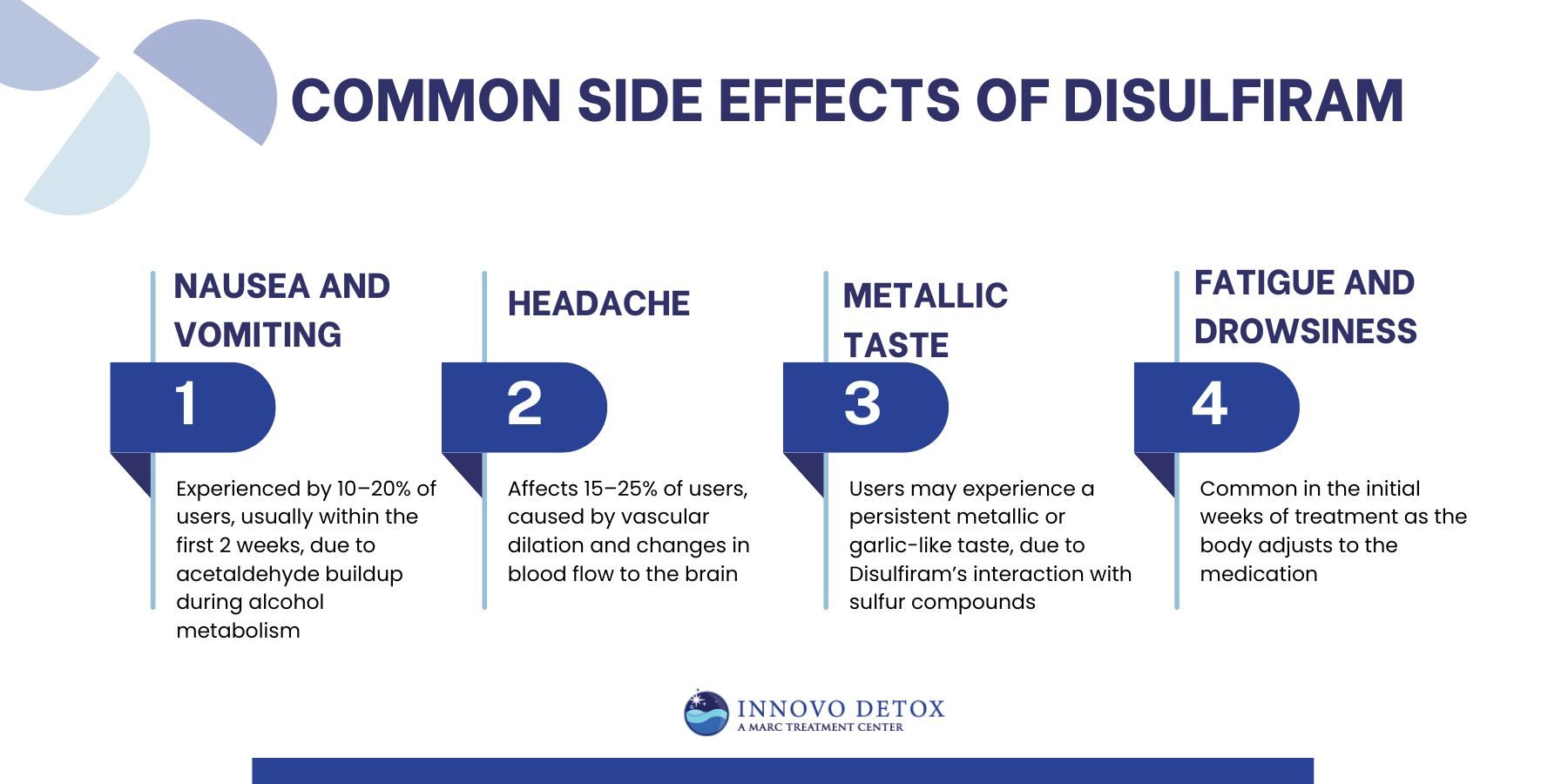
The side effects of Disulfiram include nausea, drowsiness, headache, and a metallic taste, which are common but mild. More severe reactions include liver toxicity, psychotic symptoms, and severe allergic reactions.
In rare cases, individuals experience overdose symptoms such as confusion, seizures, or difficulty breathing. Patients should consult a healthcare provider if they experience persistent or severe side effects while taking Disulfiram.
Is Disulfiram Hard on the Liver?
Yes, Disulfiram is hard on the liver and causes hepatotoxicity, particularly in those with existing liver disease. Patients on Disulfiram must have regular liver function tests (LFTs) to detect early signs of liver toxicity. Given this risk, the medication is prescribed with caution for individuals with a history of alcohol-induced liver disease.
Can Disulfiram Cause Weight Loss or Weight Gain?
No, Disulfiram is not directly linked to weight changes. However, discouraging alcohol consumption leads to reduced calorie intake, which results in weight loss. Some individuals report appetite suppression, while others experience mild metabolic effects.
Can Disulfiram Cause Mania or Mood Changes?
Yes, Disulfiram can cause mood changes, including depression, anxiety, and manic symptoms. This occurs due to its impact on dopamine and other neurotransmitters that regulate mood.
Does Disulfiram Cause Erectile Dysfunction?
Yes, Disulfiram contributes to erectile dysfunction in some users. It lowers libido and affects sexual function, potentially due to its impact on dopamine levels.
Can Disulfiram Cause Death?
Yes, Disulfiram can cause death in rare but severe cases. Fatalities result from respiratory depression, cardiovascular collapse, or extreme Disulfiram-alcohol reactions. Disulfiram-related fatalities are rare but have been reported, particularly in cases of overdose or excessive alcohol consumption while on the medication.
Are There Safer Alternatives to Disulfiram for Alcoholism?
Yes, there are safer alternatives to Disulfiram for alcoholism, which are Naltrexone, Acamprosate, and Baclofen. They are widely used in medication-assisted treatment (MAT).
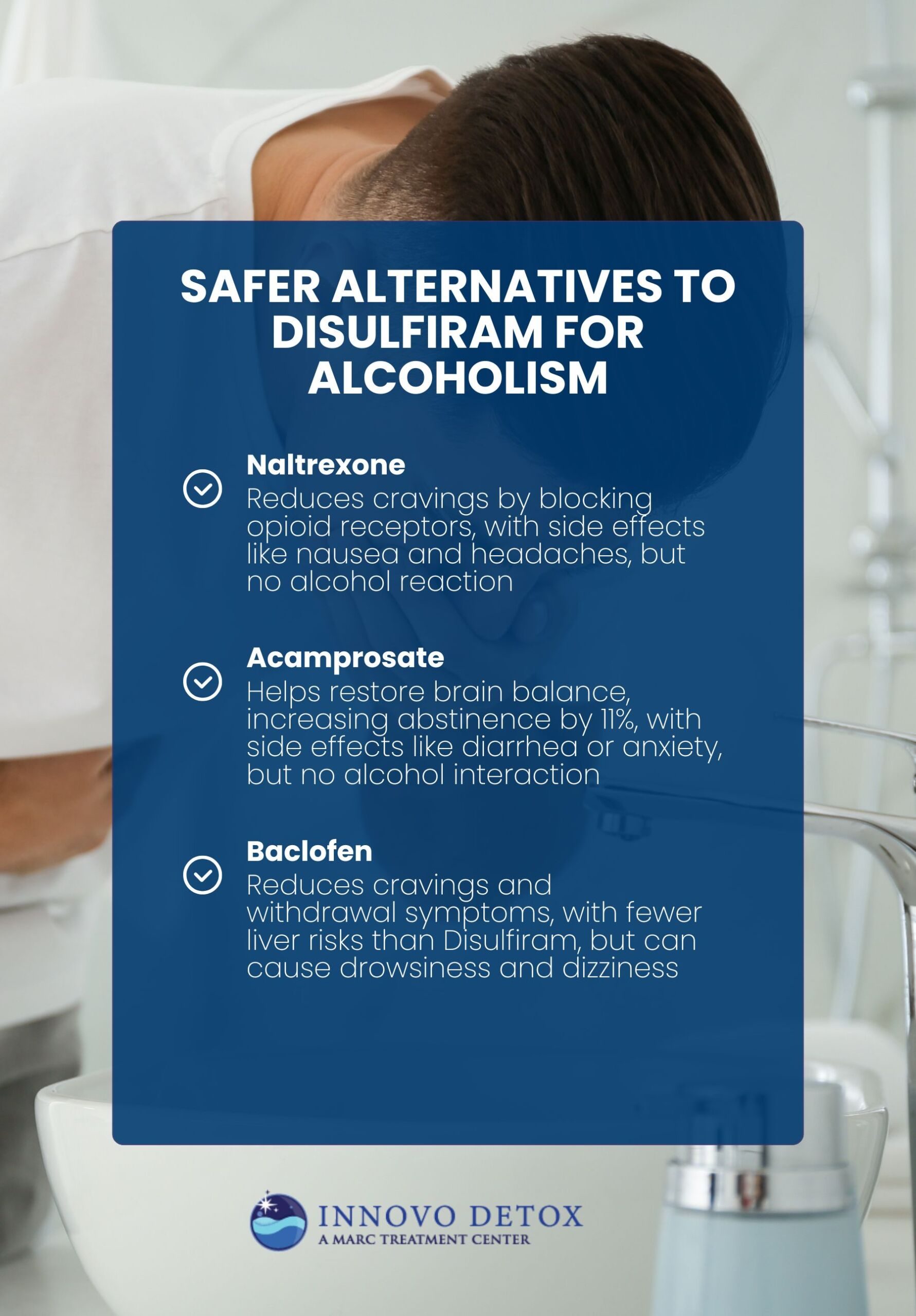
The following are the safer alternatives to Disulfiram for alcoholism:
- Naltrexone: This FDA-approved medication works by blocking opioid receptors, reducing alcohol cravings and the pleasurable effects of drinking. Naltrexone does not cause an aversive reaction but leads to nausea or headaches.
- Acamprosate: This medication helps restore neurotransmitter balance in the brain after alcohol withdrawal, reducing cravings and improving long-term abstinence rates. Unlike Disulfiram, it does not interact with alcohol but causes diarrhea or anxiety.
- Baclofen: Originally a muscle relaxant, Baclofen is increasingly used in relapse prevention by reducing alcohol cravings and withdrawal symptoms. Baclofen has fewer liver-related risks than Disulfiram but causes drowsiness and dizziness.
Can Therapy Be Used Instead of Disulfiram?
Yes, therapy can be used instead of Disulfiram for treating alcohol use disorder (AUD). Various forms of behavioral treatment have been shown to improve abstinence rates and reduce the risk of relapse.
Cognitive Behavioral Therapy (CBT) helps individuals recognize and change unhealthy drinking patterns. 12-step Programs, such as Alcoholics Anonymous (AA), provide a structured support system that fosters peer accountability and long-term sobriety. Many individuals succeed in these programs due to their emphasis on community and shared experiences.
Motivational Interviewing (MI) focuses on strengthening an individual’s commitment to quitting alcohol. While therapy is effective on its own, research suggests that combining behavioral therapy with medication-assisted treatment (MAT), including Disulfiram, further enhances recovery outcomes by addressing both psychological and physiological aspects of alcohol dependence.
Can You Take Naltrexone and Disulfiram Together?
Yes, Naltrexone and Disulfiram can be taken together, but with caution. While both medications are used in medication-assisted treatment (MAT) for alcohol use disorder (AUD), they have hepatotoxicity risks. Combining them increases the likelihood of liver enzyme elevation, requiring regular liver function tests (LFTs) to monitor potential damage.
Can You Buy Disulfiram Over the Counter in Pennsylvania?
No, you cannot buy Disulfiram over the counter in Pennsylvania. In Pennsylvania and the U.S., it is a prescription-only medication regulated by the FDA. As a controlled treatment for alcohol use disorder (AUD), Disulfiram must be obtained through a healthcare provider to ensure proper monitoring and safe use.
Is Disulfiram Safe for Long-Term Use?
Yes, Disulfiram is safe for long-term use, but its safety depends on individual health factors. While effective in maintaining abstinence, chronic use has been linked to liver toxicity and peripheral neuropathy in some patients. Long-term Disulfiram treatment is regularly monitored, especially for liver enzyme elevations.
How Soon After Taking Disulfiram Can You Drink Alcohol?
You can drink alcohol at least 14 days after taking Disulfiram. The medication’s effects persist for up to 2 weeks after discontinuation, meaning consuming alcohol too soon triggers severe reactions, including nausea, vomiting, chest pain, and dangerously low blood pressure. Patients should wait at least 14 days before drinking again to avoid serious health risks.
Can You Stop Taking Disulfiram Suddenly?
Yes, you can stop taking Disulfiram suddenly, as it does not cause physical dependence or withdrawal symptoms. However, stopping without an alternative treatment plan increases the risk of relapse. Patients consider switching to other evidence-based treatments, such as Naltrexone or Acamprosate, and continue therapy for long-term recovery.
What Happens If Disulfiram Treatment Is Stopped?
Discontinuing Disulfiram increases the risk of relapse, especially without alternative treatment. Individuals are advised to transition to a comprehensive recovery plan, including therapy, support groups, or medications like Naltrexone to maintain sobriety.


