
Inpatient alcohol rehab offers 24/7 care for those facing severe alcohol addiction, creating a focused space for healing. In this structured setting, you’ll go through detox, receive therapy, and join support groups — all under constant medical supervision.
Programs vary in length, from short-term (28–30 days) to long-term (60–90+ days). Some are tailored for people with co-occurring disorders, ensuring your mental health gets equal attention.
The benefits are clear: continuous care, fewer triggers, intensive therapy, and peer support — all geared toward long-term recovery. According to the Pennsylvania Department of Drug and Alcohol Programs (DDAP) 2020 Annual Report, over 30,000 individuals completed substance use treatment programs in the state, with approximately 60% success rate.
Inpatient alcohol rehab costs range from $5,000 to $20,000 for a 30-day program, depending on the facility and services offered.
What Is Inpatient Alcohol Rehab?
Inpatient alcohol rehab is a residential program designed to treat alcohol addiction. It provides 24/7 medical supervision and structured therapy programs to address both the physical and psychological aspects of addiction.
Patients reside at the treatment facility for the duration of their rehabilitation, ensuring a focused and distraction-free environment. This approach is particularly beneficial for individuals with severe alcohol dependence or those who have experienced previous relapses.
How Does Inpatient Alcohol Rehab Work?
Inpatient alcohol rehab works by offering a structured and intensive recovery program within a residential setting. It begins with a full medical evaluation to understand the severity of your alcohol use and any related health issues.
Next is detox, where your body safely clears alcohol under 24/7 medical care. Once stable, you move into therapy, including Cognitive Behavioral Therapy (CBT), individual counselling, and group sessions, all focused on changing harmful patterns and addressing emotional triggers.
Holistic treatments like yoga or meditation support your overall well-being, while relapse prevention strategies help you build lasting coping skills.
The final phase is aftercare planning, arranging ongoing therapy, support groups, and resources to help you stay sober after leaving the program.
How Long Does Inpatient Alcohol Rehab Last?
Inpatient alcohol rehab lasts 30, 60, or 90+ days, depending on the individual’s needs and progress. A 30-day program is common for those with less severe addiction, while longer durations, such as 60 or 90 days, are recommended for those with more intensive needs or a history of relapse.
The severity of addiction determines the duration, as more severe cases require extended care. Insurance coverage also influences the duration, as some plans only cover a limited number of days.
What Are The Types Of Inpatient Alcohol Rehab?
The types of inpatient alcohol rehab are short-term rehab and long-term rehab. Short-term rehab lasts 30 days, providing intensive care for those with moderate addiction issues. Long-term rehab, lasting 60 to 90 days, is designed for individuals with more severe addictions or a history of relapse.
The types of inpatient alcohol rehab include:
Short Term Rehab
Short-term rehab is a structured inpatient program lasting 30 days, aimed at providing intensive treatment for individuals with alcohol addiction. This duration offers a balance between comprehensive care and cost-effectiveness. However, they are not sufficient for those with severe addictions or co-occurring disorders.
Ideal candidates for short-term rehab are individuals with moderate alcohol use disorders who have a strong support system and stable living environment. These individuals benefit from the intensive focus of short-term programs without the need for extended residential care.
Long Term Rehab
Long-term rehab lasts 60 to 90 days, offering extended care for individuals with severe alcohol addiction. This extended duration allows for more intensive treatment and recovery, including therapies, medical detox, and relapse prevention strategies.
Long-term rehab is ideal for individuals who require more comprehensive treatment due to the severity of their addiction, a history of relapse, or co-occurring mental health disorders.
Are There Specialized Inpatient Rehab Programs?
Yes, there are specialized inpatient rehab programs designed to address specific needs based on individual demographics or conditions. These programs provide targeted care to individuals who benefit from tailored treatment plans.
Types of specialized inpatient rehab programs include:
- Veterans Programs: These programs cater to veterans who face unique challenges related to trauma, PTSD, or military service. Treatment includes trauma-informed care and therapies that address both addiction and the psychological impact of military service.
- Professional Programs: These programs are designed for individuals in high-stress professions, such as doctors or lawyers. They provide treatment with a focus on maintaining professional licensure and ensuring that individuals reintegrate into their careers after rehab.
- LGBTQ+ Programs: These programs focus on the unique needs of LGBTQ+ individuals, providing a supportive environment where issues such as discrimination or identity-related stressors are addressed alongside addiction treatment.
- Women-Only Programs: These programs provide a female-only environment, which is beneficial for women dealing with trauma, abuse, or the challenges of addiction. The focus is on building a supportive and non-judgmental space for recovery.
- Dual-Diagnosis Programs: These programs address both substance use disorder and co-occurring mental health conditions such as depression, anxiety, or PTSD. Treatment integrates both addiction care and mental health therapy to offer a more holistic recovery process.
What Are The Benefits Of Inpatient Alcohol Rehab?
The benefits of inpatient alcohol rehab are 24/7 medical care, a structured environment, removal from triggers, intensive therapy, peer support, and higher success rates. The continuous care and treatment reduce the chances of relapse and enhance long-term recovery.
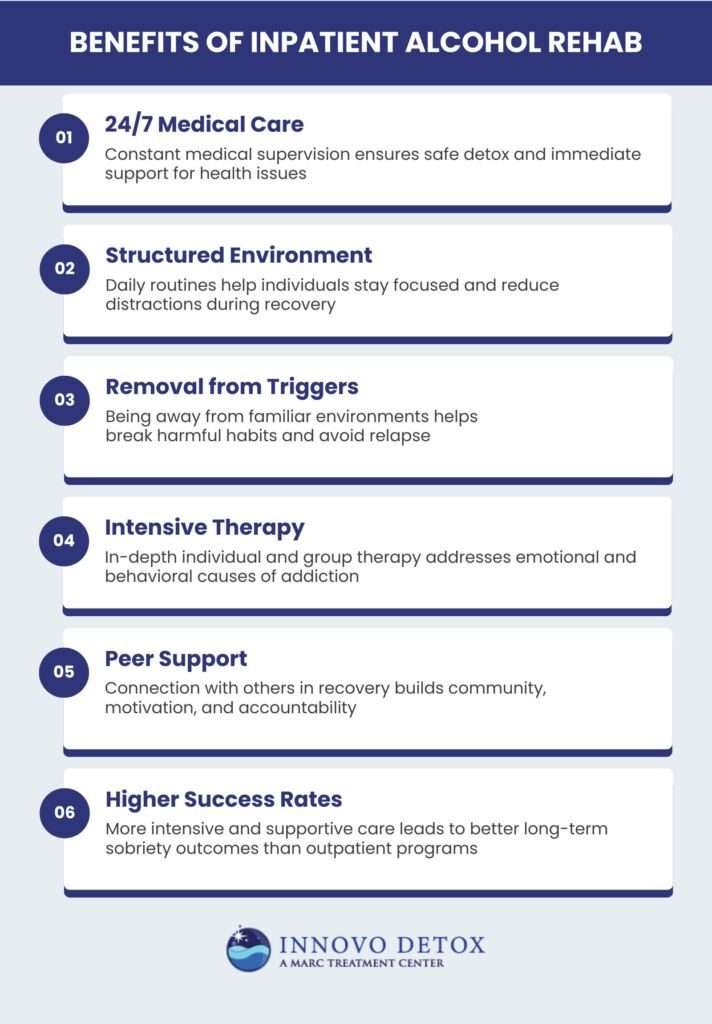
The benefits of inpatient alcohol rehab include:
- 24/7 Medical Care: Inpatient rehab provides round-the-clock medical supervision to manage withdrawal symptoms and prevent complications. This constant care ensures that individuals are safe during detox and throughout the treatment process.
- Structured Environment: A structured environment includes scheduled therapy sessions, meals, and rest periods, which help individuals stay on track. The stability of this environment reduces the likelihood of distractions or temptations that might lead to relapse.
- Removal from Triggers: Inpatient rehab removes individuals from their usual environments, which are filled with triggers for alcohol use. This isolation helps individuals break unhealthy patterns and focus solely on their recovery.
- Intensive Therapy: Intensive therapy, including individual and group counseling, targets both the emotional and behavioral aspects of addiction. Cognitive Behavioral Therapy (CBT) and other evidence-based practices help individuals address negative thought patterns and develop healthier coping mechanisms.
- Peer Support: Peer support is a critical aspect of inpatient rehab, as it allows individuals to connect with others who share similar struggles. Group therapy sessions and informal interactions provide a sense of community and accountability.
- Higher Success Rates: Inpatient rehab programs report higher success rates due to their structured and intensive nature.
What Treatment Approaches Are Used In Inpatient Alcohol Rehab?
The treatment approaches used in inpatient alcohol rehab are medical detoxification, individual counseling, group counseling, family therapy, behavioral therapies, medication-assisted treatment (MAT), 12-step programs, dual diagnosis treatment, and holistic therapies.
These therapies are designed to address both the physical and emotional aspects of alcohol addiction.
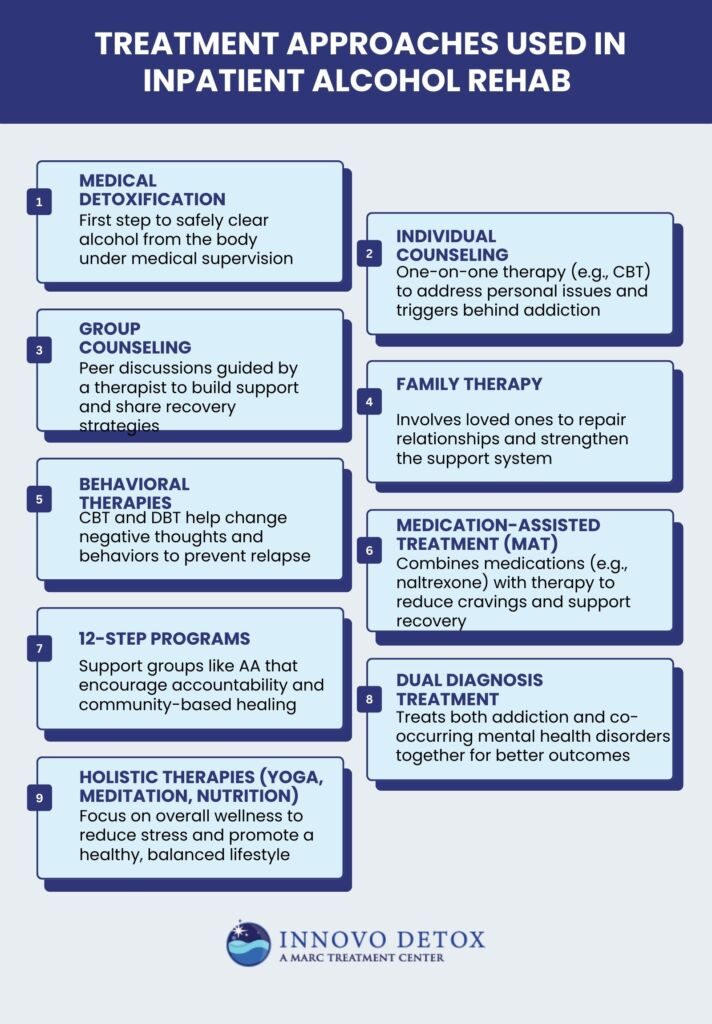
The treatment approaches used in inpatient alcohol rehab include:
- Medical Detoxification: Medical detoxification is the first stage of inpatient rehab, helping individuals safely withdraw from alcohol under medical supervision. This process ensures that the body is cleansed of alcohol while minimizing withdrawal symptoms and complications. Detox is important to stabilize individuals before they begin therapy and other treatment approaches.
- Individual Counseling: Individual counseling provides personalized therapy to address the specific challenges of alcohol addiction. Techniques like Cognitive Behavioral Therapy (CBT) are used to help individuals identify and change harmful behaviors and thought patterns. This one-on-one therapy allows for a deeper exploration of the personal factors contributing to addiction.
- Group Counseling: Group counseling provides a platform for individuals to share experiences and support each other in recovery. It fosters a sense of community, helping individuals connect with others facing similar challenges. Therapists guide group sessions, which focus on developing coping strategies and maintaining sobriety.
- Family Therapy: Family therapy involves the individual’s loved ones in the treatment process, helping to address the impact of addiction on family relationships. This therapy aims to rebuild trust, improve communication, and provide families with the tools to support long-term recovery. Family involvement enhances the overall treatment experience and strengthens recovery outcomes.
- Behavioral Therapies: Behavioral therapies, such as Cognitive Behavioral Therapy (CBT) and Dialectical Behavior Therapy (DBT), help individuals change negative thinking patterns and develop healthier coping mechanisms. These evidence-based approaches are central to inpatient rehab, as they allow individuals to manage triggers and prevent relapse.
- Medication-Assisted Treatment (MAT): MAT combines medications with counseling and therapy to help individuals manage cravings and reduce the risk of relapse. Medications like naltrexone or disulfiram are commonly prescribed to support recovery. MAT has been shown to improve treatment outcomes when combined with therapy.
- 12-Step Programs: 12-step programs, such as Alcoholics Anonymous (AA), are integral to inpatient rehab, offering a supportive network for individuals in recovery. These programs emphasize personal responsibility, community support, and accountability.
- Dual Diagnosis Treatment: Dual diagnosis treatment is for individuals who have both a substance use disorder and a co-occurring mental health condition. This integrated approach ensures that both issues are treated simultaneously, providing more effective and comprehensive care. I
- Holistic Therapies (Yoga, Meditation, Nutrition): Holistic therapies include yoga, meditation, and nutrition counseling, aiming to heal the mind, body, and spirit. These therapies help reduce stress, improve emotional well-being, and promote a healthy lifestyle.
Does Inpatient Alcohol Rehab Include Mental Health Treatment?
Yes, inpatient alcohol rehab includes mental health treatment, especially for individuals with co-occurring disorders like depression, PTSD, or anxiety.
Dual diagnosis treatment addresses both addiction and mental health conditions simultaneously, using integrated therapy models. This comprehensive approach ensures that both disorders are treated together, improving outcomes and reducing the risk of relapse.
How Much Does Inpatient Alcohol Rehab Cost?
Inpatient alcohol rehab costs between $14,000 and $27,000 for a 30-day stay in Pennsylvania. This high cost is due to factors such as the facility’s location, luxury amenities, and the length of stay. State-funded centers offer more affordable or even free programs, focusing primarily on important treatment services.
The overall cost is influenced by various factors, including the location of the center, with urban centers generally charging more due to higher living costs, and the duration of treatment, as longer stays lead to higher expenses.
Does Insurance Cover Inpatient Alcohol Rehab in Pennsylvania?
Yes, insurance covers inpatient alcohol rehab in Pennsylvania, with different types of insurance providing varying levels of coverage. The Affordable Care Act (ACA) mandates that insurance plans cover substance use treatment, including inpatient rehab, as an important health benefit, ensuring greater access to care. It is best to verify your insurance with the treatment center.
What Are The Success Rates Of Inpatient Alcohol Rehab?
The success rate of inpatient alcohol rehab is 43%. According to a study by the National Institute on Alcohol Abuse and Alcoholism (NIAAA) titled “Alcohol Use Disorder and Alcohol Treatment,” 2023, approximately 43% of individuals who enter inpatient alcohol rehab programs complete their treatment successfully.
Who Needs Inpatient Alcohol Rehab?
Individuals with severe alcohol dependence, repeated relapses, co-occurring disorders, an unsafe home environment, or a history of failed outpatient treatment are those who need inpatient alcohol rehab.
Inpatient rehab offers intensive care and medical supervision to address the physical and psychological aspects of addiction. It provides a structured, safe environment for detoxification and recovery.

When Does Alcohol Addiction Require Inpatient Treatment?
Alcohol addiction requires inpatient treatment when individuals face medical and psychological risks that cannot be managed in outpatient settings. Medical criteria include withdrawal risks such as severe tremors, seizures, or delirium tremens (DTs), which require 24/7 monitoring and medical intervention.
Inpatient treatment is also necessary when individuals face the risk of self-harm or have co-occurring mental health disorders that require integrated care. The need for medical detoxification, which is best managed in a residential program, further justifies inpatient treatment for those with severe alcohol addiction.
What Should You Consider When Choosing An Inpatient Rehab Center in Pennsylvania?
Factors to consider when choosing an inpatient rehab center in Pennsylvania are accreditation, staff credentials, success rates, program structure, therapy options, location, and insurance acceptance. These factors ensure high-quality, evidence-based care and improve the likelihood of long-term recovery.
The factors to consider when choosing an inpatient rehab center in Pennsylvania include:
- Accreditation: Accreditation from bodies like JCAHO or CARF ensures the rehab center meets industry standards for care and patient safety. Accredited centers are regularly reviewed for compliance with high-quality treatment practices.
- Staff Credentials: Staff credentials refer to the qualifications and experience of the professionals providing care. Ensure that the rehab center employs licensed therapists, counselors, and medical staff.
- Success Rates: Success rates reflect the effectiveness of a rehab center in helping individuals maintain sobriety. High success rates suggest that the center has a proven track record of successful treatment.
- Program Structure: A well-structured program includes a clear treatment schedule, therapeutic activities, and set goals. This approach helps individuals stay on track with their recovery and ensures consistency and accountability throughout treatment.
- Therapy Options: Therapy options should include evidence-based therapies like CBT and group counseling. These therapies address the psychological and behavioral aspects of addiction.
- Location: The location of the rehab center affects recovery. A facility that is far from home helps individuals avoid triggers and distractions.
- Insurance Acceptance: Insurance acceptance ensures access to treatment without financial barriers. Many rehab centers accept Medicaid, Medicare, and private insurance plans. Verifying insurance coverage beforehand helps avoid unexpected costs.
Can You Have Visitors During Inpatient Alcohol Rehab?
Yes, you can have visitors during inpatient alcohol rehab, but visitation policies vary depending on the rehab center. Some facilities allow visitors during designated visiting hours, while others have restrictions to maintain focus on recovery.
Can You Leave Inpatient Alcohol Rehab Early?
Yes, you can leave inpatient alcohol rehab early if the treatment is voluntary, but it is highly discouraged due to the risks involved. Leaving rehab prematurely leads to increased relapse risks, as individuals have not developed the necessary coping strategies or support systems to maintain sobriety.
What Happens If You Relapse After Inpatient Alcohol Rehab?
If you relapse after inpatient alcohol rehab, the first step is to return to treatment as soon as possible. This involves re-entering an inpatient facility, attending outpatient therapy, or adjusting your recovery plan to address the factors that led to the relapse. Relapse is common and does not mean failure; it’s part of the recovery process for many individuals. However, following the above steps helps overcome alcohol relapse.


