Alcohol addiction medication refers to FDA-approved pharmaceutical treatments used to help individuals reduce or stop alcohol consumption as part of recovery from Alcohol Use Disorder (AUD). These medications work by targeting the brain’s response to alcohol, either by reducing cravings, blocking the pleasurable effects of drinking, or easing withdrawal symptoms.
Common types include disulfiram, which causes adverse reactions when alcohol is consumed; naltrexone, which blocks the pleasurable effects of alcohol; and acamprosate, which helps reduce cravings and restore brain balance. These medications are most effective when used alongside therapy and support groups. The benefits include reduced relapse rates, fewer cravings, and increased treatment retention. However, side effects can range from mild (nausea, dizziness) to severe, such as disulfiram’s dangerous reactions if alcohol is ingested or potential liver concerns with naltrexone. For those who cannot or choose not to use medications, alternatives like Cognitive Behavioral Therapy (CBT), Alcoholics Anonymous (AA), and lifestyle interventions focusing on nutrition, exercise, and emotional wellness provide meaningful paths to sustained sobriety.
What Is Alcohol Addiction Medication?
Alcohol addiction medications are pharmaceutical drugs specifically designed and approved to treat alcohol use disorder (AUD) by addressing various aspects of addiction and recovery.
These medications work through different mechanisms, such as reducing alcohol cravings, blocking the pleasurable effects of alcohol consumption, creating adverse reactions when alcohol is consumed, or managing withdrawal symptoms during detoxification.
The FDA-approved options include disulfiram (Antabuse), naltrexone (ReVia, Vivitrol), and acamprosate (Campral), while other medications like topiramate and gabapentin are prescribed off-label.
These pharmaceutical interventions are prescribed as part of a comprehensive treatment approach that includes behavioral therapy, counseling, and support groups to maximize effectiveness in helping individuals achieve and maintain sobriety.
What Are the Types of Alcohol Addiction Medication?
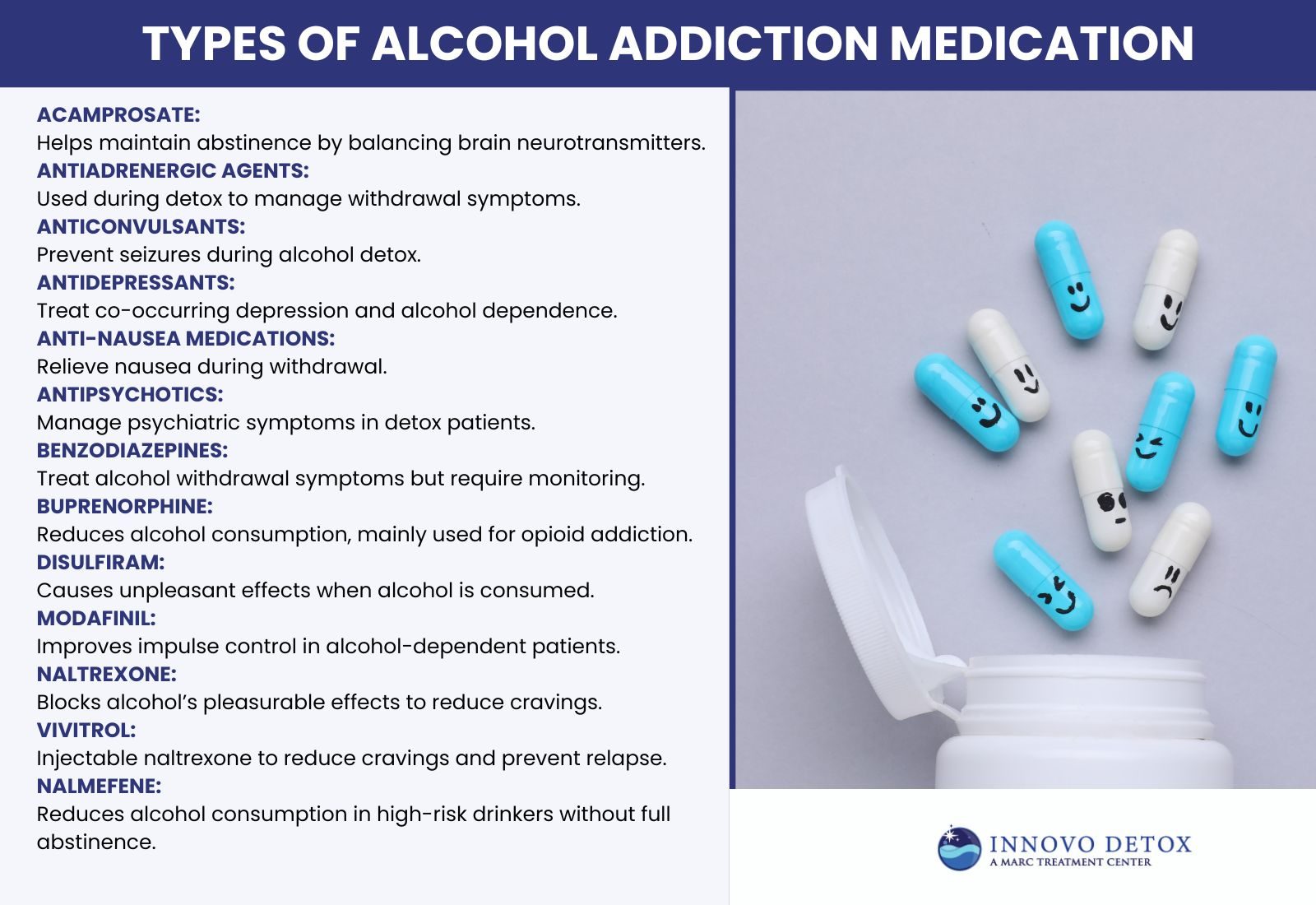
The Types of Alcohol Addiction Medication include Acamprosate, Disulfiram, Naltrexone, Vivitrol, Antiadrenergic agents, Nalmefene, and Modafinil.
These commonly used medications for alcohol addiction work in different ways to reduce alcohol dependence.
Here are the types of common alcohol addiction medications:
Acamprosate
Acamprosate (brand name: Campral) is a medication approved by the FDA for the treatment of alcoholism. It is one of three medications approved by the FDA to treat alcohol use disorder and reduces the brain’s dependence on alcohol by reacting with the brain’s neurotransmitter systems.
Antiadrenergic agents
Antiadrenegic agents are drugs that inhibit the signals of epinephrine and norepinephrine. Some examples of these types of drugs are clonidine and propranolol. These medications are used during detox to help treat the withdrawal symptoms from alcohol, opiates, and benzodiazepines.
Anticonvulsants
Some examples of anticonvulsant drugs used during a detox stay to help manage symptoms or side effects from drug and alcohol withdrawals are Depakote or Tegretol. Other examples of anticonvulsants are phenobarbital, levetiracetam (Keppra), and clonazepam (Klonopin).
Antidepressants
Antidepressants are types of medication that help relieve symptoms of depression, social anxiety, and other types of anxiety disorders, as well as several other disorders. Some examples of antidepressants are Celexa, Lexapro, Prozac, Paxil, and Zoloft.
Anti-nausea Medications
Anti-nausea medications alleviate nausea and vomiting, which are common symptoms during alcohol withdrawal. By reducing these symptoms, these medications improve patient comfort and compliance with treatment, facilitating a smoother transition through the withdrawal process.
Antipsychotics
For those patients in detox who have certain co-occurring or psychiatric issues, a doctor or nurse at the detox will prescribe them an antipsychotic medication. Sometimes, they also help treat withdrawal symptoms such as anxiety and major agitation in patients. Some examples of antipsychotics used in a detox setting for drugs and alcohol include olanzapine, Risperdal, Seroquel, Abilify, and Clozaril.
Benzodiazepines
Benzodiazepines are a type of medication, known as tranquilizers, commonly used for their sedating effects and prescribed to treat anxiety, panic disorders, panic attacks, seizures, insomnia, or trouble sleeping. Common examples of benzodiazepines are Ativan (lorazepam), chlordiazepoxide, diazepam, Librium, Valium, and Xanax.
Benzodiazepines are used in various drug detox programs but require careful monitoring due to their addictive potential, especially for individuals with a history of benzodiazepine addiction.
Buprenorphine
Used primarily in detox from opioids or opiates, buprenorphine is an opioid partial agonist approved by the FDA to treat opioid use disorder and addiction. It is used in a detox setting or prescribed as part of a Medication-Assisted Treatment (MAT) protocol.
Disulfiram
Disulfiram is one of the medications approved by the FDA for treating alcohol use disorder (AUD). Disulfiram is a medication that interferes with how the body breaks down alcohol. Disulfiram is sold under the trade name Antabuse.
Naltrexone
Naltrexone is used in a medical detox and treatment for those individuals suffering from alcohol use disorder, alcoholism, opioid use disorder, or opioid addiction. Naltrexone is an FDA-approved medication that comes in either pill form or as an injectable. The medication naltrexone is effective in blocking the euphoric and sedative effects of painkilling substances such as heroin, morphine, fentanyl, and codeine.
VIVITROL
VIVITROL is a once-monthly, injectable naltrexone medication prescribed for alcohol dependence treatment since 2006. VIVITROL functions by interrupting patterns of alcohol dependence and prevents users from feeling the effects of alcohol without causing disulfiram-like reactions.
Nalmefene
Nalmefene is an opioid receptor modulator approved by the European Medicines Agency for reducing alcohol consumption in adult patients with alcohol dependence who have a high drinking risk level (DRL) without physical withdrawal symptoms and who do not require immediate detoxification.
What Are the Benefits of Alcohol Addiction Medications?

The Benefits Of Alcohol Addiction Medications include reduced alcohol cravings, enhanced relapse prevention capabilities, and easier withdrawal symptom management.
Here are the common benefits of alcohol addiction medications:
- Reduced Cravings: Medications like Naltrexone and Acamprosate help suppress the urge to consume alcohol by blocking opioid receptors and balancing neurotransmitters, making it easier for individuals to abstain.
- Improved Relapse Prevention: Alcohol addiction medications decrease the risk of relapse by minimizing the brain’s response to alcohol consumption. Disulfiram creates an aversive reaction to alcohol, while Naltrexone blocks the euphoric effects, reducing motivation to drink.
- Better Withdrawal Management: Medications such as Acamprosate help manage withdrawal symptoms by stabilizing brain chemistry and easing discomfort, making the detoxification process safer and more comfortable.
- Enhanced Treatment Adherence: Alcohol addiction medications increase the likelihood of staying in treatment by reducing distressing symptoms that lead to dropout. When cravings and withdrawal symptoms are controlled, individuals are more likely to follow structured treatment plans, including therapy and counseling.
- Physical and Emotional Health Benefits: Reducing alcohol consumption leads to fewer alcohol-related consequences, such as less anxiety and depression, lower blood pressure, improved liver enzyme levels, and an overall better quality of life.
- Long-term Recovery Support: Medications provide ongoing support for individuals seeking long-term recovery, improving the chances of sustained sobriety when used as part of a comprehensive treatment plan.
What Are the Common Side Effects of Alcohol Addiction Medications?
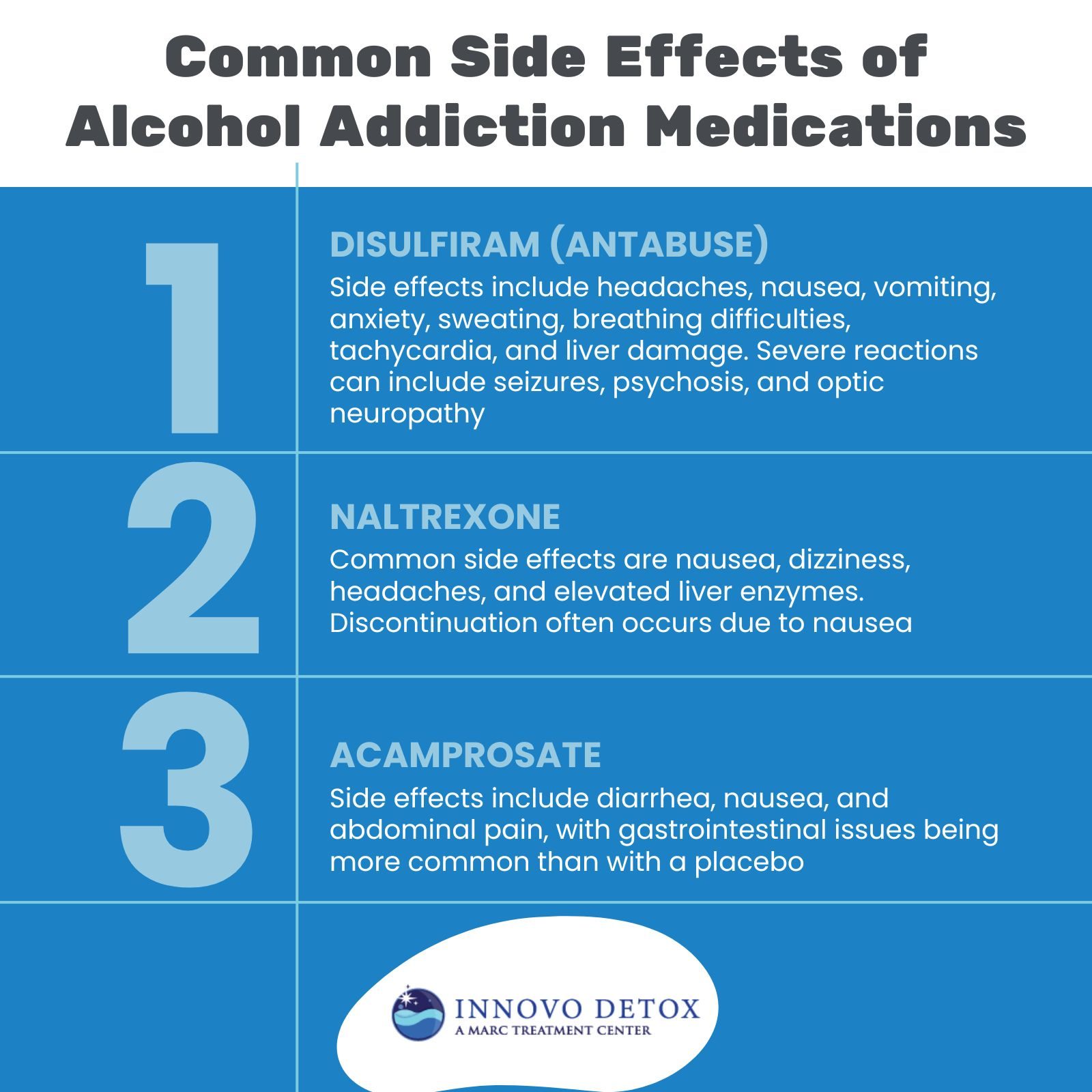
The common side effects of alcohol addiction medications include nausea, headaches, drowsiness, digestive issues, and potential allergic reactions. These effects vary by medication type.
Here are the common side effects of alcohol addiction medications:
-
- Disulfiram (Antabuse): Disulfiram side effects include headaches, nausea, vomiting, weakness, mental confusion, anxiety, impaired vision, sweating, breathing difficulties, tachycardia, and hypotension.
- Naltrexone: Common side effects of Naltrexone include nausea, dizziness, and headaches. Naltrexone also causes liver enzyme elevations in some cases.
- Acamprosate: Common side effects of Acamprosate include diarrhea, nausea, and abdominal pain. These digestive system reactions occur more frequently in patients taking Acamprosate than in those on a placebo.
What Are The Alternatives To Alcohol Addiction Medication Treatment?

The alternatives to alcohol addiction medication treatment include behavioral therapies like CBT and motivational interviewing, and supportive communities. Alcohol addiction therapy improves mental and physical alcohol recovery.
Here are the key alternatives to alcohol addiction medications:
- Behavioral Therapies: Behavioral therapies like cognitive behavioral and motivational interviewing are crucial in managing alcohol addiction. This approach enables them to develop coping strategies and manage triggers effectively.
- Support Groups: Alcoholics Anonymous (AA) offers a structured 12-step program that provides peer support and a sense of community, which is essential for maintaining sobriety. SMART Recovery is another program that provides tools and training for managing addiction, focusing on self-empowerment and self-reliance.
- Lifestyle Changes: Dietary modifications involve improving nutrition to stabilize mood and reduce cravings. A balanced diet helps manage withdrawal symptoms and supports overall health. Exercise and physical activity are also vital as they reduce stress and improve overall well-being, contributing to a healthier lifestyle.
- Complementary Therapies: Acupuncture is used to reduce anxiety and depression, which are common challenges faced during recovery. Mindfulness and meditation practices help manage stress and cravings by promoting relaxation and mental clarity, which are crucial for maintaining sobriety.
How Does Medication-Assisted Treatment (MAT) Help with Alcohol Detox?
Medication-Assisted Treatment (MAT) helps with alcohol detox by combining FDA-approved medications with counseling and behavioral therapies to address physical and psychological addiction.
Medications like naltrexone block alcohol’s pleasurable effects, reducing cravings and the urge to drink. By reducing cravings and withdrawal risks, medical detox enhances safety during detox and increases the likelihood of sustained sobriety.
What to Do If You Think You or a Loved One Requires Alcohol Addiction Therapy?
If you think you or a loved one in Pennsylvania requires alcohol addiction therapy, contact a licensed treatment center in Pennsylvania. Research accredited facilities offering medical detox and evidence-based care.
Verify credentials, treatment approaches, and reviews to ensure quality support. Prioritize centers providing alcohol addiction therapy with medical stabilization and personalized plans. Pennsylvania’s Department of Drug and Alcohol Programs assists with referrals.
Seek programs integrating holistic therapies and psychiatric care to address physical and mental health. Reach out directly via phone or email for program details. Early alcohol addiction treatment gives great recovery outcomes.
How to Prevent Alcohol Relapse?
To prevent alcohol relapse, combine therapy, medication, and monitoring to address triggers and cravings. Develop coping strategies, such as avoiding high-risk situations or engaging in alternative activities, to help prevent alcohol relapse.
Remove yourself from triggers like people, places, or stressors linked to drinking. Recognize early warning signs (e.g., cravings, emotional distress) to intervene before relapse escalates. Focus on staying sober “one day at a time” to manage overwhelming pressures.
Adjust treatment plans if alcohol relapse occurs, as it signals the need for modified strategies. Consistent support and skill-building reduce risks and sustain recovery.
How to Find an Alcohol Addiction Treatment Center?
To find an alcohol addiction treatment center near Pennsylvania, begin by researching accredited facilities that specialize in medical detox and evidence-based care. Verify credentials, treatment approaches, and patient reviews to ensure quality support.
For those in the Mid-Atlantic region, Innovo Detox offers comprehensive alcohol addiction treatment, combining medical stabilization, psychiatric care, and personalized therapies to address physical and psychological recovery.
Our team provides tailored programs and assists in connecting you with trusted providers if needed. Contact us directly at (717) 912-4297 or [email protected] for guidance. Prioritize centers that integrate medical expertise with holistic strategies to ensure lasting recovery.