
Are you worried about your drinking habit and want to understand how alcohol affects your mental health? Alcohol causes mental health issues such as depression, anxiety, and cognitive impairments.
These effects are primarily due to alcohol’s impact on brain chemistry, including alterations in neurotransmitter levels and disruption of neural circuits involved in mood regulation. The 2022 NSDUH also found that 18.1% of individuals aged 12 or older in Pennsylvania met the criteria for an alcohol use disorder in the past year.
Long-term alcohol use results in chronic mental health disorders, including persistent depression, anxiety, and cognitive decline. Prolonged alcohol consumption also leads to brain shrinkage and other structural changes, further exacerbating mental health issues.
How Does Alcohol Affect the Brain?
Alcohol affects the brain by altering its chemistry and structure, leading to both immediate and long-term consequences. When consumed, alcohol acts as a central nervous system depressant, affecting neurotransmitter systems and slowing down brain activity.
It primarily targets the gamma-aminobutyric acid (GABA) receptors, enhancing their inhibitory effects while simultaneously inhibiting glutamate, a neurotransmitter that excites the brain. This disruption leads to impaired judgment, coordination, and cognitive function.
Moreover, heavy alcohol consumption is linked to structural and functional changes in the brain, including shrinkage of the brain’s grey matter, which impacts memory and learning processes.
What Are the Long-Term Effects of Alcohol on the Brain?
The long-term effects of alcohol on the brain are cognitive impairment, memory deficits, and changes in brain structure. Chronic alcohol use also leads to brain shrinkage, particularly in areas responsible for decision-making and memory, increasing the risk of developing conditions like depression and anxiety.
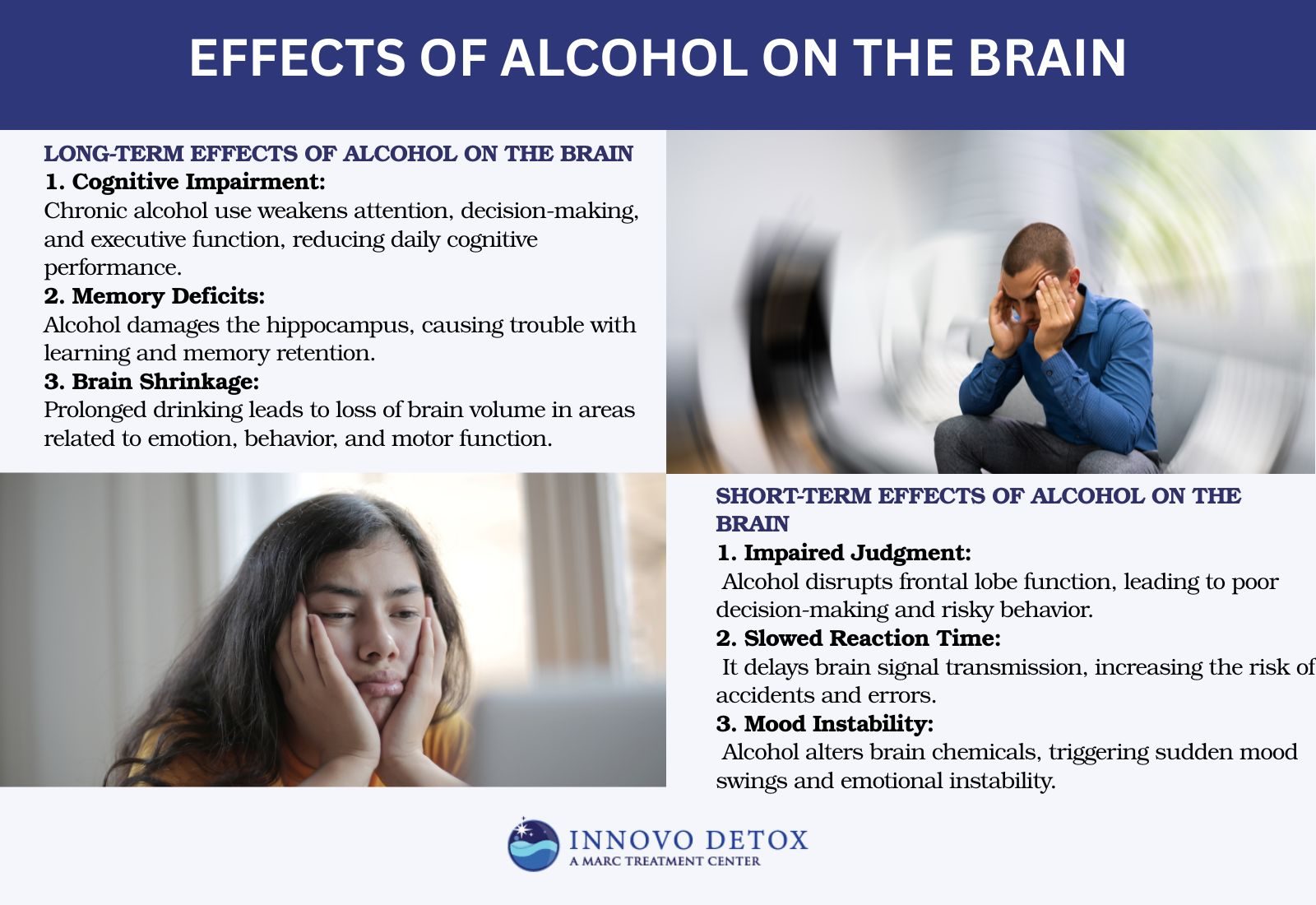
The long-term effects of alcohol on the brain are explained below:
- Cognitive Impairment: Chronic alcohol use impairs executive function, attention, and decision-making skills. These changes worsen over time, impacting a person’s ability to perform everyday tasks and make sound judgments. According to a report by the National Institute on Alcohol Abuse and Alcoholism, long-term alcohol use contributes to measurable deficits in cognitive performance.
- Memory Deficits: Long-term drinking damages the hippocampus, leading to short-term and long-term memory problems. These deficits include difficulty learning new information or recalling recent events.
- Brain Shrinkage: Excessive drinking causes shrinkage of the brain’s grey and white matter, particularly in areas that control movement, behaviour, and emotional processing. Over time, this results in serious neurological decline.
What Are the Short-Term Effects of Alcohol on the Brain?
The short-term effects of alcohol on the brain are impaired judgment, slowed reaction time, and mood instability. These effects occur because alcohol disrupts neurotransmitter activity and suppresses brain function, which leads to risky behaviour, emotional swings, and temporary memory lapses.
The short-term effects of alcohol on the brain are explained below:
- Impaired Judgment: Alcohol interferes with the brain’s frontal lobe, which is responsible for decision-making and self-control. This led individuals to engage in risky behaviours they would normally avoid..
- Slowed Reaction Time: Alcohol slows communication between brain cells, leading to delayed physical and mental responses. This is particularly dangerous while performing tasks that require alertness, such as driving.
- Mood Instability: Alcohol temporarily alters levels of neurotransmitters like serotonin and dopamine, causing mood swings, irritability, or sudden euphoria. These shifts exacerbate underlying emotional issues or create conflict in social situations.
What is the Impact of Alcohol on Mental Health?
The impact of alcohol on mental health includes depression, anxiety, and increased emotional instability. Alcohol alters brain chemistry by affecting neurotransmitters responsible for mood regulation, which trigger or worsen existing mental health conditions. These effects are emotional and lead to long-term mood disorders or difficulty managing stress and interpersonal relationships.

The impact of alcohol on mental health is explained below:
Depression
Long-term alcohol use disrupts serotonin and dopamine levels in the brain, which play a critical role in regulating mood. This disruption causes persistent feelings of sadness, hopelessness, and low energy levels. Over time, individuals develop clinical depression that interferes with daily functioning and emotional well-being.
Anxiety
Alcohol initially acts as a sedative, but later increases feelings of nervousness and restlessness as it wears off. Chronic drinking sensitises the brain’s stress systems, making users more vulnerable to anxiety disorders. This creates a vicious cycle where alcohol is used to self-medicate, which only deepens anxiety symptoms in the long run.
Cognitive Impairment
Alcohol damages the prefrontal cortex and hippocampus, areas responsible for thinking, learning, and decision-making. With continued use, individuals struggle to focus, plan, or retain information. These deficits are irreversible and contribute to reduced mental flexibility and quality of life.
Memory Deficits
Excessive alcohol use interferes with the consolidation of new memories and the retrieval of stored ones. This is particularly due to alcohol’s toxic effect on the hippocampus. Over time, memory lapses become more frequent and severe, impacting both personal and professional life.
Mood Disorders
Chronic alcohol use destabilises emotional regulation systems in the brain, leading to persistent mood swings, irritability, or emotional numbness. These fluctuations mimic bipolar disorder or major depressive disorder. Such instability impairs relationships and daily responsibilities.
Increased Risk of Suicidal Thoughts
Alcohol lowers inhibitions and impairs judgment, increasing the likelihood of impulsive thoughts and behaviours. Individuals with depression or other mental health issues are particularly at risk when alcohol is involved. Over time, chronic drinking significantly raises the risk of suicidal ideation and attempts.
Aggression
Alcohol impairs the brain’s ability to regulate anger and impulse control, especially in the frontal lobe. This leads to verbal or physical aggression, particularly in stressful or confrontational situations. Repeated incidents of aggression damage relationships and contribute to legal or social consequences.
Impaired Decision-Making
Frequent alcohol use weakens the brain’s executive functioning, reducing the ability to evaluate risks and consequences. This leads to poor life choices, such as unsafe sex, reckless driving, or financial mismanagement. The damage becomes more pronounced with time, affecting long-term planning and control.
Stress Response Dysregulation
Alcohol disrupts the hypothalamic-pituitary-adrenal (HPA) axis, which controls the body’s stress response. This dysregulation makes it harder to manage anxiety or return to a calm state after a stressful event. As a result, individuals feel constantly overwhelmed or emotionally reactive.
Disruption of Sleep Patterns
While alcohol makes falling asleep easier, it reduces sleep quality by interfering with REM cycles. Over time, this leads to chronic insomnia or unrefreshing sleep. Poor sleep further exacerbates mental health issues like anxiety, depression, and irritability.
Brain Shrinkage
Long-term alcohol use causes the loss of grey and white matter in critical brain regions, including the prefrontal cortex. This shrinkage leads to deficits in memory, emotional control, and decision-making. The changes are permanent and are more severe in heavy drinkers.
Increased Risk of Psychosis
Excessive alcohol use has been linked to alcohol-induced psychotic disorder, characterized by hallucinations, delusions, and paranoia. These symptoms occur during intoxication or withdrawal. In some cases, long-term use increases the likelihood of developing chronic psychotic conditions.
Emotional Instability
Alcohol disrupts the balance of brain chemicals responsible for regulating emotions. Over time, users experience extreme highs and lows, emotional numbness, or outbursts without clear triggers. This instability complicates relationships and increases vulnerability to mental health conditions.
Paranoia
Heavy alcohol use increases feelings of suspicion or irrational fear, particularly during withdrawal phases. This developed into chronic paranoia, affecting social interactions and trust. Individuals begin to isolate themselves or misinterpret others’ intentions.
Alcohol Use Disorder (AUD)
AUD is a compulsive, problematic pattern of alcohol use that leads to significant distress and impairment. It alters brain circuits related to reward, motivation, and control. Over time, individuals find it increasingly difficult to stop drinking despite negative consequences to health, job, and personal relationships.
Social Withdrawal and Isolation
As mental health deteriorates, individuals avoid social interactions to hide their drinking or because they feel emotionally disconnected. Alcohol numbs emotional responsiveness, making it difficult to connect with others. This isolation worsens feelings of loneliness, depression, and anxiety.
What Are the Statistics of Alcohol-Induced Mental Health Issues In Pennsylvania?
According to the 2023 National Survey on Drug Use and Health (NSDUH), approximately 1.1 million individuals aged 12 and older in Pennsylvania experienced an alcohol use disorder (AUD) in the past year, representing about 5.1% of the state’s population in this age group. This rate is consistent with the national average of 5.3% for the same period.
The prevalence of serious mental illness (SMI) among adults aged 18 or older in Pennsylvania was 4.7% in 2017–2019, equating to approximately 464,000 individuals. This figure aligns closely with the regional average of 4.5% and the national average of 4.2%.
Data from the 2023 Pennsylvania Youth Survey also indicates that 39.0% of young adults aged 18–25 in the state engaged in binge alcohol use in the past month, a rate higher than both the regional average of 37.9% and the national average of 35.4%.
Why Is Alcohol Bad for Mental Health?
Alcohol is bad for mental health because it disrupts brain chemistry by altering neurotransmitters like serotonin and dopamine, which are crucial for regulating mood and emotions. This disruption leads to anxiety, depression, and other mental health issues, and long-term use results in irreversible changes to brain structures associated with emotional regulation.
Does Alcohol Affect Mood?
Yes, alcohol affects mood by initially creating a sense of euphoria, but as the effects wear off, it leads to feelings of depression and anxiety. This mood fluctuation occurs because alcohol alters the balance of chemicals in the brain that regulate emotional responses, such as serotonin and dopamine.
Does Alcohol Cause Mental Health Disorders?
Yes, alcohol causes mental health disorders, especially when consumed excessively or over long periods. Alcohol use leads to or worsens mental health disorders and conditions like depression, anxiety, and alcohol use disorder (AUD), as it disrupts brain chemistry and cognitive functioning.
What Type Of Mental Health Disorder does Alcohol Cause?
The types of mental health disorders alcohol causes are depression, anxiety, alcohol use disorder (AUD), and in some cases, psychosis. Chronic alcohol use has also been linked to mood disorders, cognitive impairments, and memory deficits, particularly in areas of the brain responsible for emotional regulation and decision-making.


