
Alcohol withdrawal begins when your brain struggles to function without alcohol after long-term use. Over time, your body relies on alcohol to manage brain chemicals like GABA and glutamate, so stopping suddenly causes an imbalance.
This imbalance triggers symptoms like anxiety, shaking, sweating, nausea, and headaches. In more severe cases, it leads to seizures, hallucinations, or delirium tremens, which is life-threatening if not treated.
According to the Pennsylvania Department of Drug and Alcohol Programs (DDAP), an average of 5,703 annual deaths were attributable to excessive alcohol use between 2015 and 2019.
Withdrawal symptoms begin within 6 hours, peak around 24–72 hours, and last for several weeks. Factors like your age, health history, and how long you’ve been drinking increase your risk. Doctors use the CIWA scale to assess severity and guide treatment, which includes medications, IV fluids, and, for severe cases, inpatient detox care.
What Is Alcohol Withdrawal?
Alcohol withdrawal is what happens when you suddenly stop or cut back after drinking heavily for a long time. Your brain, used to alcohol’s depressant effects, struggles to adjust without it. Over time, your body starts to depend on alcohol just to function normally.
According to a study by the National Institute on Alcohol Abuse and Alcoholism (NIAAA) titled “Alcohol Use Disorder and Alcohol Treatment,” 2023, about 1 in 4 people with alcohol dependence experience withdrawal symptoms. The severity depends on how long and how heavily you’ve been drinking.
Withdrawal is a key part of recovery. Managing these symptoms from anxiety and tremors to more dangerous effects like seizures or delirium tremens is the first step in safe, structured alcohol addiction treatment.
Why Is Alcohol Withdrawal Dangerous?
Alcohol withdrawal is dangerous because it puts your body through sudden, intense stress. One of the biggest risks is seizures, caused by your nervous system overreacting once alcohol is removed. In severe cases, it leads to delirium tremens a life-threatening state marked by confusion, hallucinations, and agitation that demands emergency care.
Withdrawal also strains your heart, raising your blood pressure and heart rate, which increases the risk of serious cardiovascular problems. These complications show why detoxing without medical supervision is risky.
Proper care and close monitoring during withdrawal are critical to avoid life-threatening outcomes and make the process safer and more manageable.
What Causes Alcohol Withdrawal?
Alcohol withdrawal is caused by neurotransmitter imbalance, brain adaptation, physical dependence, central nervous system overactivation, and dehydration. These factors contribute to the beginning of withdrawal symptoms when alcohol consumption is suddenly reduced or stopped.
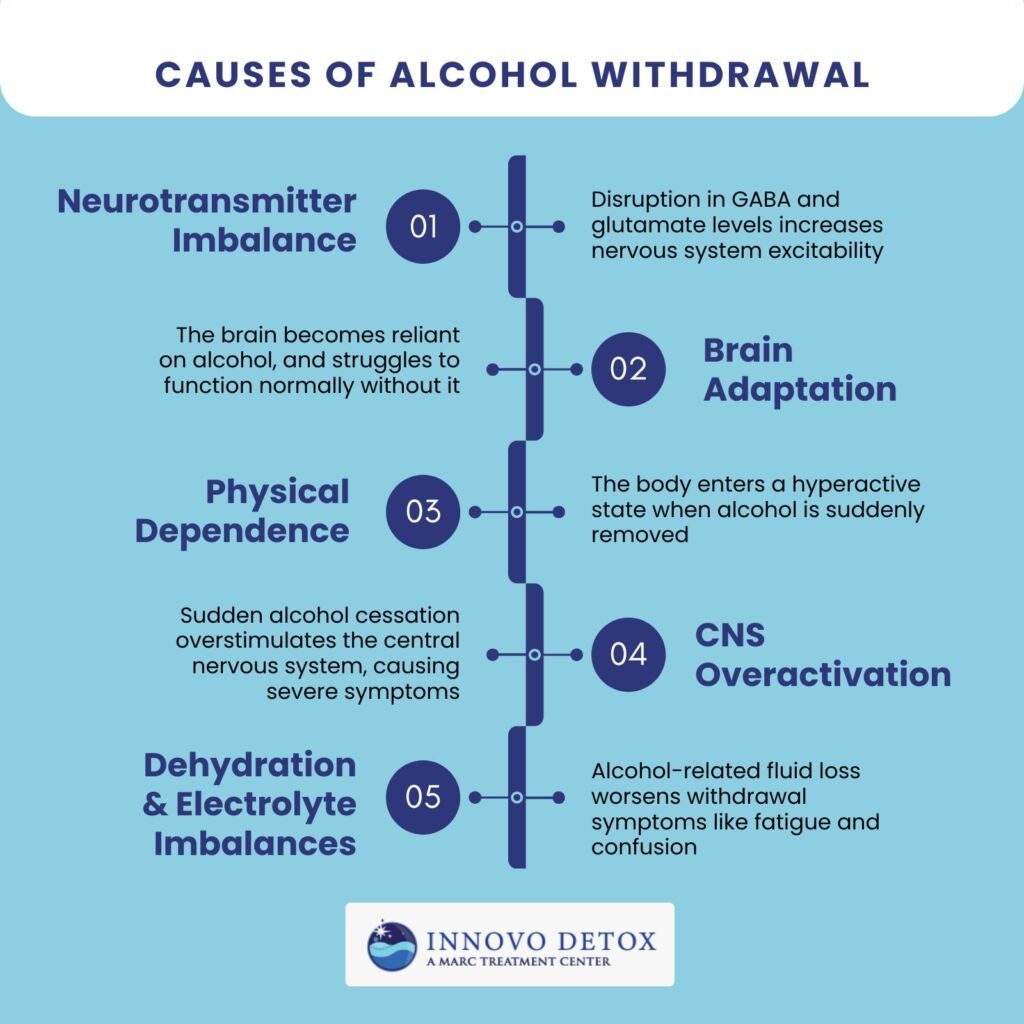
The causes of alcohol withdrawal are:
- Neurotransmitter Imbalance: Chronic alcohol consumption alters neurotransmitter systems, particularly GABA and glutamate. This imbalance leads to symptoms such as anxiety and tremors during withdrawal.
- Brain Adaptation: The brain adjusts to the constant presence of alcohol by modifying its chemical composition. This adaptation makes the brain dependent on alcohol for normal functioning.
- Physical Dependence: Prolonged alcohol use leads to physical dependence, where the body becomes reliant on alcohol to maintain homeostasis. When alcohol is stopped suddenly, the body enters a hyperactive state. This overactivity results in symptoms like irritability, sweating, and nausea.
- Central Nervous System Overactivation: Alcohol depresses the central nervous system, and its sudden removal causes the CNS to become overly stimulated. This overactivation manifests as tremors, increased heart rate, and seizures. The nervous system remains heightened until it re-adjusts.
- Dehydration and Electrolyte Imbalances: Alcohol has a diuretic effect, leading to dehydration and electrolyte imbalances. When alcohol is withdrawn, the body struggles to restore balance, exacerbating symptoms like fatigue and confusion.
What Are The Signs And Symptoms Of Alcohol Withdrawal?
The signs and symptoms of alcohol withdrawal include anxiety, tremors, sweating, nausea, vomiting, insomnia, headaches, increased heart rate, and high blood pressure. Early symptoms appear within 6 to 12 hours after the last drink, with anxiety, insomnia, and mild tremors being the most common.
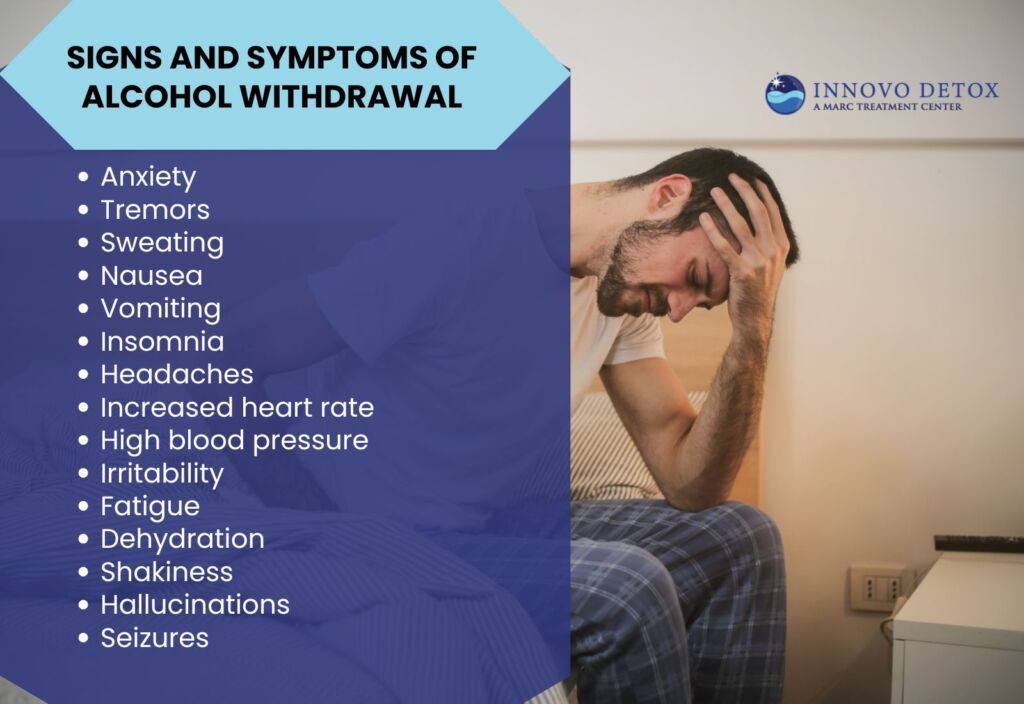
The signs and symptoms of alcohol withdrawal are explained below:
Anxiety
Anxiety is characterized by feelings of unease, nervousness, and fear as the body reacts to the sudden absence of alcohol. It develops because alcohol, a CNS depressant, has been removed, causing the nervous system to become overstimulated.
Anxiety exacerbates other withdrawal symptoms such as irritability, shaking, and insomnia. Managing anxiety during alcohol detox involves medications like benzodiazepines, which help calm the nervous system and reduce the severity of anxiety symptoms.
Tremors
Tremors are involuntary shaking movements that occur during alcohol withdrawal. They primarily affect the hands but involve other parts of the body. The tremors result from the central nervous system becoming overstimulated when alcohol, a CNS depressant, is suddenly removed. Tremors are among the first symptoms to appear and progress as withdrawal continues.
Sweating
Sweating occurs when the body’s autonomic nervous system becomes overactive due to the removal of alcohol, a depressant. It is the body’s response to regulate temperature and maintain homeostasis under stress. This leads to discomfort and dehydration, which exacerbate other withdrawal symptoms like nausea and dizziness.
Nausea
Nausea refers to a feeling of discomfort in the stomach that precedes vomiting. Nausea occurs as a result of the gastrointestinal system reacting to the sudden absence of alcohol, which had been acting as a sedative. It is one of the early symptoms of alcohol withdrawal, appearing within hours after the last drink, and persists for several days, depending on the severity of withdrawal.
Vomiting
Vomiting occurs when the stomach expels its contents forcefully due to irritation or imbalance caused by alcohol cessation. This symptom follows nausea and is a result of the body’s response to the disruption in normal gastrointestinal function.
The body’s sudden withdrawal from alcohol affects the digestive system, leading to increased stomach acid production and irritation. Vomiting lasts for several hours to days, depending on the individual’s withdrawal severity, and requires attention to ensure proper hydration and electrolyte replenishment.
Insomnia
Insomnia is characterized by difficulty falling asleep, staying asleep, or achieving restorative sleep. This condition arises when the central nervous system, previously accustomed to alcohol’s depressant effects, becomes hyperactive in its absence.
Headaches
Headaches manifest as persistent or throbbing pain in the head region, accompanied by sensitivity to light and sound. The onset of headaches coincides with the initial phase of alcohol detoxification. Headache episodes range from mild to severe in intensity.
Irritability
Irritability is characterized by heightened emotional sensitivity and frustration. It arises as the central nervous system adjusts to the absence of alcohol, a substance that previously exerted a depressant effect. The sudden removal of alcohol leads to an overactive state in the brain, manifesting as irritability. Mood swings, restlessness, and difficulty concentrating accompany this symptom.
Fatigue
Fatigue encompasses a persistent feeling of tiredness or lack of energy that is not relieved by rest. This condition arises as the body adjusts to the absence of alcohol, a substance that previously exerted a depressant effect on the central nervous system. Withdrawal symptoms such as nausea, sweating, and sleep disturbances contribute to the overall sense of fatigue.
Hallucinations
Hallucinations are characterized by sensory experiences without external stimuli. These experiences are visual, auditory, or tactile and occur while the individual remains conscious and aware. Hallucinations are indicative of significant central nervous system disruption due to the cessation of alcohol, a central nervous system depressant.
The severity and duration of hallucinations vary, with some individuals experiencing transient episodes and others enduring persistent symptoms.
Seizures
Sudden, uncontrolled electrical disturbances in the brain characterize seizures. These events present as generalized tonic–clonic seizures, commonly referred to as “rum fits.” They occur within 6 to 48 hours following the cessation of alcohol intake.
How Long Do Alcohol Withdrawal Symptoms Last?
Alcohol withdrawal symptoms last from 6 hours to several weeks, depending on factors such as the individual’s alcohol consumption history, overall health, and the presence of any co-occurring medical conditions.
The withdrawal process follows a three-phase timeline: mild symptoms appear within 6–12 hours, peak symptoms occur within 24–72 hours, and lingering effects last for weeks.
The first phase includes mild symptoms like anxiety, tremors, sweating, and nausea, which begin within 6 hours after the last drink and peak around 12 hours. The second phase sees more severe symptoms such as seizures, hallucinations, and elevated blood pressure. How long alcohol withdrawal lasts depends on individual factors, but the worst symptoms are experienced in the first 72 hours.
What Are The Stages Of Alcohol Withdrawal?
The stages of alcohol withdrawal include Stage 1 (Mild symptoms), Stage 2 (Moderate symptoms), and Stage 3 (Severe symptoms). These stages reflect the progression of withdrawal as the body adjusts to the absence of alcohol.
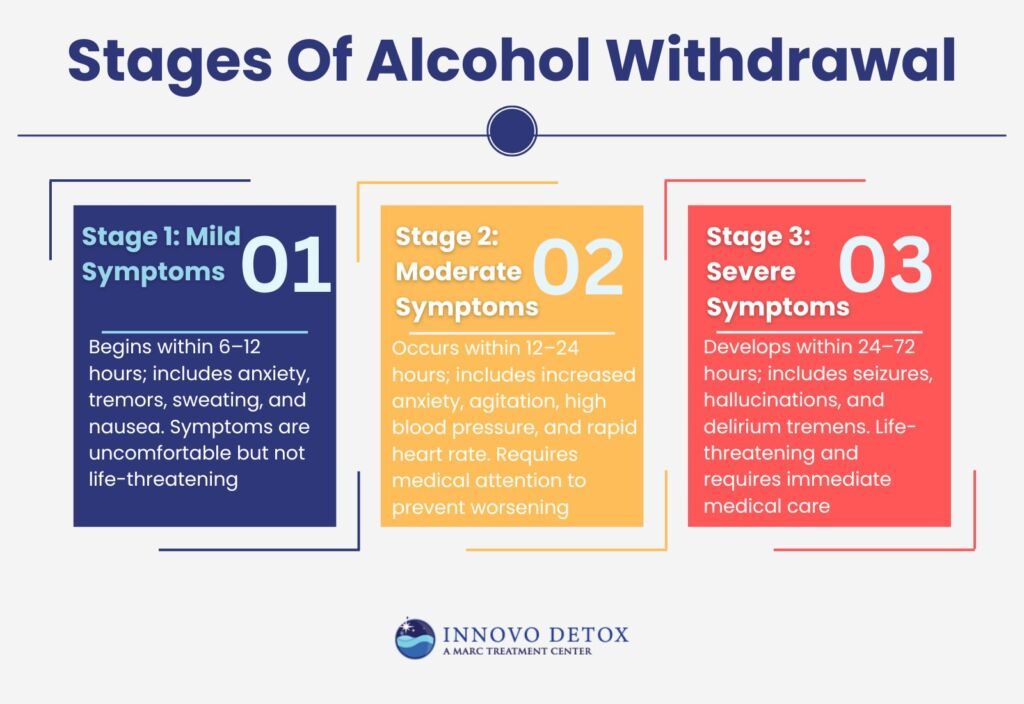
The stages of alcohol withdrawal are explained below:
Stage 1: Mild Symptoms
Stage 1 of alcohol withdrawal consists of mild symptoms that appear within the first 6 to 12 hours after alcohol cessation. These symptoms include anxiety, tremors, sweating, and mild nausea. As the body begins to adjust to the lack of alcohol, the central nervous system becomes slightly overstimulated, leading to these early signs of withdrawal.
Although these symptoms are uncomfortable, they are usually not life-threatening and are managed with proper care. However, if left untreated, these mild symptoms progress to more severe stages.
Stage 2: Moderate Symptoms
Stage 2 of alcohol withdrawal encompasses moderate symptoms that emerge within 12 to 24 hours after the last drink. These symptoms include increased anxiety, agitation, elevated blood pressure, rapid heart rate, and moderate tremors.
These moderate symptoms, while uncomfortable, are not life-threatening but require medical attention to prevent progression to more severe stages.
Stage 3: Severe Symptoms
Stage 3 of alcohol withdrawal encompasses severe symptoms that emerge within 24 to 72 hours after cessation. These symptoms include seizures, hallucinations, delirium tremens, and significant autonomic instability.
The central nervous system’s heightened excitability during this phase leads to these life-threatening manifestations. This stage requires immediate medical intervention to manage symptoms and prevent complications.
Can Alcohol Withdrawal Be Fatal?
Yes, alcohol withdrawal can be fatal due to the development of life-threatening complications such as delirium tremens, seizures, and severe cardiovascular instability. When left untreated, these symptoms escalate rapidly, leading to high mortality rates if medical intervention is not provided.
According to the Centers for Disease Control and Prevention (CDC), Pennsylvania’s alcohol poisoning death rate stands at 6.5 per 1 million people.
Delirium tremens (DTs), which occur within 48 to 72 hours of alcohol cessation, cause severe confusion, agitation, hallucinations, and life-threatening cardiovascular symptoms such as elevated heart rate and blood pressure.
Without prompt treatment, DTs lead to shock, organ failure, and death in severe cases. Seizures, another fatal withdrawal symptom, increase the risk of brain damage and further complications.
How Is Alcohol Withdrawal Diagnosed?
Alcohol withdrawal is diagnosed based on a comprehensive clinical evaluation, including patient history, the Clinical Institute Withdrawal Assessment for Alcohol Scale (CIWA-Ar), and relevant lab tests. The CIWA-Ar scale is commonly used to assess the severity of withdrawal symptoms and guide treatment decisions.
The CIWA-Ar scale evaluates symptoms such as tremors, anxiety, nausea, and sweating, with scores indicating the intensity of withdrawal. The higher the score, the more severe the withdrawal symptoms, which helps determine the level of medical intervention required.
When Should You Seek Medical Help For Withdrawal?
You should seek medical help for withdrawal as symptoms worsen or become life-threatening. Emergency care is necessary when severe withdrawal symptoms, such as seizures, confusion, high fever, or hallucinations, occur.
It is vital to seek medical attention immediately. Medical intervention, such as intravenous fluids, medications, and continuous monitoring, is necessary to manage severe alcohol withdrawal safely.
What Are The Treatments for Alcohol Withdrawal?
The treatment of alcohol withdrawal includes medication-assisted therapy, IV fluids and nutrition, and supervised detoxification. Proper care is important for ensuring a safe detox process and aiding the individual’s recovery.
According to the Pennsylvania Department of Drug and Alcohol Programs (DDAP) 2020 Annual Report, over 30,000 individuals completed substance use treatment programs in the state, with approximately 60% success rate.
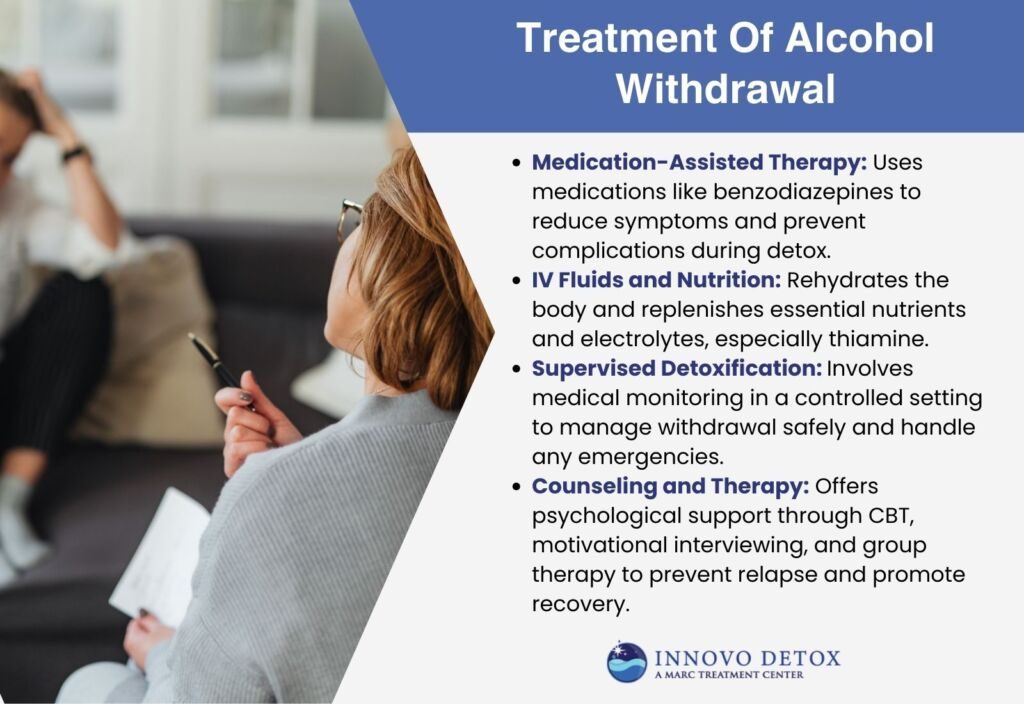
The treatments for alcohol withdrawal are:
Medication-Assisted Therapy
Medication-assisted therapy (MAT) involves using medications, such as benzodiazepines, to control withdrawal symptoms like anxiety, agitation, and tremors, while supporting the body through detoxification.
Benzodiazepines, such as lorazepam or chlordiazepoxide, are commonly used in MAT. These medications work by calming the central nervous system, alleviating the intense symptoms of withdrawal, and preventing dangerous complications like seizures.
IV Fluids And Nutrition
IV fluids and nutrition are integral components of alcohol withdrawal treatment, aimed at maintaining hydration and restoring important nutrients. Chronic alcohol use leads to dehydration, electrolyte imbalances, and nutritional deficiencies. IV fluids help correct these imbalances, providing vital hydration and replenishing electrolytes lost during withdrawal.
In addition to electrolytes, IV nutrition includes thiamine supplementation, which is important for preventing Wernicke-Korsakoff syndrome, a serious condition associated with alcohol abuse. This treatment helps stabilize the body and supports overall recovery, allowing the patient to progress through detoxification more safely.
Supervised Detoxification
Supervised detoxification is a medical treatment process where individuals undergoing alcohol withdrawal are closely monitored in a clinical setting. This process ensures that withdrawal symptoms are managed appropriately, and any complications, such as seizures or delirium tremens, are promptly addressed.
Supervised detoxification provides a controlled environment to ensure patient safety during this critical phase of recovery.
Counseling And Therapy
Counseling and therapy are integral components of alcohol withdrawal treatment, focusing on addressing the psychological and emotional aspects of addiction. As individuals undergo detoxification, therapy helps them process the underlying causes of their alcohol use, manage cravings, and develop coping strategies to prevent relapse.
Therapeutic approaches include cognitive-behavioral therapy (CBT), which helps individuals identify and change negative thought patterns related to alcohol use, and motivational interviewing, which encourages personal commitment to sobriety. Group therapy and family therapy are also valuable in providing social support and fostering recovery through shared experiences.
Can Alcohol Withdrawal Be Treated At Home?
Yes, alcohol withdrawal can be treated at home based on the severity of the symptoms and the individual’s overall health. For mild withdrawal symptoms, outpatient treatment is an option, allowing individuals to detox under close medical supervision in a home setting.
However, home treatment is only suitable for those who do not experience severe symptoms like seizures or delirium tremens, which require professional medical intervention. Individuals undergoing home treatment must have a support system in place, such as a healthcare provider or a family member, to ensure safety and prompt action if symptoms worsen.
Home detox should always be done under the guidance of a healthcare professional, who provides instructions on managing withdrawal symptoms and offers advice on when to seek further medical assistance.
How Does Alcohol Withdrawal Differ From Hangover?
Alcohol withdrawal differs from a hangover in both symptoms and causes. A hangover is a temporary condition that occurs after consuming alcohol, characterized by dehydration, fatigue, headache, and nausea. These symptoms result from the body’s reaction to alcohol consumption and usually resolve within 24 hours as the body processes and eliminates alcohol.
In contrast, alcohol withdrawal occurs when an individual with alcohol dependence suddenly reduces or stops drinking. Withdrawal symptoms are more severe and include anxiety, tremors, seizures, and delirium tremens.


