

Methamphetamine (or meth) use in the United States has surged to over 2.6 million people reporting usage in 2023, more than double the number from 2009.
The demographic breakdown of the available data reveals that White or Multiracial adults aged 26 or older show the highest usage rates. Multiple national surveys also report concerning statistics about multi-drug use patterns and mental health impacts of meth.
Let’s go over some important statistics you need to know about trends in meth use, demographic factors, mental health impacts, and the rising rates of meth-related overdoses and arrests in the U.S.
Key Takeaways:
- The number of people with a clinically diagnosed methamphetamine use disorder was 1.6 million in 2021, which corresponds to 0.6% of the population aged 12 or older.
- In 2021, 0.9% of individuals aged 12 and older, equivalent to approximately 2.5 million people, reported using methamphetamine in the past year.
- Between 2015 and 2019, the number of people reporting methamphetamine use rose by 43%, while overdose deaths involving methamphetamine surged by 180%.
- Methamphetamine use in 2021 was most prevalent among Multiracial individuals at 1.6% and White individuals at 1.1%, compared to 0.4% for Black individuals and 0.3% for Asian individuals.
- In 2019, Substance Abuse and Mental Health Services reported that 3.6% of LGB adults aged 26 and older used methamphetamine, a 0.7% increase from 2018.
- In 2023, 60% of specimens from patients who had used fentanyl also tested positive for methamphetamine, representing an 875% increase since 2015.
- In one study, over 60% of methamphetamine users in New York City reported using methamphetamine in combination with alcohol.
- From 2008 to 2020, there was a 10.5-fold rise in hospitalizations related to mental health disorders alongside methamphetamine use.
- A 2020 study found that 48.2% of the 629 patients admitted to a Texas emergency department for methamphetamine intoxication exhibited suicidal ideation or behavior.
- Drug overdose deaths involving psychostimulants, primarily methamphetamine, rose from 5,716 in 2015 to 34,022 in 2022.
- In 2019, 42% of individuals with a methamphetamine substance use disorder reported being arrested for any offense within the previous year.
- In an analysis of data from 2015–2018, 50% of individuals who used methamphetamine in the past year met the criteria for a methamphetamine use disorder, but less than one-third of those with the disorder received any treatment.
Meth Usage in the United States
- Statista reports that in 2023, 2,621,000 (over 2.6 million) people in North America used meth in the past year compared to 1,167,000 (1.67 million) people in 2009. The number of meth users was at an all-time high in 2022 at 2,705,000 (2.7 million).
- According to the 2021 National Survey on Drug Use and Health (NSDUH):
- 0.6% of people aged 12 or older, equivalent to 1.6 million individuals, had a clinically diagnosed methamphetamine use disorder. The highest rate was among adults aged 26 or older, at 0.7% (1.5 million people), followed by young adults aged 18–25 at 0.3% (111,000 people), and adolescents aged 12–17 at 0.1% (20,000 people).
- 1.6 million people in the United States aged 12 or above used methamphetamine in the past month.
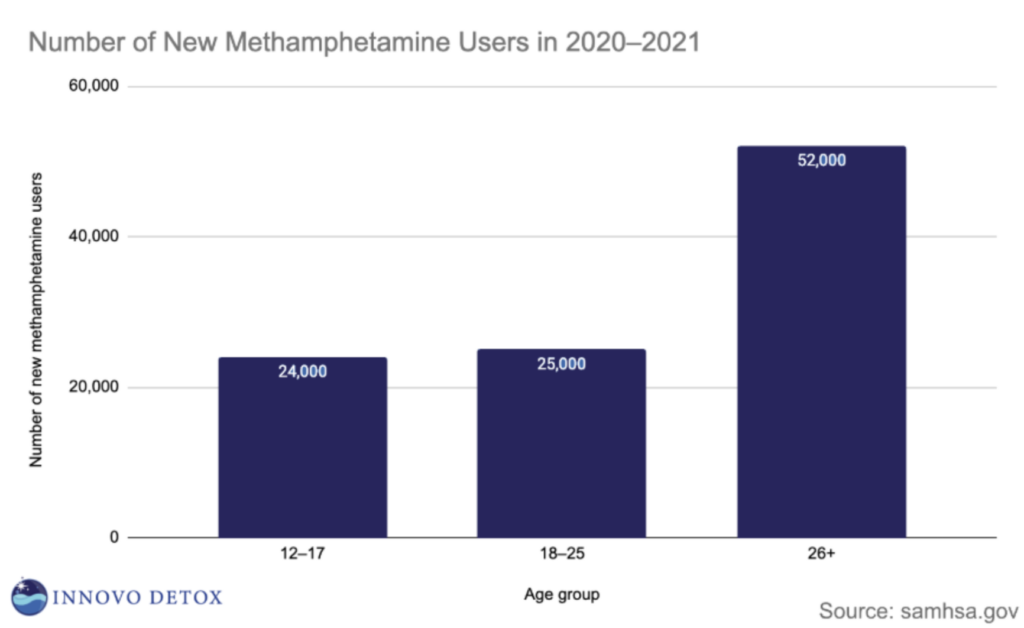
- 101,000 people aged 12 or older began using methamphetamine in the past year. Around 50% of these new users were over the age of 25.
- The Monitoring the Future Survey reports that:
- In 2022, approximately 0.2% of 8-graders, 0.3% of 10-graders, and 0.5% of 12-graders had used methamphetamine in the past year.
- In 2023, the percentage of methamphetamine users dropped to 0% for 8-graders and 0.4% for 12-graders. The usage slightly increased to 0.4% among 10-graders.
- Beth Han et al.’s 2021 study, “Methamphetamine Use, Methamphetamine Use Disorder, and Associated Overdose Deaths Among U.S. Adults,” reports that:
- From 2015 to 2019, the number of people reporting methamphetamine use rose by 43%, while overdose deaths involving methamphetamine surged by 180%.
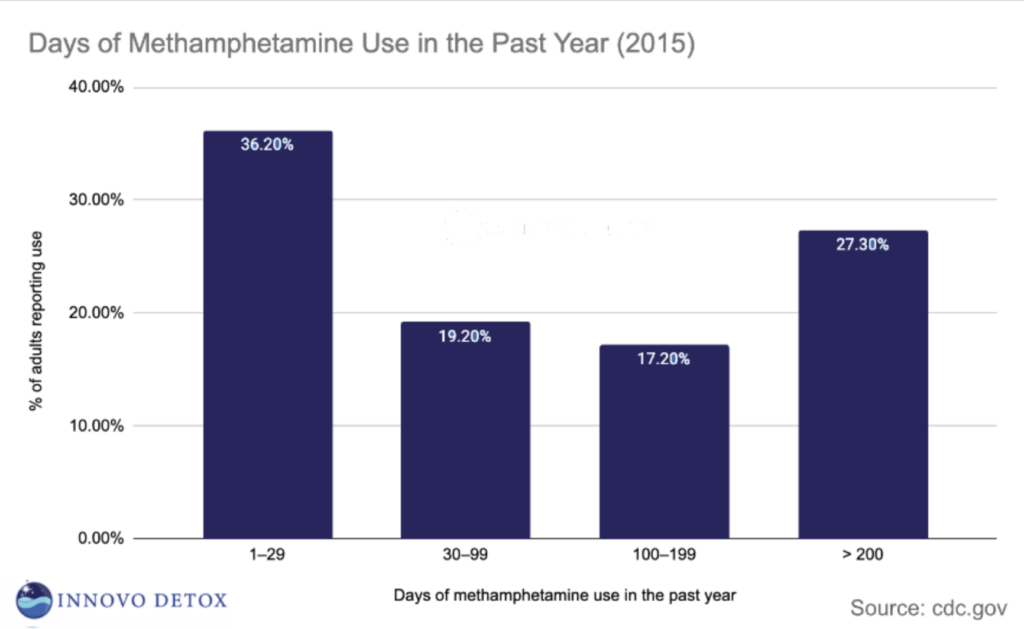
- During the same 4-year period, the number of people reporting frequent methamphetamine use—defined as 100 days or more per year—increased by 66%.
- A similar increase was observed in the concurrent use of methamphetamine and cocaine, with reported use rising by 60% between 2015 and 2019.
- The CDC analyzed data from the 2015–2018 NSDUH and found that the estimated rate of past-year methamphetamine use among adults during this period was 6.6 per 1,000.
- Among those who reported using methamphetamine in the past year before 2015–2018 as per the NSDUH data, 27.3% used it on 200 or more days, 52.9% had a methamphetamine use disorder, and 22.3% injected the drug.
- According to the CDC, the rates of past-year methamphetamine use varied from 2.76 per 1,000 in New York to 13.98 per 1,000 in Nevada during 2017–2018.
Types of Meth Users in the United States
- According to the 2021 NSDUH:
- Methamphetamine use in the past year was more common among Multiracial individuals (1.6%) and White individuals (1.1%) compared to Black individuals (0.4%) and Asian individuals (0.3%).
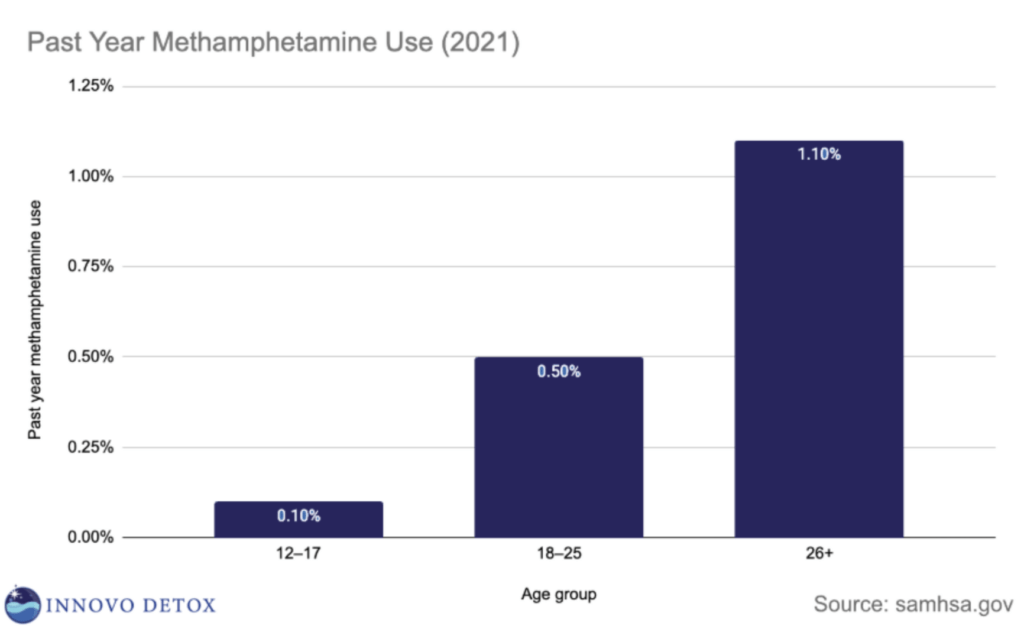
- 0.9% of individuals aged 12 and older, which amounts to 2.5 million people, used methamphetamine in the past year.
- Among adolescents aged 12–17, the rate of methamphetamine use was the lowest at 0.1% (37,000 people).
- The percentages rose with age: 0.5% (166,000 people) among young adults aged 18–25, and 1.1% (2.3 million people) among adults aged 26 and older.
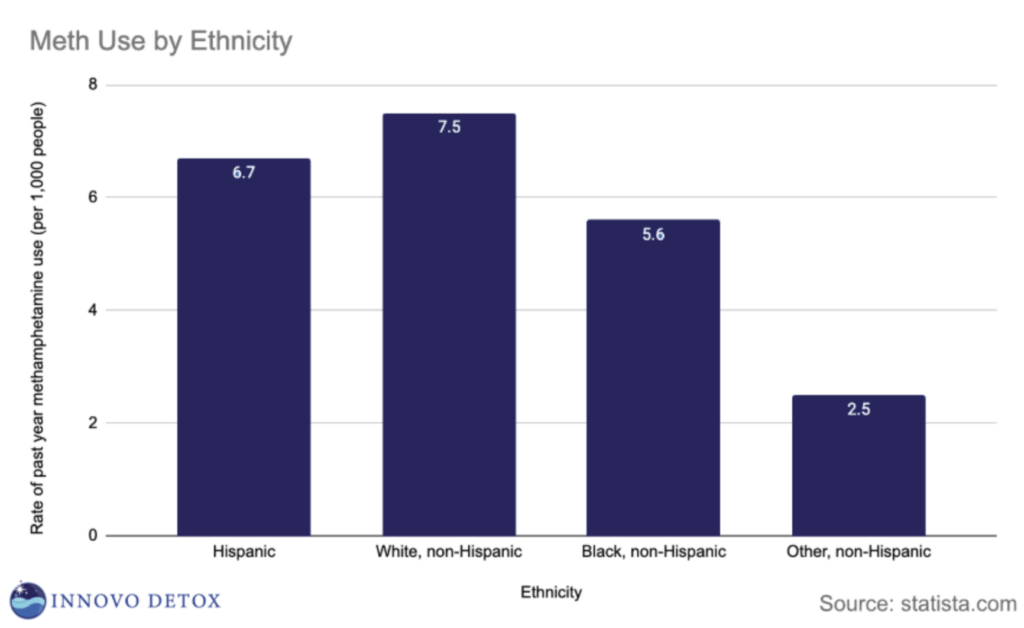
- According to Statista, between 2015 and 2018, an annual average of nearly 8 out of every 1,000 White, non-Hispanic adults in the U.S. reported using methamphetamine in the past year.
- The Substance Abuse and Mental Health Services Administration (SAMHSA) reported that in 2019, 3.6% of LGB adults aged 26 and older used methamphetamine, marking a 0.7% increase from 2018.
Meth and Other Drugs
- The 2021 NSDUH reports that:
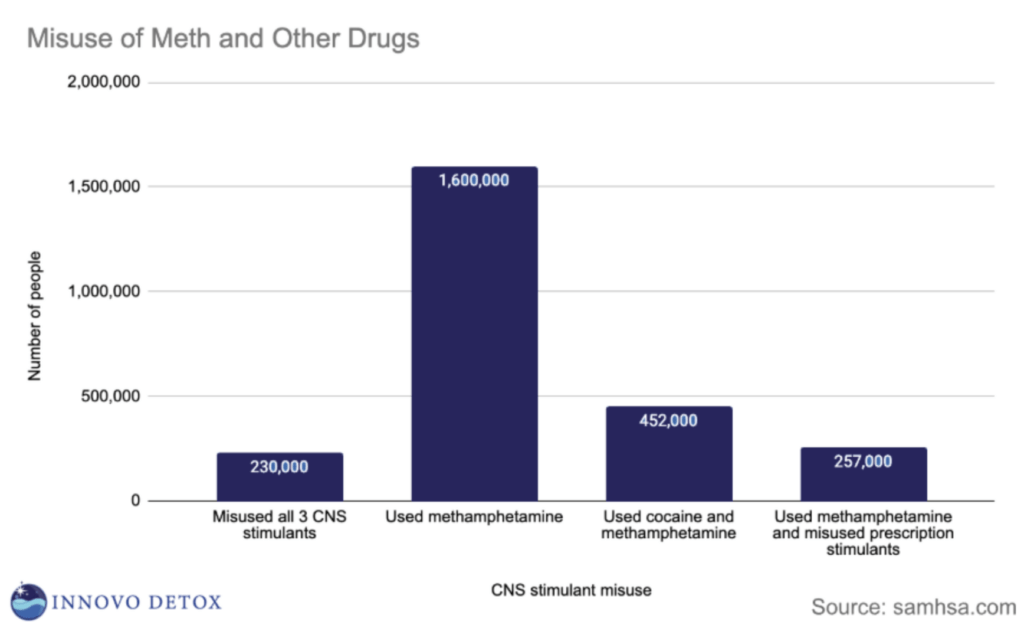
- 9.2 million people misused central nervous system stimulants including cocaine, methamphetamine, and prescription stimulants. 230,000 people used or misused all 3 types of CNS stimulants.
- Around 1 in 6, or 1.6 million people (17.5%) used only methamphetamine.
- 452,000 individuals (4.9%) used both cocaine and methamphetamine without misusing prescription stimulants.
- 257,000 individuals (2.8%) used methamphetamine and misused prescription stimulants but did not use cocaine.
- Millennium Health’s Signals Report indicates that in 2023, 60% of specimens from patients who had used fentanyl also tested positive for methamphetamine, marking an 875% increase since 2015.
- According to Stinson S F’s 2005 study, “Comorbidity Between DSM-IV Alcohol and Specific Drug Use Disorders in the United States: Results From the National Epidemiologic Survey on Alcohol and Related Conditions,” the prevalence of alcohol use disorder was 75% higher among patients dependent on amphetamines.
- Halkitis N P’s 2005 study, “Longitudinal Investigation of Methamphetamine Use Among Gay and Bisexual Men in New York City: Findings From Project Bumps,” found that over 60% of methamphetamine users in New York City reported using the drug in combination with alcohol.
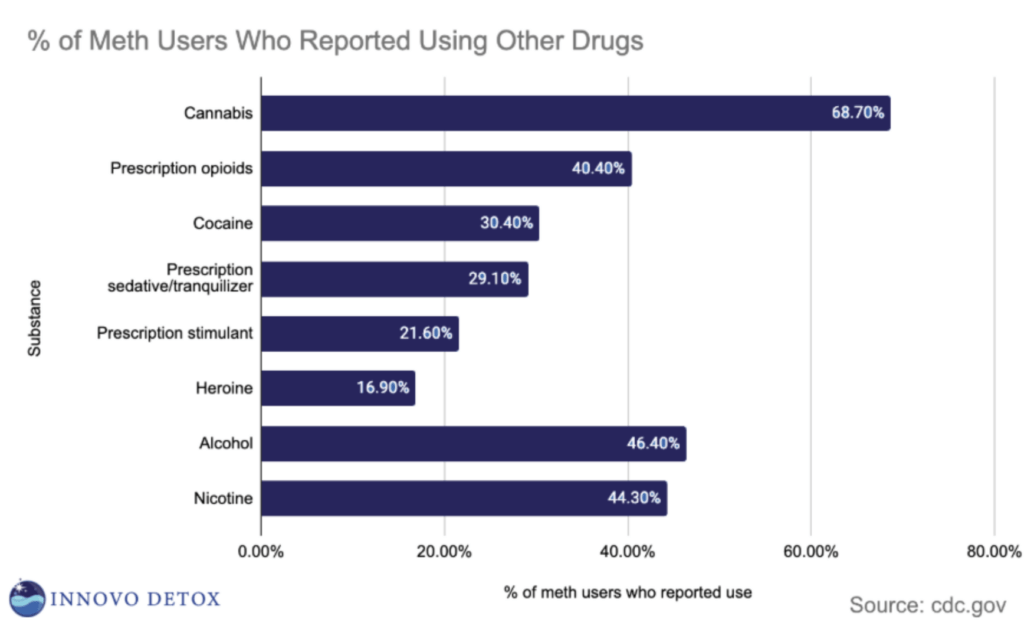
- According to the CDC, among adults who used methamphetamine in the past year, the estimated prevalence of using or misusing other substances was as follows:
Mental Health Impacts of Meth Abuse in the United States
- Xing G D et al.’s study, “Prevalence and Patterns of Methamphetamine Use and Mental Health Disparity in the United States,” analyzed over 4 million hospital admissions in the U.S. between 2008 and 2020 and revealed the following:
- There was a 10.5-fold rise in hospitalizations related to mental health disorders alongside methamphetamine use from 2008 to 2020.
- Male patients showed a 16.5-fold increase in mental-health-related hospital admissions, significantly higher than the 7.3-fold increase among female patients.
- Edward G S et al’s 2011 study, “Anxiety Disorders Among Methamphetamine Dependent Adults: Association With Posttreatment Functioning,” reported that 39% of individuals with amphetamine use disorder had a lifetime history of anxiety disorders.
- The CDC’s analysis of 2015–2018 NSDUH data revealed that among individuals who used methamphetamine, 57.7% reported experiencing any mental illness, while 25.0% reported having a serious mental illness within the past year.
- Bazayet H. et al’s 2020 study, “Methamphetamine Intoxication and Suicidal Ideation/Behavior in the Emergency Department,” examined suicidal behavior among 629 patients admitted to a Texas emergency department for methamphetamine intoxication from January to December 2020. Suicidal ideation or behavior was observed in 48.2% of these patients with acute methamphetamine intoxication.
Methamphetamine Overdose Deaths in the United States
- According to the National Institute on Drug Abuse, drug overdose deaths involving psychostimulants with abuse potential, mainly methamphetamine, increased from 5,716 in 2015 to 34,022 in 2022.
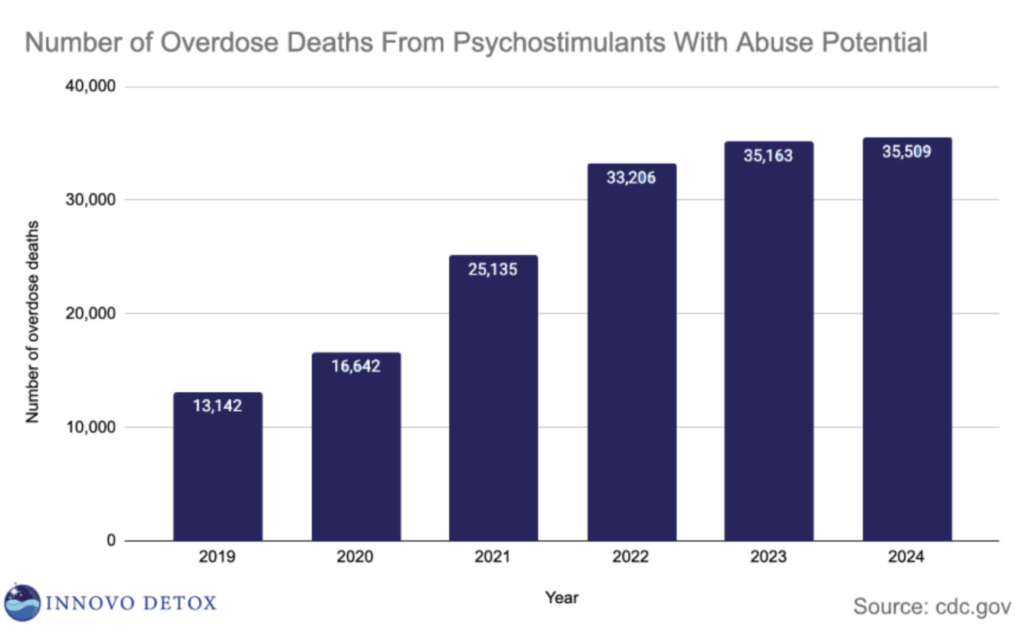
- According to the CDC, there were 13,142 reported psychostimulant overdose deaths in January 2019, which increased to 35,509 in January 2024.
- The yearly trend of overdose deaths from psychostimulants with abuse potential, mainly methamphetamine, is as follows:
- Pew’s analysis of data from the CDC shows that:
- Methamphetamine overdose deaths more than doubled between 2015 and 2019, rising from 2.1 to 5.6 per 100,000 people.
- All 43 states with available data for both 2015 and 2019 reported increases in methamphetamine-related death rates. 34 states experienced at least 2 times more overdose deaths in 2019 than in 2015.
- According to Han B’s study, “Methamphetamine Use, Methamphetamine Use Disorder, and Associated Overdose Deaths Among U.S. Adults,” the number of deaths associated with methamphetamine use increased from 5,526 annually in 2015 to 15,489 annually in 2019, representing an approximate 180% rise.
Meth-Related Crime and Arrests in the United States
- According to an analysis by Pew:
- In 2019, 42% of individuals with a methamphetamine substance use disorder reported being arrested for any offense within the previous year.
- In states with available data, meth possession arrests increased by an average of 79% over 5 years. In 9 of these states, possession arrests more than doubled during this period, while 5 states saw rates at least triple. Meth possession arrests rose in 40 out of 43 states where comparable data from 2015 and 2019 was available.
- Pew’s analysis of FBI data estimates that arrests for methamphetamine possession, classified as a “dangerous non-narcotic” drug, rose by approximately 240,400 between 2009 and 2019.
- Stretesky B P’s 2009 study, “National Case-Control Study of Homicide Offending and Methamphetamine Use,” found that individuals who use methamphetamine are nearly 9 times more likely to commit homicide.
Meth Addiction Treatment Stats
- The 2014 Treatment Episode Data Set Report indicates that the treatment admission rate for methamphetamine/amphetamines in 2004 was 57 per 100,000 people aged 12 and older, which is 8% higher than the 2014 rate of 53 per 100,000.
- The 2015 Treatment Episode Data Set reported that treatment admissions for methamphetamine misuse decreased from 68 per 100,000 individuals in 2005 to 49 per 100,000 in 2015.
Frequently Asked Questions
How Does Meth Affect the Brain?
Meth increases the release of dopamine, a neurotransmitter associated with pleasure, which leads to intense happiness. Over time, it damages dopamine receptors, impairs the brain’s reward system, and causes addiction, memory loss, and cognitive deficits.
Where Are the Major Meth Hubs in the U.S.?
According to the Drug Enforcement Administration, the 8 major meth hubs in the U.S. are Atlanta, Dallas, El Paso, Houston, Los Angeles, New Orleans, Phoenix, and St. Louis.
Can Meth Be Used to Treat Attention Deficit Hyperactivity Disorder (ADHD)?
Meth can be prescribed in very low doses to treat ADHD. However, it’s rarely used due to the risk of addiction and severe side effects.


