Benzodiazepine withdrawal is a complex process that requires medical oversight to ensure safety and long-term recovery success. While some mild cases manage symptoms with outpatient support, most individuals need professional detox supervision to prevent severe complications such as seizures, anxiety rebound, or psychosis.
Natural and herbal remedies, such as kava root, valerian root, and passion flower, can ease mild discomfort and promote relaxation during detoxification, but should not replace medical treatment. Professional detox programs use gradual tapering, medication-assisted therapy, nutritional support, and psychological care to stabilize both body and mind.
Though herbs complement recovery, they also carry side effects and potential drug interactions. In Pennsylvania, specialized detox centers provide safe, evidence-based care and tailored treatment plans to help patients transition from dependence to stability. Choosing a medically guided detox remains the most reliable path toward overcoming benzo withdrawal and achieving sustained wellness.
Can You Withdraw from Benzos Without Detoxing in a Hospital?
No, withdrawing from benzodiazepines (benzos) without medical detox supervision is not considered safe. While some individuals with mild to moderate dependence taper off under a doctor’s guidance in an outpatient setting, it must be done with strict clinical monitoring to prevent dangerous complications such as seizures, psychosis, or severe anxiety rebound.
What Natural or Herbal Remedies Can Support a Safe Benzo Detox?
Kava root, valerian root, and passion flower can support a safe benzo detox by easing anxiety, improving sleep, and promoting relaxation during withdrawal. While these natural aids may help relieve discomfort, they should be used as complementary options under medical supervision, not as substitutes for clinical detox.
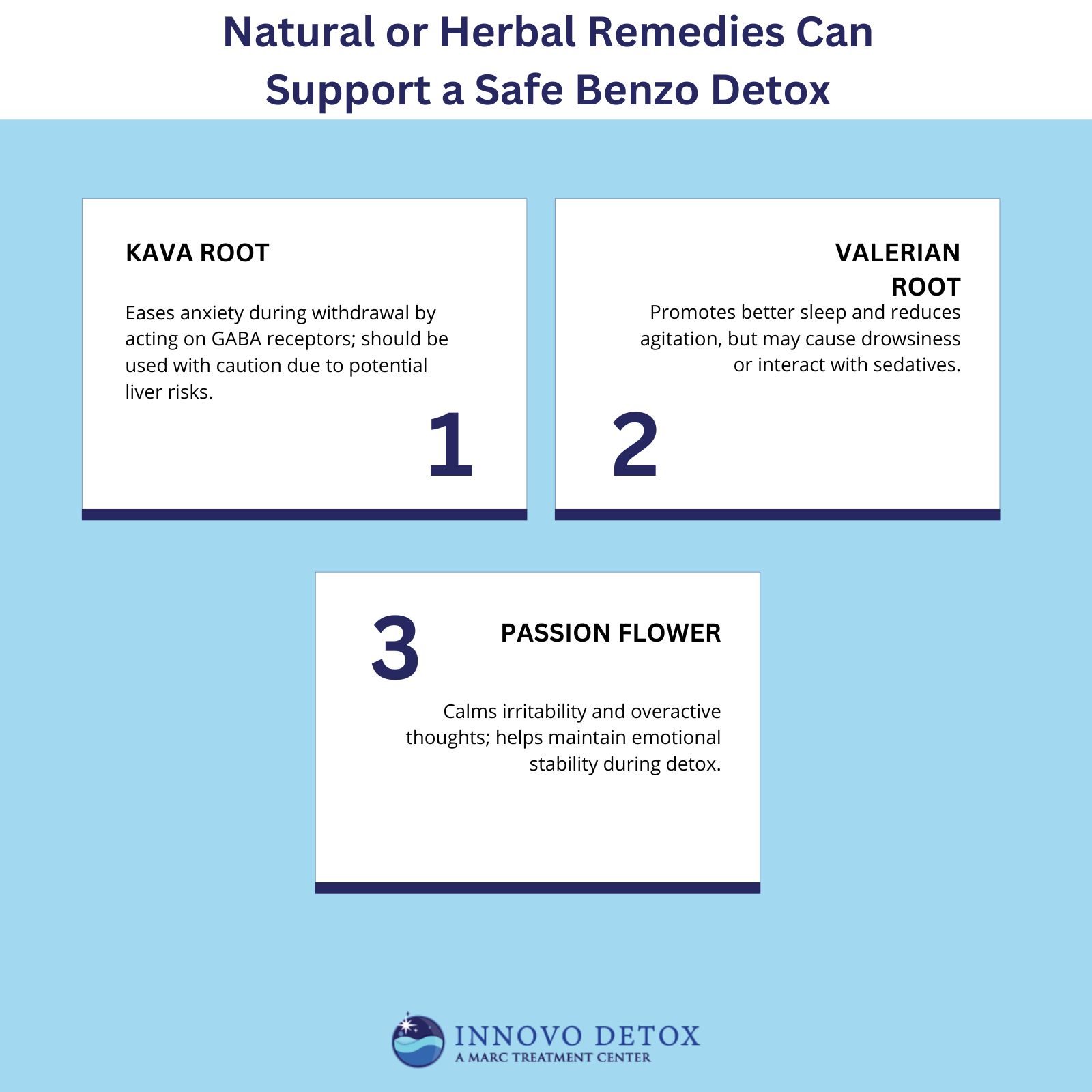
The following natural or herbal remedies can support a safe benzo detox:
- Kava Root: Kava root reduces anxiety and restlessness during benzo withdrawal by interacting with the brain’s GABA receptors. However, long-term or excessive use affects liver health, making professional monitoring essential.
- Valerian Root: Often used as a natural sleep aid, valerian root helps improve sleep quality and reduce nervous tension. It alleviates insomnia and mild agitation that occur during detox, but causes drowsiness or interacts with other sedatives if taken without guidance.
- Passion Flower: This herb supports emotional balance by soothing irritability, racing thoughts, and tension linked to withdrawal. Passion flower is combined with other calming herbs to ease nervous system overactivity during detox, helping patients maintain relaxation and emotional stability.
What Side Effects Can Herbal Alternatives Cause?
Herbal remedies can cause side effects, including dizziness, nausea, headaches, and digestive discomfort. While herbal treatments for benzo withdrawal appear safe, they still lead to unwanted reactions and dangerous drug interactions. Because the FDA does not regulate supplements, their purity and potency vary, which increases the risk of side effects. Always consult a medical professional before using any herbal detox aids to ensure safe and effective recovery.
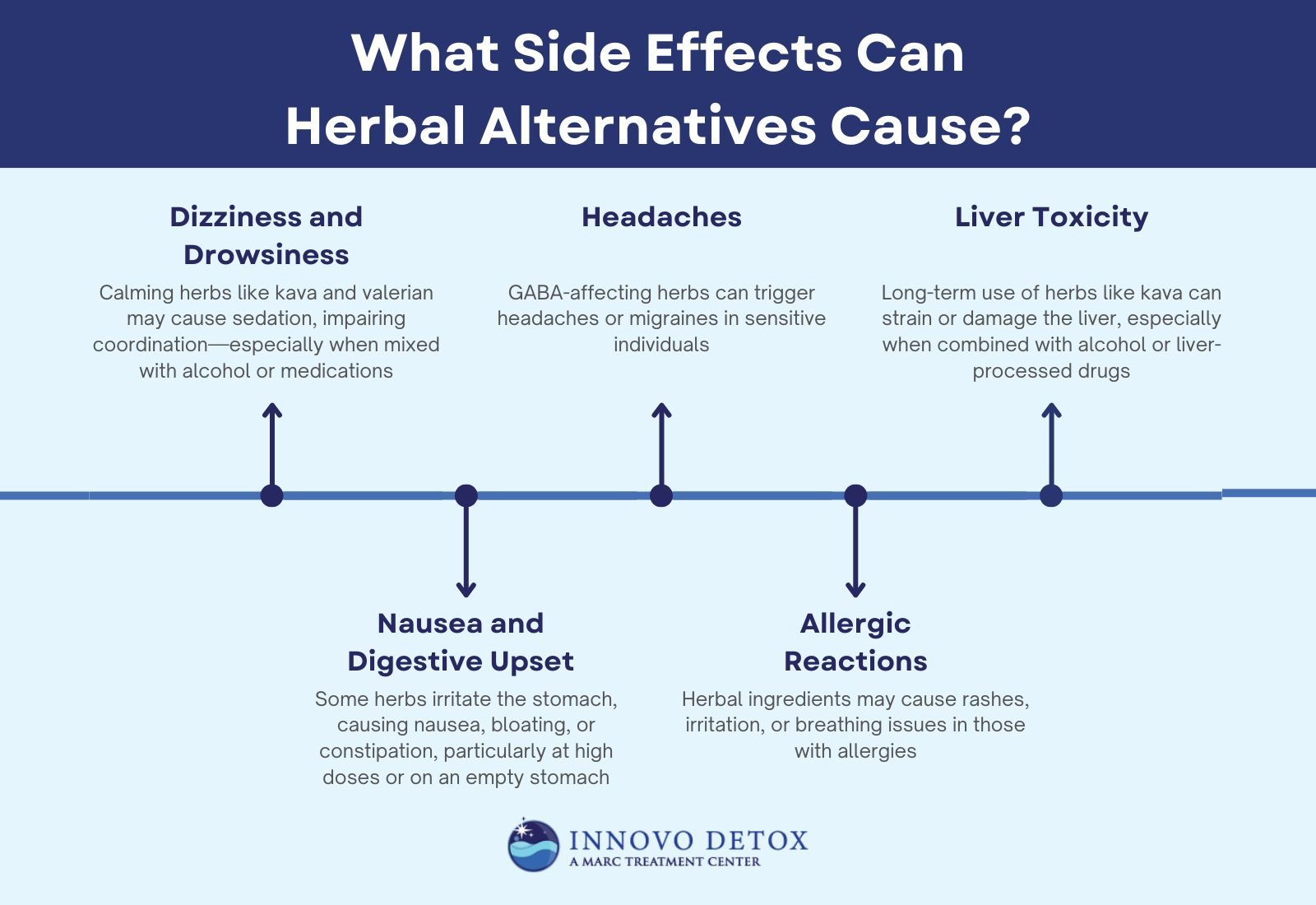
The following are the side effects of herbal remedies:
- Dizziness and Drowsiness: Many calming herbs, such as kava or valerian, cause excessive sedation, leading to dizziness or impaired coordination. This effect worsens when combined with prescription medications or alcohol.
- Nausea and Digestive Upset: Certain herbal supplements can irritate the stomach lining or disrupt digestion, leading to nausea, bloating, or constipation, especially when taken in high doses or on an empty stomach.
- Headaches: Sudden changes in brain chemistry caused by herbal sedatives can trigger headaches or migraines, especially in individuals sensitive to GABA-modulating herbs.
- Allergic Reactions: Natural does not always mean safe. Herbal ingredients cause skin irritation, rashes, or breathing difficulties in those with allergies or sensitivities.
- Liver Toxicity: Prolonged use of herbs like kava has been linked to liver strain or damage, especially when used with alcohol or other medications processed by the liver.
What Is the Role of Professional Detox in Benzo Withdrawal?
The role of professional detox in benzo withdrawal is to ensure a medically safe, structured, and supportive process that minimizes health risks and emotional distress. Detox programs provide continuous monitoring, controlled tapering, and access to medications that prevent dangerous complications such as seizures or severe anxiety. This medically supervised professional detox approach not only stabilizes the body but also prepares individuals for long-term recovery by addressing the psychological effects of withdrawal.
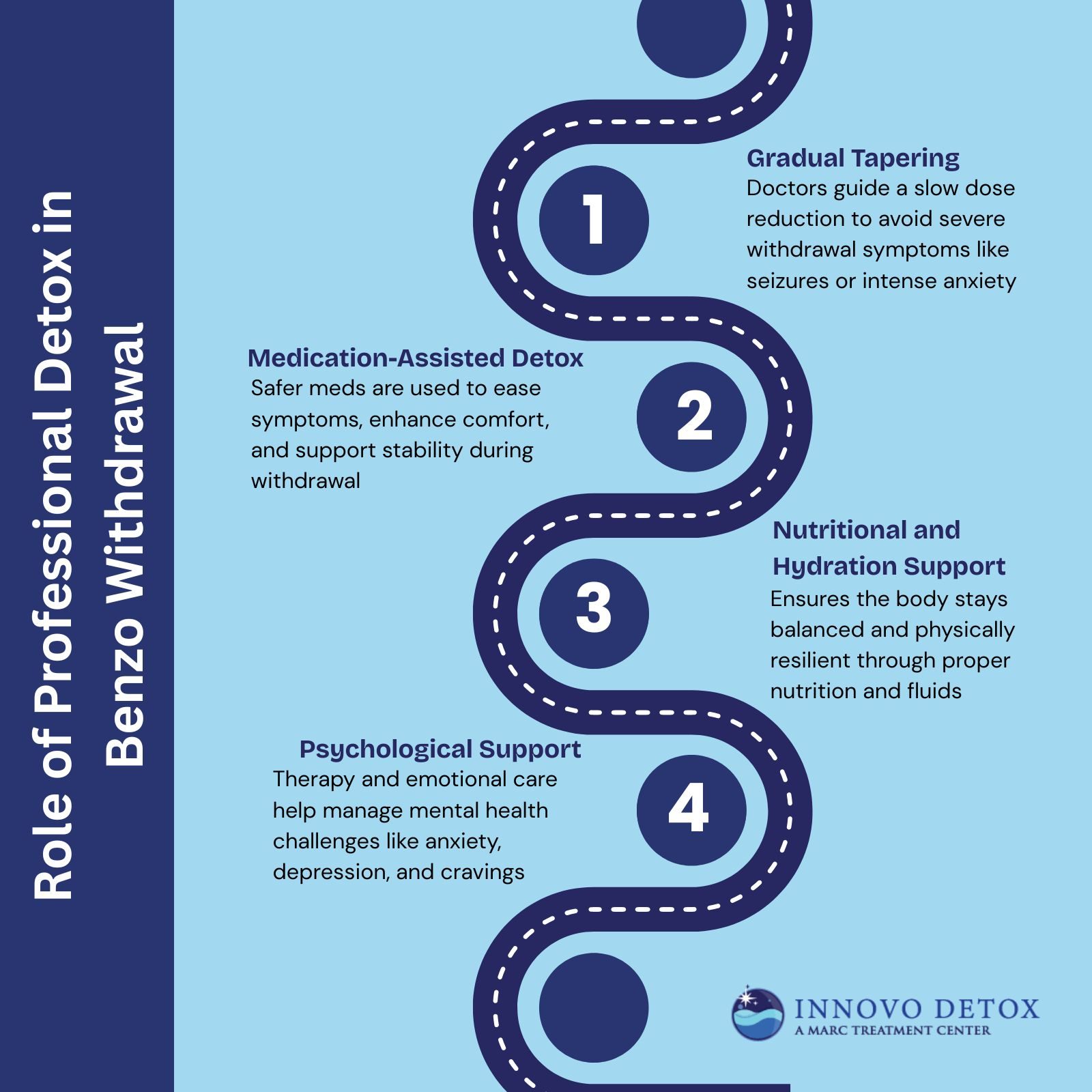
The following are the roles of professional detox in benzodiazepine withdrawal:
- Gradual Tapering: Medical professionals oversee a slow, controlled reduction in dosage to prevent withdrawal shocks, minimizing the risk of seizures or rebound anxiety.
- Medication-Assisted Detox: Safer medications, such as long-acting benzodiazepines or anti-anxiety agents, are used to stabilize symptoms, reduce discomfort, and promote calmness during the transition.
- Nutritional and Hydration Support: Proper hydration and nutrient replenishment help restore the body’s natural balance, thereby strengthening physical resilience throughout the detox process.
- Psychological Support: Therapeutic counseling, mindfulness sessions, and emotional care help manage anxiety, depression, and cravings associated with withdrawal.
Where to Get Help for Benzo Withdrawal Symptoms in Pennsylvania?
Help for benzodiazepine withdrawal symptoms in Pennsylvania is available through licensed detox and addiction treatment centers that specialize in medically supervised benzodiazepine withdrawal. These facilities provide comprehensive care that combines medical management, psychological therapy, and long-term recovery planning.
Benzodiazepines are among the most prescribed and most misused medications in the United States, and dependence occurs even with proper use. Attempting withdrawal without medical supervision leads to severe symptoms, relapse, or life-threatening complications.
Detox centers in Pennsylvania provide a safe environment where patients receive individualized tapering protocols, continuous clinical monitoring, and counseling support. Seeking professional help ensures that benzo withdrawal is managed safely, effectively, and with long-term recovery success in mind.
Can Herbal Remedies Replace Medical Benzo Detox?
No, herbal remedies cannot replace a medical benzo detox. While natural options like valerian root or kava offer mild symptom relief, they do not address the neurochemical imbalances caused by benzodiazepine dependence. A professional detox program ensures safe tapering, medical supervision, and access to emergency care, elements that herbs alone cannot provide.
How Long Does Benzo Detox Take in a Professional Setting?
The duration of benzo detox in a professional setting ranges from 7 to 14 days, depending on the type of benzodiazepine, dosage, and length of use. Some individuals require extended tapering over several weeks or months to minimize withdrawal symptoms safely. Medical teams tailor detox timelines to each person’s clinical needs for optimal recovery outcomes.
Are There Specialized Benzo Detox Centers in Pennsylvania?
Yes, Pennsylvania has several specialized benzo detox centers offering medically supervised withdrawal programs. These facilities provide controlled tapering plans, continuous monitoring, medication-assisted support, and therapy to address both physical and emotional recovery. Individuals choose between inpatient and outpatient programs based on the severity of dependence and personal circumstances.