Alcoholics Anonymous (AA) refers to a fellowship of individuals who share a common desire to stop drinking and help others achieve sobriety. Founded in 1935, AA has become one of the most recognized programs for alcohol addiction recovery, helping millions worldwide through its peer-based approach.
AA works by providing a supportive, peer-driven environment where individuals can attend regular meetings, share their experiences, and participate in the 12-step program.
The main principles of Alcoholics Anonymous include honesty, hope, faith, courage, integrity, willingness, humility, love, discipline, perseverance, spirituality, and service. These principles guide individuals through their recovery journey by focusing on personal growth, accountability, and spiritual development.
The benefits of Alcoholics Anonymous include long-term abstinence from alcohol, reduced relapse rates, and a strong sense of community support. According to a study by the National Institute on Alcohol Abuse and Alcoholism (NIAAA) titled “Alcohol Use Disorder and Treatment,” published in 2023, AA participants who attend regularly are 33% more likely to maintain long-term sobriety.
Alternatives to Alcoholics Anonymous include Medication-Assisted Treatment (MAT), SMART Recovery, LifeRing, and Women for Sobriety (WFS). According to a report from the Substance Abuse and Mental Health Services Administration (SAMHSA) titled “Alcohol Recovery Options,” published in 2021, alternatives like SMART Recovery focus on self-empowerment and cognitive-behavioral techniques, offering a secular option with a similar focus on personal responsibility and recovery.
What Is Alcoholics Anonymous?
Alcoholics Anonymous (AA) is a self-help organization that aims to assist individuals struggling with alcohol addiction in achieving and maintaining sobriety through mutual support and a structured 12-step program.
AA follows a 12-step program that guides individuals toward abstinence and personal growth. The organization operates through peer-led support groups, offering an environment where members share their experiences, challenges, and successes in overcoming alcohol dependence.
AA stands for “Alcoholics Anonymous,” a name that reflects its foundational principle: anonymity. The name is intended to emphasize the importance of a confidential and supportive environment where individuals seek help without fear of judgment or exposure. The use of “Anonymous” highlights the focus on personal recovery, rather than on individual identities, promoting a sense of equality among members.
According to a study by the National Institute on Alcohol Abuse and Alcoholism (NIAAA) titled “Alcohol Use Disorder: A Public Health Perspective,” published in Alcohol Research (2020), approximately 7.9% of individuals with alcohol use disorder (AUD) received treatment through mutual help groups like AA, illustrating its significance in the overall landscape of addiction recovery.
What Is the History of Alcoholics Anonymous?
The history of Alcoholics Anonymous (AA) started in 1935 by Bill Wilson and Dr. Bob Smith, two individuals who struggled with alcohol addiction and sought a solution. They created AA as a fellowship of men and women who shared a common desire to stop drinking, and it became a cornerstone in the development of self-help and support groups for addiction.
The primary purpose of AA is to help individuals achieve sobriety and maintain long-term recovery through a structured 12-step program, which emphasizes accountability, spiritual growth, and peer support.
The inception of AA was influenced by Wilson’s personal struggles with alcoholism, along with Dr. Bob’s desire to find a lasting solution for his own addiction. Together, they combined their experiences to create a program that offered both spiritual and practical guidance for those battling alcohol dependence. The fellowship grew rapidly, spreading across the United States and eventually around the world, providing a foundation for countless other recovery programs.
According to the National Institute on Alcohol Abuse and Alcoholism (NIAAA), titled “Alcohol Use Disorder and Treatment,” published in 2023, AA’s 12-step program has been a key intervention for millions globally, showing that support-based recovery programs like AA significantly contribute to long-term sobriety.
Why Is Anonymity Important in Alcoholics Anonymous?
Anonymity is important in Alcoholics Anonymous because it helps create a safe, non-judgmental space where individuals share their experiences openly without fear of social stigma.
The principle of anonymity ensures that members’ identities remain confidential, encouraging honest and vulnerable conversations about their struggles with alcohol addiction. This is particularly crucial as alcohol dependence carries a significant social stigma, which deters individuals from seeking help or participating in recovery programs.
Furthermore, anonymity promotes equality among members, as it removes the hierarchy that could be formed by wealth, status, or other external identifiers. This fosters a sense of community, where each participant is valued solely for their commitment to recovery, rather than for their background or personal circumstances.
According to a study by the National Institute on Alcohol Abuse and Alcoholism (NIAAA) titled “The Role of Social Support in Alcohol Recovery,” published in 2022, anonymity has been shown to enhance the success of group therapy by creating a trusting environment that encourages open sharing.
How Does Alcoholics Anonymous Work?
Alcoholics Anonymous works by providing a structured, peer-supported environment where individuals with alcohol addiction receive help through the 12-step program. The program focuses on personal accountability, spiritual growth, and community support to help individuals achieve and maintain sobriety.
Participants attend AA meetings, where they share their experiences, challenges, and successes, while also listening to others in similar situations. The 12-step guide members through a process of self-reflection, making amends for past wrongs, and seeking spiritual guidance to overcome addiction.
The program emphasizes the importance of peer sponsorship, where experienced members mentor newcomers, providing guidance and support throughout their recovery journey. The AA “Big Book” is a core resource used in meetings and personal study, offering practical advice and spiritual insights to aid in overcoming alcoholism.
In addition, AA meetings include open discussions, allowing participants to share their struggles and victories in a safe, confidential setting. According to the National Institute on Alcohol Abuse and Alcoholism (NIAAA), titled “Alcohol Recovery Programs and Their Effectiveness,” published in 2021, AA’s model has been shown to significantly reduce alcohol consumption and promote long-term recovery in participants.
How Does Alcoholics Anonymous Help People With Alcohol Addiction?
Alcoholics Anonymous helps people with alcohol addiction by offering a supportive environment that encourages sobriety through peer support, structured meetings, and the 12-step program.
The steps guide individuals toward recovery by focusing on personal accountability, spiritual growth, and making amends for past actions. AA provides a network of support through meetings and sponsor relationships, which are crucial for individuals who do not have a strong support system outside of the fellowship.
The program fosters a sense of community, helping participants feel understood and less isolated in their struggles. AA’s approach to recovery is effective in numerous studies.
According to a study by the National Institute on Alcohol Abuse and Alcoholism (NIAAA) titled “Alcohol Use Disorder and Treatment,” published in 2023, approximately 33% of individuals who participate in AA for at least one year report reduced alcohol consumption and long-term abstinence.
Additionally, the study found that individuals who engage in AA meetings and have a sponsor are more likely to experience positive recovery outcomes, with a 45% higher success rate in maintaining sobriety compared to those who do not participate in mutual-help groups.
What Are the 12 Principles of Alcoholics Anonymous?
The 12 principles of Alcoholics Anonymous are honesty, hope, faith, courage, integrity, willingness, humility, love, discipline, perseverance, spirituality, and service. These principles guide individuals through their recovery journey, helping them develop the emotional and spiritual strength necessary to overcome alcohol addiction and maintain long-term sobriety.
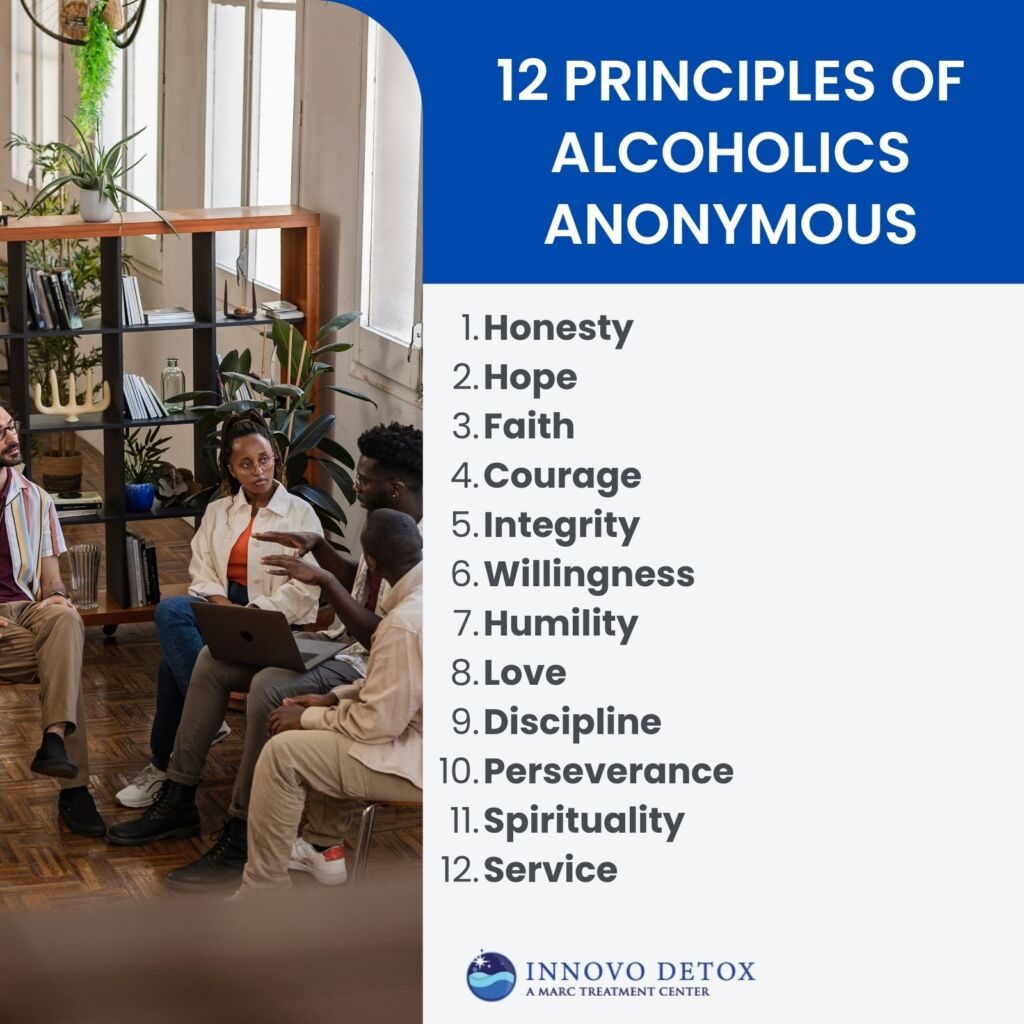
The 12 principles of Alcoholics Anonymous are explained below:
- Honesty: Honesty is the foundation of AA’s recovery process. By being truthful about their addiction, individuals begin to confront their behaviors and their need for help. This principle encourages participants to accept their limitations and face the reality of their condition.
- Hope: Hope is essential in maintaining the belief that recovery is possible. It motivates individuals to keep moving forward, even when challenges arise. This principle emphasizes the importance of finding hope in the shared experiences of others within the fellowship.
- Faith: Faith is about believing in the process of recovery and in the possibility of change. It encourages individuals to trust the 12-step program and the guidance of a higher power, however they choose to define it. Faith helps to build resilience and strength throughout the recovery journey.
- Courage: Courage is needed to face the emotional and psychological challenges of addiction. It involves the willingness to step out of one’s comfort zone and make difficult changes. This principle empowers individuals to confront their fears and take proactive steps toward recovery.
- Integrity: Integrity involves being truthful to oneself and others, aligning actions with values. It helps individuals in the AA program maintain consistency in their recovery, ensuring that their thoughts, words, and actions are in harmony. This principle supports long-term sobriety by promoting ethical and responsible behavior.
- Willingness: Willingness is the openness to embrace change and follow the steps necessary for recovery. It requires individuals to be open to new ideas and suggestions, even when they might be uncomfortable. This principle emphasizes the importance of flexibility and adaptability in the recovery process.
- Humility: Humility involves recognizing the need for help and being willing to learn from others. It encourages individuals to let go of pride and accept that they cannot recover alone. This principle fosters a sense of unity within the AA fellowship, where everyone is seen as equal in their struggle.
- Love: Love in AA is about showing compassion and empathy for oneself and others. It encourages individuals to treat themselves and others with kindness, understanding, and respect. This principle helps build a supportive, caring environment where members feel safe and nurtured.
- Discipline: Discipline is essential for maintaining a structured approach to recovery. It involves sticking to the commitments made to oneself and others, such as attending meetings and following the 12-step program. This principle helps individuals remain focused and consistent in their efforts to stay sober.
- Perseverance: Perseverance means continuing to work on one’s recovery despite setbacks or challenges. It teaches individuals to stay committed to their goals, even when progress seems slow. This principle is crucial for long-term success in maintaining sobriety and achieving personal growth.
- Spirituality: Spirituality in AA is about connecting with a higher power, whatever that may be for the individual. It provides a sense of purpose and strength beyond oneself, fostering inner peace and emotional balance. This principle supports mental and emotional healing during recovery.
- Service: Service encourages individuals to help others who are struggling with alcohol addiction. By offering support and guidance, members contribute to the growth of the AA community and their own recovery. This principle reinforces the importance of giving back and maintaining a sense of responsibility within the fellowship.
What Are the 12 Traditions of Alcoholics Anonymous?
The 12 Traditions of Alcoholics Anonymous provide guidelines for the organization’s structure and interactions, ensuring unity, purpose, and effective operation. They emphasize principles like anonymity, collective responsibility, and maintaining focus on helping individuals recover from alcohol addiction.
The 12 Traditions of Alcoholics Anonymous are explained below:
- Our common welfare should come first; personal recovery depends upon AA unity: Unity is vital for the success of Alcoholics Anonymous. This tradition emphasizes the importance of working together as a collective to ensure the success of individual recoveries and the overall group.
- For our group purpose, there is but one ultimate authority – a loving God as He may express Himself in our group conscience: This tradition promotes the idea that the group’s decisions should be guided by a higher power or the collective wisdom of its members. It helps maintain a focus on shared goals and spiritual guidance rather than personal opinions or agendas.
- The only requirement for AA membership is a desire to stop drinking: This tradition ensures that AA remains inclusive and accessible to anyone who seeks help with alcohol addiction. It focuses on the individual’s willingness to seek recovery rather than any specific beliefs or qualifications.
- Each group should be autonomous, except in matters affecting other groups or AA as a whole: Autonomy allows each AA group to operate according to its specific needs while remaining connected to the broader fellowship. This tradition encourages flexibility and adaptability, while also maintaining responsibility to the larger AA community.
- Each group has but one primary purpose – to carry its message to the alcoholic who still suffers: The core mission of every AA group is to help others who are struggling with alcohol addiction. This tradition keeps the focus on the group’s main goal: supporting recovery and offering a path to sobriety.
- An AA group ought never endorse, finance, or lend the AA name to any related facility or outside enterprise: This tradition keeps AA independent and focused solely on its mission. It prevents external influence and ensures that AA’s message remains unbiased and free from outside interests, such as commercial or political agendas.
- Every AA group ought to be fully self-supporting, declining outside contributions: Self-sufficiency is crucial for maintaining AA’s integrity and independence. This tradition ensures that AA remains financially independent and does not rely on outside funding, preserving its focus on spiritual growth and recovery.
- Alcoholics Anonymous should remain forever nonprofessional, but our service centers may employ special workers: AA maintains its grassroots, peer-led structure, emphasizing the importance of personal experience over professional intervention. This tradition allows for professional assistance when necessary, but ensures that the leadership of AA remains within the fellowship itself.
- AA, as such, ought never be organized; but we may create service boards or committees directly responsible to those they serve: This tradition ensures that AA remains a fellowship driven by the principles of equality and shared responsibility, rather than becoming a formal organization. It allows for practical decision-making through service boards, while still keeping the community spirit intact.
- Alcoholics Anonymous has no opinion on outside issues; hence, the AA name ought never be drawn into public controversy: This tradition keeps AA focused solely on alcohol recovery and free from political or social debates. It encourages members to avoid using the AA name in issues unrelated to their recovery work.
- Our public relations policy is based on attraction rather than promotion; we need to always maintain personal anonymity at the level of press, radio, and films: AA’s approach to public relations relies on attracting individuals to the fellowship through positive word-of-mouth rather than advertising. Anonymity ensures that members are protected from public exposure and preserves the integrity of the fellowship.
- Anonymity is the spiritual foundation of all our traditions, ever reminding us to place principles before personalities: Anonymity is the cornerstone of AA’s structure, promoting humility and unity. This tradition ensures that personal egos do not interfere with the mission of recovery, prioritizing the collective good over individual recognition.
What Happens During an Alcoholics Anonymous Meeting?
During an AA meeting, members discuss their struggles with alcohol addiction, listen to others, and provide encouragement, creating a space of mutual understanding and accountability. The purpose of these meetings is to foster sobriety and personal growth through shared experiences, making it clear that no one is alone in their journey.
AA meetings are held in various locations such as community centers, churches, and dedicated recovery spaces, and are found in almost every city around the world. These meetings are typically led by a member who has experience with the program and volunteers to facilitate the discussion. Meetings are held daily or weekly, depending on the specific group, and generally last from 60 to 90 minutes.
What Is the Difference Between an Open and Closed Meeting in Alcoholics Anonymous?
The difference between an open and closed meeting in Alcoholics Anonymous lies in who is allowed to attend. Open meetings are available to anyone interested in learning about AA, including friends, family members, and professionals from treatment centers or office buildings. These meetings encourage greater awareness of the AA program and allow others to observe the recovery process.
In contrast, closed meetings are reserved exclusively for individuals who have a desire to stop drinking, ensuring a more private and intimate space for discussing personal struggles and progress in sobriety.
Both open and closed meetings are held in person at various venues such as community centers, treatment centers, or office buildings, depending on local availability. Additionally, online meetings are increasingly available, providing greater accessibility for members who are not able to attend in-person meetings.
Online meetings allow for flexible attendance, especially for those facing physical or geographical limitations.
What Is the Role of a Sponsor In Alcoholics Anonymous Meetings?
The role of a sponsor in Alcoholics Anonymous meetings is to provide guidance, support, and accountability to newcomers or less experienced members. Sponsors are individuals who have maintained sobriety for a significant period and have a deep understanding of the 12-step program.
They help their sponsees navigate the challenges of recovery by offering personal advice, sharing their experiences, and being available for emotional support outside of meetings. This mentorship relationship encourages growth and helps members stay committed to their sobriety journey.
According to a study by the National Institute on Alcohol Abuse and Alcoholism (NIAAA) titled “The Role of Peer Support in Alcohol Recovery,” published in 2021, individuals with a sponsor are 30% more likely to maintain long-term sobriety compared to those without a sponsor. This highlights the crucial role peer support plays in the effectiveness of the AA program.
What are the Benefits of Alcoholics Anonymous?
The benefits of Alcoholics Anonymous are long-term abstinence, a structured program that guides individuals through recovery, and a lower chance of relapse. AA also offers gender-specific benefits, with women finding additional support in meetings tailored to their needs, while men benefit from the camaraderie and shared experience in the fellowship; it is also a cost-effective approach to recovery compared to other treatment methods.
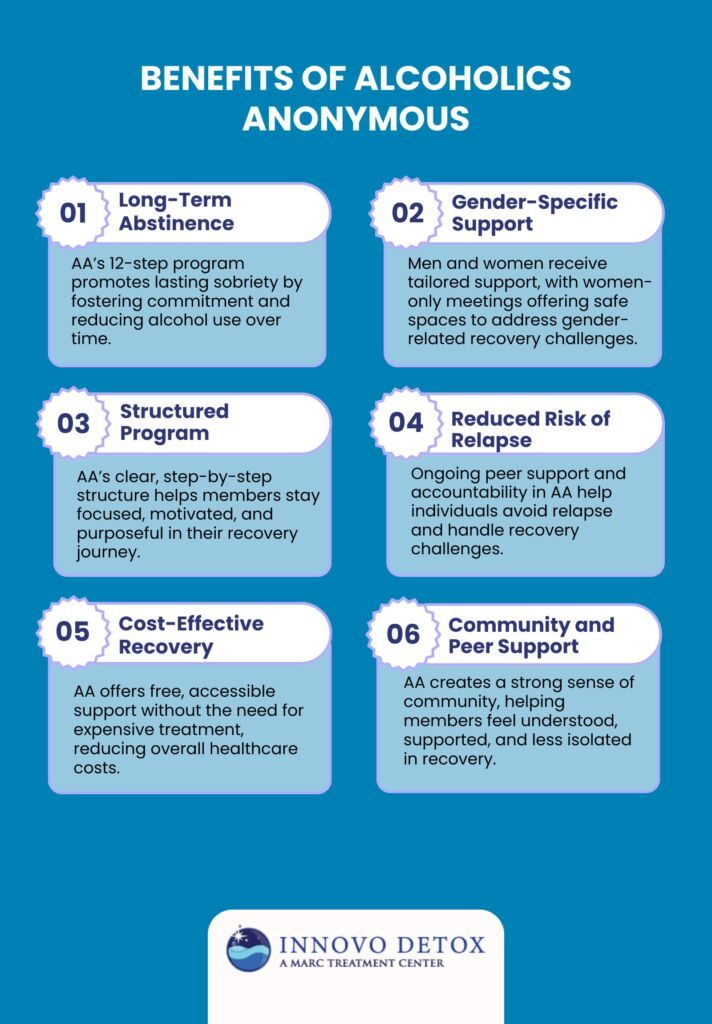
The benefits of Alcoholics Anonymous are explained below:
- Long-term Abstinence: AA helps individuals achieve long-term abstinence from alcohol through its structured 12-step program. Members develop a strong commitment to recovery and experience a reduction in alcohol consumption, promoting sustained sobriety.
- Gender-Specific Benefits: AA offers specific support to both men and women, addressing their unique challenges in recovery. Women benefit from women-only meetings, which provide a safe space for discussing gender-related issues in addiction and recovery.
- Structured Program: The 12-step program of AA offers a clear, step-by-step path toward recovery, which helps members stay focused and motivated. The structure provides individuals with a sense of purpose and direction, which is essential in the recovery process. According to the NIAAA’s study titled “The Effectiveness of Structured Recovery Programs,” published in 2022, participants in structured programs like AA have a 45% higher success rate in maintaining sobriety.
- Less Chance of Relapse: AA reduces the likelihood of relapse by providing ongoing support, accountability, and encouragement. The peer support system in AA helps individuals navigate triggers and challenges, reinforcing their commitment to sobriety.
- Cost-Effective: AA is a low-cost, accessible recovery option that does not require expensive treatments or interventions. Meetings are free, and many are held in community spaces, making it accessible to people from all socioeconomic backgrounds. The NIAAA’s 2020 report titled “Cost-Effectiveness of Alcohol Treatment Programs” showed that AA offers a significant reduction in healthcare costs associated with alcohol addiction treatment.
- Community and Peer Support: The fellowship aspect of AA provides a supportive community where members encourage one another through shared experiences. This sense of belonging and connection helps reduce feelings of isolation, which is common in addiction recovery.
Who Can Join Alcoholics Anonymous, and Is It Truly Anonymous?
Anyone who has a desire to stop drinking can join Alcoholics Anonymous, regardless of their background or severity of addiction. AA is truly anonymous, with the confidentiality of members being a cornerstone of the program, ensuring a safe and non-judgmental space for individuals to share their struggles and recovery journey.
Reasons why anyone can join alcoholics anonymous include the following:
- Anyone Struggling with Alcoholism: Anyone who desires to stop drinking and is struggling with alcohol addiction can join Alcoholics Anonymous. The program is open to individuals at any stage of their recovery, whether they are just beginning to seek help or have been in recovery for years.
- No Specific Requirements: There are no formal requirements to join AA, making it an inclusive space for people from various backgrounds. Membership is based solely on the individual’s desire to achieve sobriety and commitment to the 12-step program.
- Open to All Ages and Demographics: AA welcomes individuals of all ages, genders, and socioeconomic backgrounds. The fellowship’s inclusive nature ensures that anyone who struggles with alcohol finds support, regardless of their personal circumstances.
- Anonymous Participation: AA is truly anonymous, and this principle ensures that members’ identities and personal stories remain confidential. This anonymity fosters trust and safety, allowing individuals to participate openly without fear of exposure or judgment.
What Are the Challenges of Alcoholics Anonymous?
The challenges of Alcoholics Anonymous are maintaining long-term attendance, dealing with the program’s reliance on spirituality, and the potential for limited access in certain areas. Some individuals struggle with the commitment required for regular meetings, while others might find it difficult to embrace the spiritual aspects of the program or have trouble accessing in-person meetings due to geographic limitations.

The challenges of alcoholics anonymous include:
- Maintaining Long-term Attendance: Consistent attendance is vital for success in AA, but many individuals struggle to maintain regular participation over time. Research by the National Institute on Alcohol Abuse and Alcoholism (NIAAA) titled “Alcohol Recovery and the Role of Support Groups,” published in 2020, found that 40% of individuals drop out of AA within the first year due to challenges with attendance and engagement.
- Reliance on Spirituality: The spiritual aspect of AA is a barrier for some individuals who do not resonate with the concept of a higher power. Participants who struggled with the spiritual component are less likely to complete the 12-step program and sustain long-term sobriety.
- Limited Access to In-Person Meetings: While AA meetings are widespread, some areas, especially rural regions, may have limited access to in-person meetings. A report by the Substance Abuse and Mental Health Services Administration (SAMHSA) titled “Barriers to Alcohol Treatment Services,” published in 2021, revealed that 35% of individuals in rural areas report difficulty accessing local AA meetings.
What Are Some Alternative Treatments to Alcoholics Anonymous?
The alternative treatments to Alcoholics Anonymous include Medication-Assisted Treatment (MAT), Partial Hospitalization Programs, Intensive Outpatient Programs, Behavioral Therapies, and support groups. These treatments provide different approaches to recovery, offering medical, psychological, and community-based support tailored to the individual’s needs.
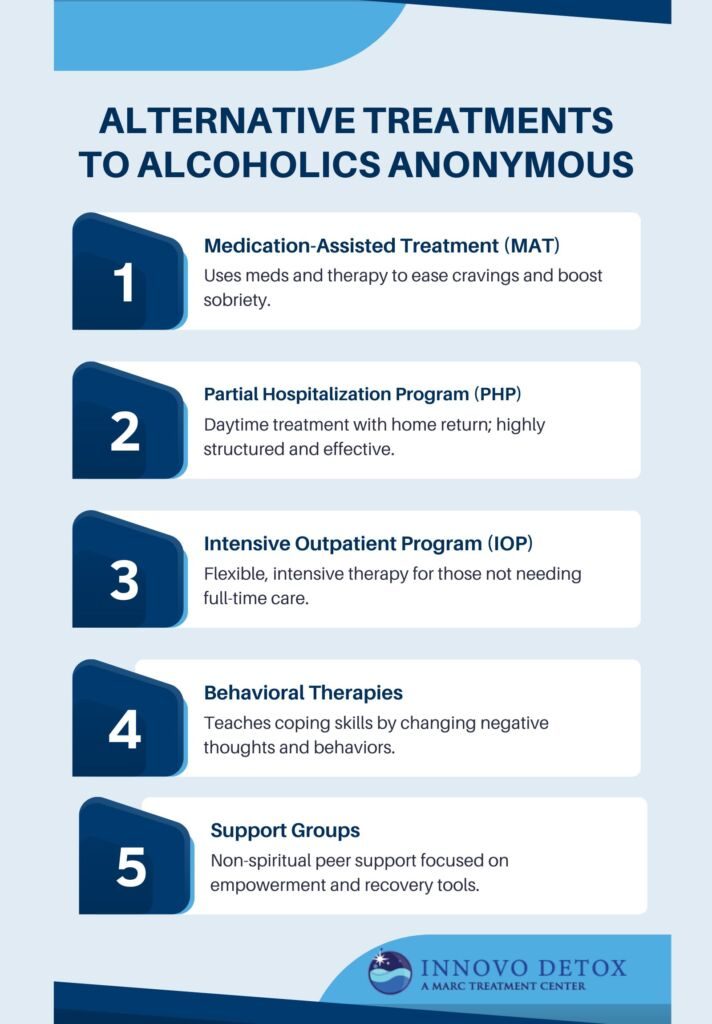
The alternative treatments to alcoholics anonymous are explained below:
- Medication-Assisted Treatment (MAT): Medication-Assisted Treatment involves the use of FDA-approved medications to help manage withdrawal symptoms and cravings associated with alcohol addiction. It is combined with counseling and therapy to support recovery, reducing the risk of relapse by addressing both physical and psychological aspects of addiction. According to a study by the National Institute on Alcohol Abuse and Alcoholism (NIAAA), MAT has been shown to increase the success rate of long-term sobriety by 30%.
- Partial Hospitalization Program (PHP): A Partial Hospitalization Program provides intensive, structured treatment during the day while allowing individuals to return home in the evenings. It includes individual and group therapy, medical services, and life skills development to address the mental and emotional components of addiction. Research by the Substance Abuse and Mental Health Services Administration (SAMHSA) in their 2021 study titled “Effectiveness of Partial Hospitalization Programs in Alcohol Recovery” showed that PHP participants have a 50% higher success rate in remaining sober after six months compared to outpatient treatment alone.
- Intensive Outpatient Program (IOP): Intensive Outpatient Programs are designed for individuals who do not require 24-hour care but need more intensive treatment than standard outpatient therapy. IOP includes individual counseling, group therapy, and educational sessions focused on relapse prevention and life skills. A study by SAMHSA found that IOP has a 35% higher success rate in reducing alcohol consumption and preventing relapse compared to less structured outpatient treatment.
- Behavioral Therapies: Behavioral therapies, such as Cognitive Behavioral Therapy (CBT), focus on identifying and changing negative patterns of thinking and behavior associated with alcohol addiction. These therapies teach individuals coping strategies to manage cravings, triggers, and stressors that lead to relapse.
- Support Groups: Support groups such as SMART Recovery, LifeRing, Women for Sobriety (WFS), SOS (Secular Organizations for Sobriety), and Moderation Management (MM) offer alternative recovery models to AA, focusing on self-empowerment, evidence-based strategies, and non-spiritual support. These groups provide peer support and education to help individuals develop the skills and mindset necessary for lasting sobriety.
What Is the Success Rate of Alcoholics Anonymous?
The success rate of Alcoholics Anonymous (AA) varies, but research indicates that it is highly effective compared to other treatment methods for alcohol addiction. According to a study by the National Institute on Alcohol Abuse and Alcoholism (NIAAA) titled “Alcohol Use Disorder and Treatment,” published in 2023, approximately 33% of individuals who attend AA for at least one year report long-term abstinence, which is higher than the success rate for many other treatment options.
Furthermore, a meta-analysis published in the Journal of Substance Abuse Treatment (2021) revealed that individuals who combine AA with professional therapies have a 45% higher chance of maintaining sobriety than those who use professional treatment alone. These findings suggest that while AA is not a one-size-fits-all solution, its success rate is competitive, especially when combined with other treatment methods.
Does Alcoholics Anonymous Help Prevent Relapse?
Yes, Alcoholics Anonymous helps prevent relapse by providing continuous support, accountability, and a structured recovery process. The 12-step program encourages regular attendance, peer sponsorship, and personal responsibility, all of which play significant roles in maintaining sobriety and preventing relapse.
According to a study by the National Institute on Alcohol Abuse and Alcoholism (NIAAA) titled “Alcohol Recovery and Relapse Prevention,” published in 2022, individuals who attend AA meetings regularly have a 30% lower risk of relapse compared to those who do not engage with support groups.
The fellowship’s peer support system offers members a sense of community, reducing isolation, a key factor in relapse risk.
Is Alcoholics Anonymous Free?
Yes, Alcoholics Anonymous is free to attend. The organization does not charge any fees for participation in meetings, and its primary support comes from voluntary donations made by members.
According to the National Institute on Alcohol Abuse and Alcoholism (NIAAA) in their report titled “Alcohol Use Disorder and Recovery Options” (2021), AA is considered one of the most cost-effective recovery methods, as it eliminates the financial barriers associated with traditional treatment programs.
The voluntary nature of the program allows individuals to access long-term support without incurring significant costs, making it an accessible option for those in need of recovery services.
Is Alcoholics Anonymous Religious?
No, Alcoholics Anonymous is not only for alcoholics; it can also support individuals with other forms of addiction. While AA is specifically designed for those struggling with alcohol addiction, the principles of the 12-step program are applied to various types of substance abuse, such as drug addiction or gambling.
According to a study by the National Institute on Drug Abuse (NIDA) titled “The Effectiveness of 12-Step Programs in Addiction Recovery,” published in 2021, the 12-step framework has been successfully adapted for other addiction recovery programs, including Narcotics Anonymous (NA) and Gamblers Anonymous (GA), showing similar benefits in maintaining long-term sobriety.
Is Alcoholics Anonymous Only for Alcoholics?
No, Alcoholics Anonymous is not only for alcoholics; it can also support individuals with other forms of addiction. While AA is specifically designed for those struggling with alcohol addiction, the principles of the 12-step program are applied to various types of substance abuse, such as drug addiction or gambling.
According to a study by the National Institute on Drug Abuse (NIDA) titled “The Effectiveness of 12-Step Programs in Addiction Recovery,” published in 2021, the 12-step framework has been successfully adapted for other addiction recovery programs, including Narcotics Anonymous (NA) and Gamblers Anonymous (GA).
The principle of alcohol anonymous shows similar benefits when applied to other substance abuse. They help in maintaining long-term sobriety, just like in alcohol recovery.
Where Can You Find Alcoholics Anonymous Meetings Near You?
You can find Alcoholics Anonymous meetings near you by visiting the AA website, which provides a comprehensive list of local meetings based on your location. Additionally, many treatment centers, community centers, churches, and office buildings host AA meetings, and information on these is obtained by contacting local AA intergroups or service offices.
Places where you can find alcoholics anonymous meetings near you include the following:
- AA Website: You can find local AA meetings by visiting the official AA website, which offers a searchable directory based on your city, state, or country. This is a quick and reliable way to locate in-person or online meetings at your convenience.
- Treatment Centers: Many treatment centers offer AA meetings as part of their comprehensive recovery programs. These centers provide scheduled meetings for patients in recovery and also help connect you with local AA groups.
- Community Centers and Churches: Local community centers and churches often host AA meetings, providing an accessible location for individuals seeking support. These meetings are open to anyone, regardless of background or previous recovery experience.
- Office Buildings: Some office buildings and corporate centers provide meeting spaces for AA groups, particularly in urban areas. These locations make it easier for working individuals to attend meetings during lunch breaks or after work hours.
Can You Use Therapy or Medication Alongside Alcoholics Anonymous?
Yes, therapy and medication can be used alongside Alcoholics Anonymous, and many individuals find that combining these treatments enhances their recovery. While AA provides peer support and a structured program, therapy (such as Cognitive Behavioral Therapy) offers professional guidance for addressing underlying psychological issues, and medication-assisted treatment (MAT) helps manage withdrawal symptoms and cravings.
According to a study by the National Institute on Alcohol Abuse and Alcoholism (NIAAA), individuals who combine AA with therapy and/or MAT have significantly higher rates of long-term sobriety and improved mental health outcomes.
This integrated approach offers a more holistic treatment plan, addressing both the physical and emotional aspects of addiction.