The Michigan Alcohol Screening Test (MAST) is for identifying alcohol use disorders and assessing the impact of drinking on daily life.
MAST uses a Yes/No questionnaire, either self-administered or done with a healthcare professional. Scores indicate risk levels: 0–3 (low risk), 4–6 (possible problem drinking), and 7 or more (probable dependence).
Used in clinical care, rehab, and self-assessment, MAST supports diagnosis and treatment planning. The Handbook of Developmental Neurotoxicology (1998) reports 98% sensitivity and 95% specificity, making it both effective and reliable across diverse settings.
What is the Michigan Alcohol Screening Test (MAST)?
The Michigan Alcohol Screening Test (MAST) is one of the oldest and most trusted tools for detecting alcohol dependency. Developed by Melvin L. Selzer in 1971, it remains a widely used self-assessment for identifying problematic drinking and measuring the severity of alcohol-related issues.
The test includes structured questions that explore your drinking behaviour, its effect on personal and professional life, and any signs of loss of control or failed attempts to quit. By highlighting negative consequences and patterns of misuse, MAST offers insight into potential alcohol use disorders.
Its reliability and depth make it valuable in both clinical settings and personal use, helping guide accurate diagnosis and effective treatment planning for those at risk.
What are the Components of the MAST?
The components of MAST are alcohol consumption patterns, behavioral and social consequences, physical dependence symptoms, and legal and occupational impacts. They help determine the severity of alcohol-related problems and guide interventions.
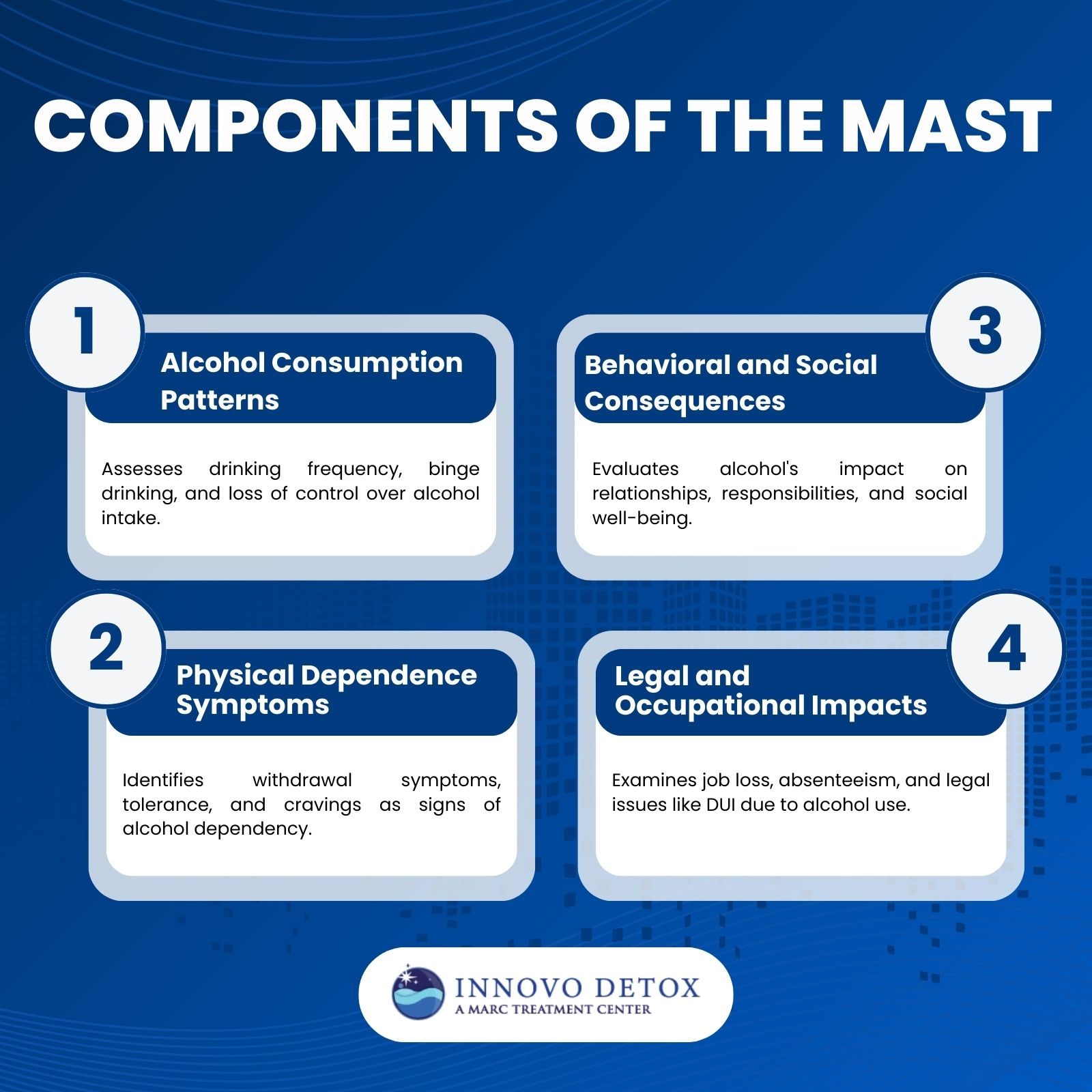
The components of the MAST are explained below:
Alcohol Consumption Patterns
This component evaluates the frequency and quantity of alcohol intake. It assesses whether an individual engages in binge drinking, drinks excessively over extended periods, or experiences difficulty in controlling their alcohol consumption.
Behavioral and Social Consequences
MAST examines how alcohol use affects an individual’s relationships, responsibilities, and daily functioning. It includes questions about conflicts with family and friends, neglect of duties, and social isolation due to drinking.
Physical Dependence Symptoms
This component identifies signs of physical dependence on alcohol, such as withdrawal symptoms, tolerance, and cravings. Individuals experience shaking, nausea, or increased alcohol consumption to achieve the same effect.
Legal and Occupational Impacts
MAST also assesses the legal and workplace consequences of alcohol use. It considers issues such as arrests for driving under the influence (DUI), absenteeism, job loss, or disciplinary actions due to drinking.
How Does the MAST Work?
MAST works by utilizing a structured questionnaire consisting of Yes/No responses to assess an individual’s alcohol use and its potential impact. The test includes questions about drinking habits, social and behavioral consequences, and physical dependence symptoms.
Each response is analyzed to determine the presence and severity of alcohol-related issues. The simplicity of the Yes/No format makes MAST easy to self-administer, allowing individuals to complete it independently or with the guidance of a healthcare professional.
The test effectively identifies those at risk of alcohol dependency by evaluating patterns of alcohol consumption and its consequences.
What is the Scoring System for the MAST?
The scoring system for MAST includes assigning points for each “Yes” response, with higher scores indicating a greater likelihood of alcohol dependency.
According to Comorbidity Guidelines, “MAST: Scoring and interpretation,” a score of 0 to 3 suggests low risk, 4 to 6 indicates potential problem drinking, and 7 or more points signify probable alcohol dependence.
Some variations of the test adjust the scoring thresholds based on the number of questions included, with shorter versions modifying the cutoff scores accordingly. This system provides a clear and structured method for interpreting alcohol use severity and guiding further evaluation or intervention.
What are the Benefits of Using the MAST?
The benefits of using MAST are its ability to provide a thorough assessment of alcohol-related issues, its simple format that ensures ease of use, its validation across diverse populations, and its applicability in both clinical and self-assessment settings. These advantages make MAST a reliable and widely accepted tool for alcohol screening.
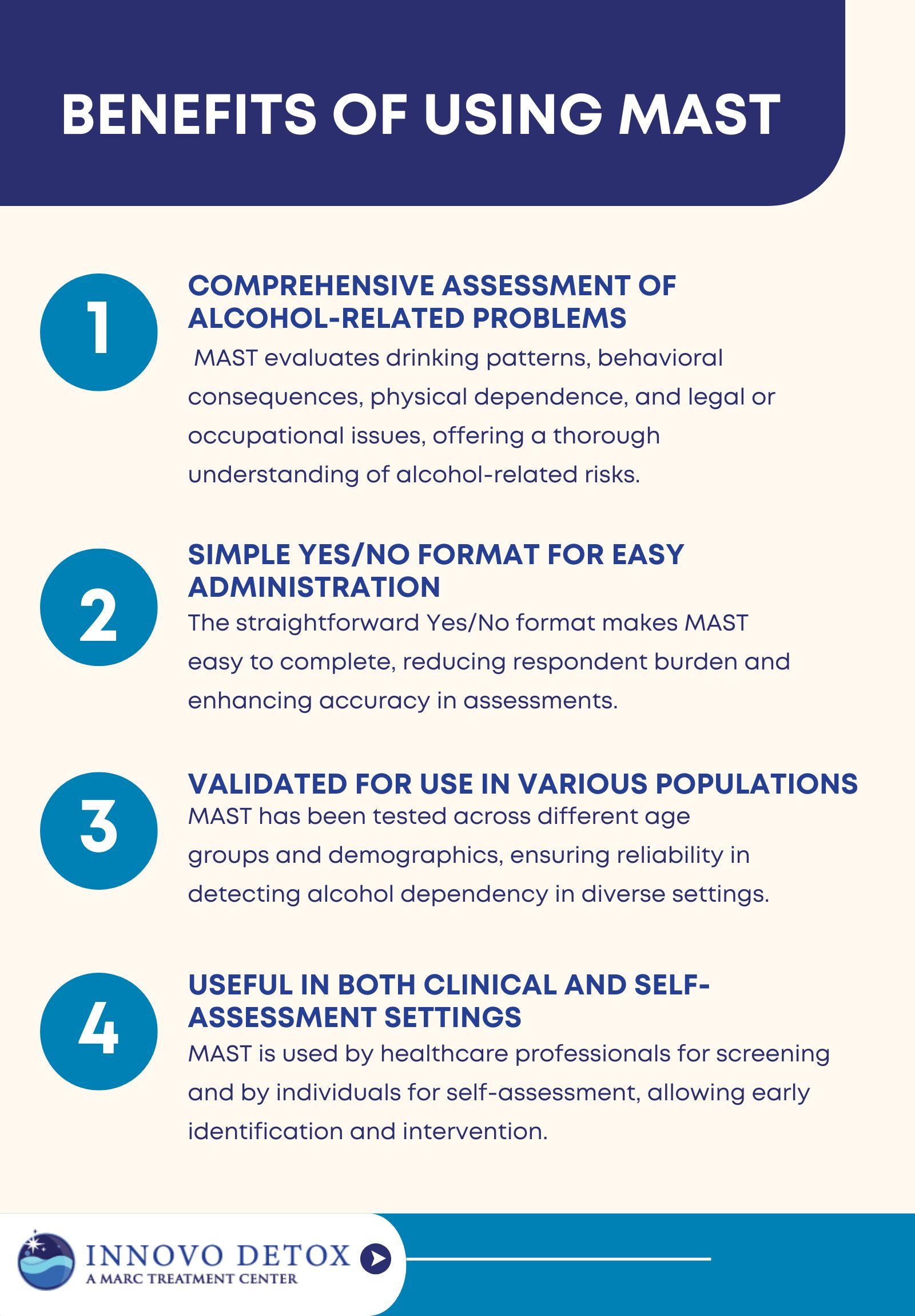
The benefits of using the MAST include:
Comprehensive Assessment of Alcohol-Related Problems
MAST evaluates various aspects of alcohol use, including drinking patterns, behavioral consequences, physical dependence, and legal or occupational issues. By covering multiple domains, the test provides a detailed understanding of an individual’s alcohol-related risks, making it a valuable tool for identifying different levels of alcohol dependency.
Simple Yes/No Format for Easy Administration
The test’s straightforward Yes/No format makes it accessible and easy to complete, reducing respondent burden and increasing reliability. Unlike complex diagnostic tools, MAST minimizes ambiguity, allowing individuals to answer quickly and accurately. This simplicity enhances its usability in both professional and personal assessments.
Validated for Use in Various Populations
MAST has been extensively studied and validated across different demographic groups, including adolescents, adults, and elderly individuals. Its reliability in detecting alcohol dependency in diverse populations ensures that it remains a trusted screening tool across various healthcare and research settings.
Useful in Both Clinical and Self-Assessment Settings
MAST is used by healthcare professionals to screen patients for alcohol dependency in clinical environments, as well as by individuals conducting a personal assessment of their drinking habits. Its flexibility allows for early identification of alcohol-related issues, enabling timely intervention and treatment when necessary.
How is the MAST Applied Clinical Settings?
MAST is used to screen patients for alcohol dependency, assess the severity of alcohol-related issues, and guide treatment planning. Healthcare professionals administer the test by having patients respond to a series of Yes/No questions, either verbally or through a written questionnaire.
Once completed, the results are scored to determine the level of alcohol dependency, with higher scores indicating more severe issues.
Clinicians use these results to make informed decisions about the need for further evaluation, counseling, or treatment interventions.
The MAST is widely utilized in addiction therapy and rehabilitation programs, helping professionals design personalized recovery plans and monitor progress throughout treatment.
What are the Questions Found in the MAST Questionnaire?
The MAST questionnaire includes questions that assess drinking habits, the impact of alcohol use on relationships and work, legal and financial consequences, and symptoms of physical and psychological dependency. These questions help identify patterns of alcohol-related issues and the severity of alcohol dependency.
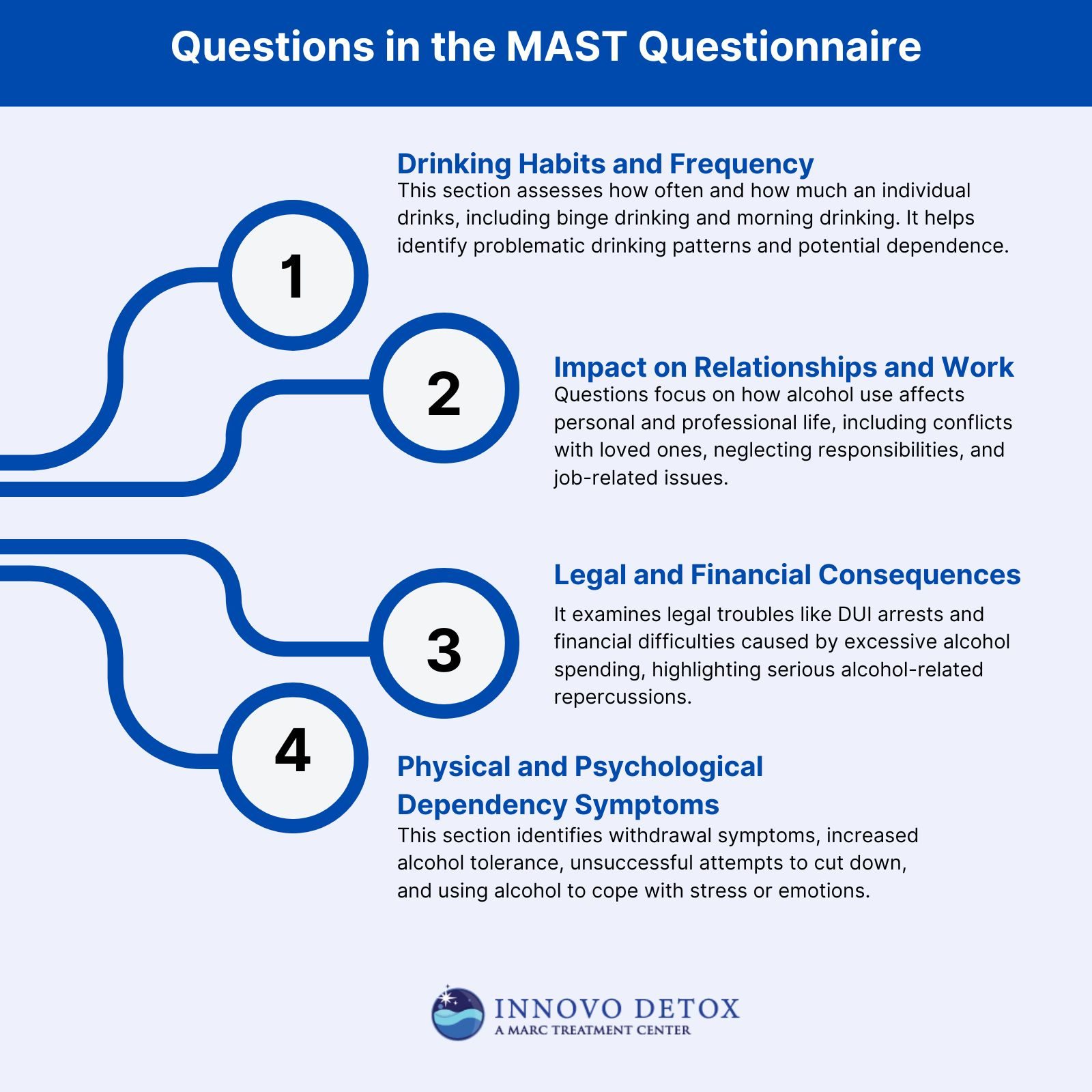
The questions found in the MAST questionnaire:
- Drinking Habits and Frequency: The questionnaire asks about the frequency and quantity of alcohol consumption, including whether the individual drinks daily, binge drinks, or feels the need to drink in the morning. These questions help determine the extent of alcohol use and potential problematic drinking patterns.
- Impact on Relationships and Work: Questions in this section assess whether alcohol use has caused conflicts with family, friends, or colleagues, led to neglect of responsibilities, or resulted in job loss. Understanding these social and occupational consequences provides insight into how alcohol use affects daily life.
- Legal and Financial Consequences: The MAST includes questions about arrests for driving under the influence (DUI), legal troubles due to alcohol-related behavior, and financial difficulties caused by excessive spending on alcohol. These indicators highlight serious repercussions that point to alcohol dependence.
- Physical and Psychological Dependency Symptoms: This section evaluates signs of alcohol dependence, such as withdrawal symptoms (shaking, sweating, or nausea), increased tolerance, and unsuccessful attempts to cut down on drinking. Psychological factors, like using alcohol to cope with stress or depression, are also assessed to determine the level of alcohol dependency.
How Accurate is the MAST in Identifying Alcohol Use Disorders?
The MAST has a sensitivity of 98% and a specificity of 95% with a cutoff score of 5 in identifying alcohol use disorders, as studied in the Handbook of Developmental Neurotoxicology, 1998.
Its sensitivity, or ability to correctly identify individuals with alcohol dependency, is high, making it a reliable tool for screening. However, its specificity, which measures its ability to rule out false positives, is slightly lower due to the reliance on self-reported answers, which leads to underreporting or exaggeration.
How is the MAST Different from Other Alcohol Screening Tools?
The MAST differs from other alcohol screening tools in its length, structure, and focus. Unlike the Alcohol Use Disorders Identification Test and CAGE questionnaire, which are shorter and designed for rapid screening, the Michigan Alcohol Screening Test provides a comprehensive assessment of alcohol-related issues over a long period.
While the Alcohol Use Disorder Identification Test focuses on recent alcohol use patterns and the CAGE questionnaire consists of only four questions targeting dependence, the MAST is more detailed, making it better suited for clinical assessments and long-term evaluations rather than quick screenings.
What are the Limitations of the MAST?
The limitations of the MAST are its reliance on self-reported data, its outdated language in some questions, the length of the test, and its emphasis on long-term alcohol use rather than recent drinking behaviors.
Because individuals underreport or overstate their alcohol consumption, the accuracy of results is affected. Some questions do not fully align with modern definitions of alcohol use disorder, and the test’s length deters some individuals from completing it.
Its primary focus on long-term patterns also makes it less effective in identifying early-stage alcohol misuse.
Can the MAST be Used as a Self-assessment Tool?
Yes, the MAST can be used as a self-assessment tool, allowing individuals to evaluate their drinking habits and determine if they have an alcohol dependency issue. It is available in both online and paper formats, making it accessible for personal use.
After completing the test, individuals interpret their scores to assess their level of risk. If the results indicate possible alcohol dependency, it is recommended to seek professional consultation for a more thorough evaluation and guidance on the next steps.
What to Do After the MAST Test?
After completing the MAST, individuals should review their scores and take appropriate action based on their results. A low score (0 to 3) suggests minimal risk, but maintaining healthy drinking habits is advised.
A moderate score (4 to 6) indicates problem drinking, and individuals should consider reducing alcohol intake or seeking guidance from a healthcare provider.
A high score (7 or more) strongly suggests alcohol dependency, and professional assessment, counseling, or entering a treatment program is necessary. Seeking medical or therapeutic support helps individuals develop a recovery plan if needed.