
Detoxing from Delta-8 THC is essential when regular use of Delta-8 THC leads to tolerance, dependence, and withdrawal that disrupt daily life. Delta-8, a hemp-derived cannabinoid with psychoactive effects, binds to CB1 receptors in the brain, altering mood, sleep, and cognition.
Delta-8 THC is marketed as a milder alternative to Delta-9 THC, but research shows that frequent use of Delta-8 can trigger the same withdrawal symptoms, such as anxiety, insomnia, cravings, and mood swings. These symptoms complicate recovery without support.
The detox process for Delta-8 THC helps the body eliminate THC, stabilize withdrawal symptoms, and prepare individuals for structured treatment through counseling, relapse-prevention planning, and community-based support. Early intervention strengthens long-term outcomes by reducing relapse risk and addressing co-occurring mental health issues before they escalate.
In the USA, approximately 17.0% of weekly and 19.0% of daily cannabis smokers met the criteria for cannabis as reported by Connor JP et al. 2021, titled “Cannabis use and cannabis use disorder.” Specialized detox centers are needed for medical monitoring, evidence-based care, and seamless referrals into therapy, ensuring recovery is safe, sustainable, and supported at every stage.
Why Does Delta-8 THC Require Detox?
Delta-8 THC requires detox because regular use leads to tolerance, dependence, and withdrawal symptoms. Delta-8 THC is a hemp-derived psychoactive cannabinoid that is chemically similar to Delta-9 THC but produces milder intoxicating effects. It binds to CB1 receptors in the brain’s endocannabinoid system, which alters mood, perception, and cognition.
Frequent exposure to Delta-8 THC increases tolerance, meaning larger amounts are needed to achieve the same effect, and this dependence creates withdrawal symptoms when use is stopped. Detox becomes necessary when withdrawal disrupts daily functioning or when continued use develops into a cannabis use disorder.
Can Delta-8 THC Cause Dependence and Withdrawal?
Yes, Delta-8 THC can cause dependence in the same way Delta-9 does, although it is often marketed as “less potent.” The Diagnostic and Statistical Manual of Mental Disorders (DSM-5) classifies problematic cannabis use under Cannabis Use Disorder (CUD). Delta-8 falls within this category because of its similar effects on the brain.
Not all use of Delta-8 THC becomes problematic. Some people consume Delta-8 casually without major consequences. Prolonged and frequent Delta-8 THC use leads to loss of control over intake, increased tolerance, withdrawal symptoms upon stopping, and impaired social, occupational, or academic functioning. Research by Budney et al. 2004 on cannabis withdrawal shows that nearly 47% of regular users experience clinically significant symptoms.
What Are the Symptoms of Delta-8 THC Withdrawal?
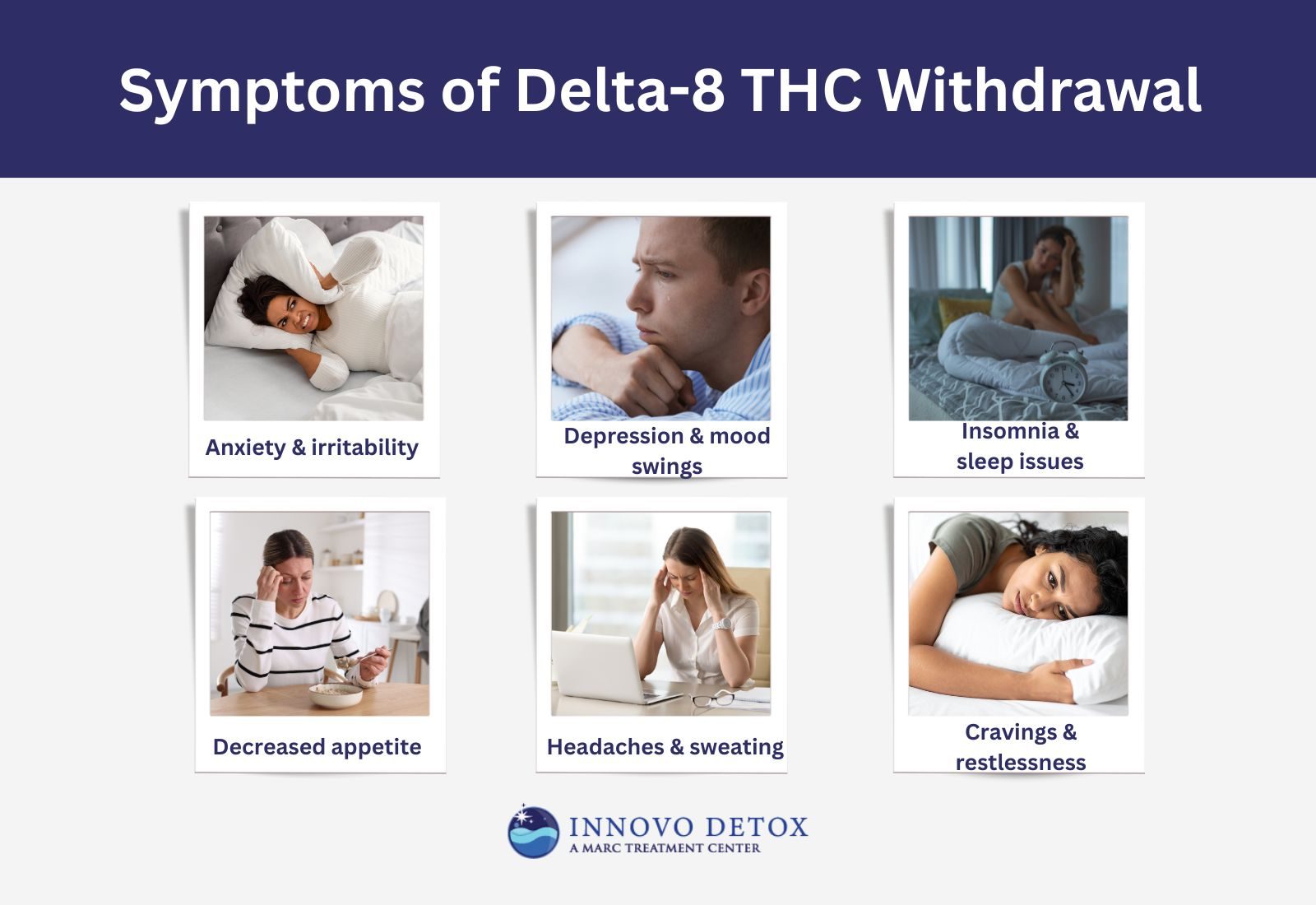
The symptoms of Delta-8 THC withdrawal include psychological, emotional, and physical effects that emerge when the brain and body adapt to frequent THC exposure and struggle to function normally after stopping. These effects reflect the body’s attempt to regain balance without the presence of Delta-8.
Research by Connor JP, et al. 2022, titled “Clinical management of cannabis withdrawal,” indicates that withdrawal symptoms appear within 24–48 hours after last use, peak during the first week, and affect around 47% of frequent cannabis users. While not life-threatening, these symptoms are uncomfortable enough to trigger relapse without proper support.
The symptoms of Delta-8 THC withdrawal are as follows:
ChatGPT said:
- Anxiety and irritability: These symptoms arise because Delta-8 withdrawal disrupts the brain’s stress-regulation systems, resulting in heightened nervousness, restlessness, and a short temper.
- Depression or mood swings: Reduced dopamine activity during withdrawal triggers persistent sadness, low energy, and unpredictable emotional shifts.
- Insomnia or disrupted sleep patterns: Since THC influences the body’s circadian rhythm, stopping Delta-8 leads to difficulty falling asleep, frequent awakenings, and vivid or disturbing dreams.
- Decreased appetite: Without THC’s appetite-stimulating effects, individuals may experience reduced interest in food, nausea, or unintended weight loss.
- Headaches and sweating: These physical symptoms reflect the body’s effort to stabilize after THC use, linked to changes in blood pressure, temperature regulation, and hydration balance.
- Cravings and restlessness: Intense urges to use Delta-8 return as the brain seeks to restore prior THC effects, making it challenging to relax, focus, or maintain abstinence.
How Long Does Delta-8 THC Withdrawal Last?
Delta-8 THC withdrawal lasts from one to three weeks, though the exact duration varies by individual factors such as frequency of use, dosage, and overall health. In some cases, post-acute withdrawal syndrome (PAWS) develops, where mood instability, anxiety, and disrupted sleep continue for several months.
Most Delta-8 THC withdrawal follows a predictable pattern:
- Onset (24–48 hours): Early symptoms such as irritability, restlessness, and mild insomnia begin.
- Peak (Days 2–6): Symptoms intensify, with stronger cravings, mood swings, and sleep disturbances.
- Resolution (1–3 weeks): Most physical symptoms improve, though psychological effects like anxiety or depression may persist.
What Happens During Delta-8 THC Detox?
During Delta-8 THC detox, the body clears THC and its byproducts while medical professionals manage withdrawal symptoms and reduce health risks. This approach ensures detox is safe, monitored, and aligned with each individual’s long-term recovery goals.
The process of Delta-8 THC usually follows the following four stages:
- Evaluation: Medical and psychiatric assessment to determine history of use, co-occurring disorders, and overall health.
- Stabilization: Medications are prescribed to manage symptoms such as insomnia, nausea, or anxiety.
- Supportive Care: Patients receive hydration, nutrition, and rest to promote physical recovery.
- Preparation for Treatment: Counseling and relapse-prevention planning help individuals transition to ongoing care.
How Do You Detox From Delta-8 THC Safely?
You detox from Delta-8 THC safely by undergoing a structured, medically supervised program rather than attempting self-detox at home. Without medical support, individuals face higher risks of relapse, unmanaged cravings, and unaddressed mental health issues such as anxiety or depression.
A professional detox setting provides 24/7 monitoring, evidence-based medications to ease withdrawal symptoms of Delta-8 THC, and immediate intervention if complications occur. Beyond managing the physical process, medical detox also prepares individuals for ongoing treatment through counseling and relapse prevention planning, ensuring that recovery is supported and sustainable.
Where Can You Get Detox and Withdrawal Support in Pennsylvania?
You can get detox and withdrawal support in Pennsylvania through specialized facilities that provide medical and clinical care for substance withdrawal. Inpatient detox centers offer round-the-clock monitoring, medication support, and a safe environment for managing withdrawal. Outpatient options are suitable for individuals with milder symptoms and a strong support system.
Community programs add peer support and counseling, but medically supervised detox remains the safest choice, particularly for individuals with a history of heavy use or co-occurring conditions. In Pennsylvania, stand-alone detox facilities provide evidence-based care, individualized treatment planning, and seamless referrals into the next level of recovery support.
How Does Early Detox Improve Long-Term Recovery?
Early detox improves long-term recovery by reducing the risk of relapse before harmful patterns become entrenched, while also addressing mental health concerns such as anxiety or depression at an earlier stage. Beginning detox promptly allows for a smoother transition into counseling and therapy, creating stability before entering structured treatment.
Detox for Delta-8 THC early also gives individuals the opportunity to build coping strategies and relapse-prevention skills before substance use escalates further. Starting detox early not only minimizes damage to health, relationships, and daily functioning but also strengthens the foundation for sustained recovery.
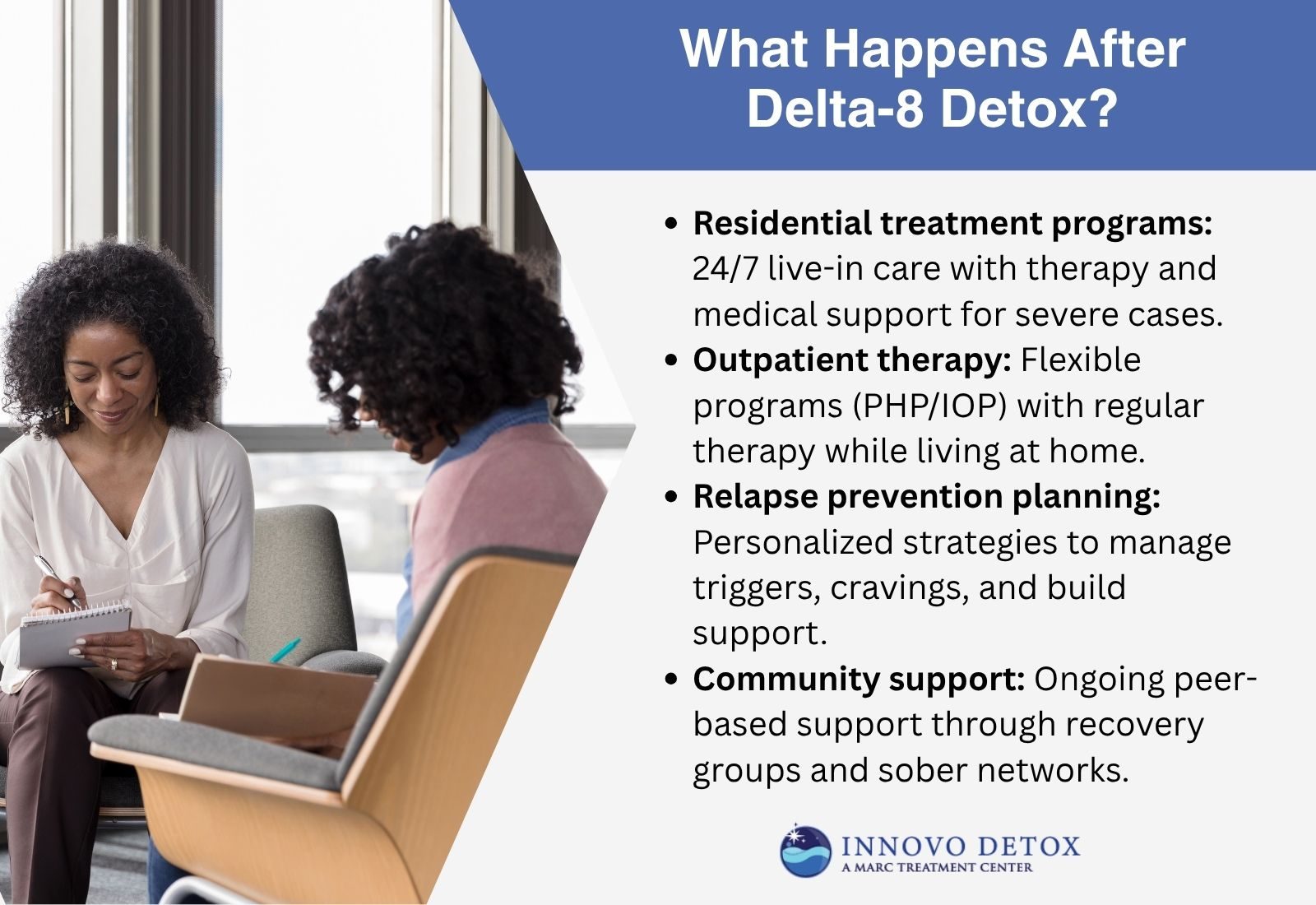
What Happens After Delta-8 Detox?
After a Delta-8 THC detox, individuals transition into structured treatment programs that target the psychological and behavioral aspects of substance use. This stage includes counseling, cognitive-behavioral therapy, relapse prevention planning, and support groups. Continued care helps address underlying triggers, build coping strategies, and reduce the likelihood of relapse, making it an essential step for sustained recovery.

Common next steps after Delta-8 THC detox include:
- Residential treatment programs: After detox, many individuals enter residential programs where they live on-site and receive 24/7 care. These programs provide a structured environment with therapy, medical oversight, and peer support, which is particularly effective for those with severe dependence or co-occurring mental health conditions.
- Outpatient therapy: For those who do not require full-time residential care, outpatient options like PHP and IOP allow individuals to live at home while attending structured therapy sessions several times a week. This flexibility supports recovery while enabling participants to maintain responsibilities such as work, school, or family.
- Relapse prevention planning: Treatment after detox includes personalized relapse prevention plans. These plans teach individuals how to identify triggers, manage cravings, and apply healthy coping mechanisms. Building a strong support network of therapists, peers, and family members is central to maintaining long-term sobriety.
- Community support: Peer-led recovery communities provide ongoing encouragement and accountability. Programs such as 12-Step groups and SMART Recovery offer structured approaches to sobriety, while local recovery organizations connect individuals to resources, mentorship, and sober social networks that reinforce progress after formal treatment.