Thiamine, vitamin C, niacin, vitamin A, calcium with vitamin D, and omega-3 fatty acids help you through drug and alcohol detox. They support both the body and brain during drug and alcohol withdrawal. These nutrients play key roles in restoring energy metabolism, repairing tissue damage, reducing oxidative stress, strengthening immunity, and stabilizing mood.
Thiamine, for example, protects against alcohol-related neurological damage, vitamin C enhances detox pathways, and omega-3 fatty acids reduce inflammation while supporting emotional balance. Calcium and vitamin D restore mineral levels, while vitamin A and niacin promote cellular repair and metabolic stability.
While drug and alcohol detox remains a challenging medical process, these vitamins and nutrients provide an added layer of support, helping to ease symptoms, improve resilience, and promote long-term recovery outcomes when used under professional guidance.
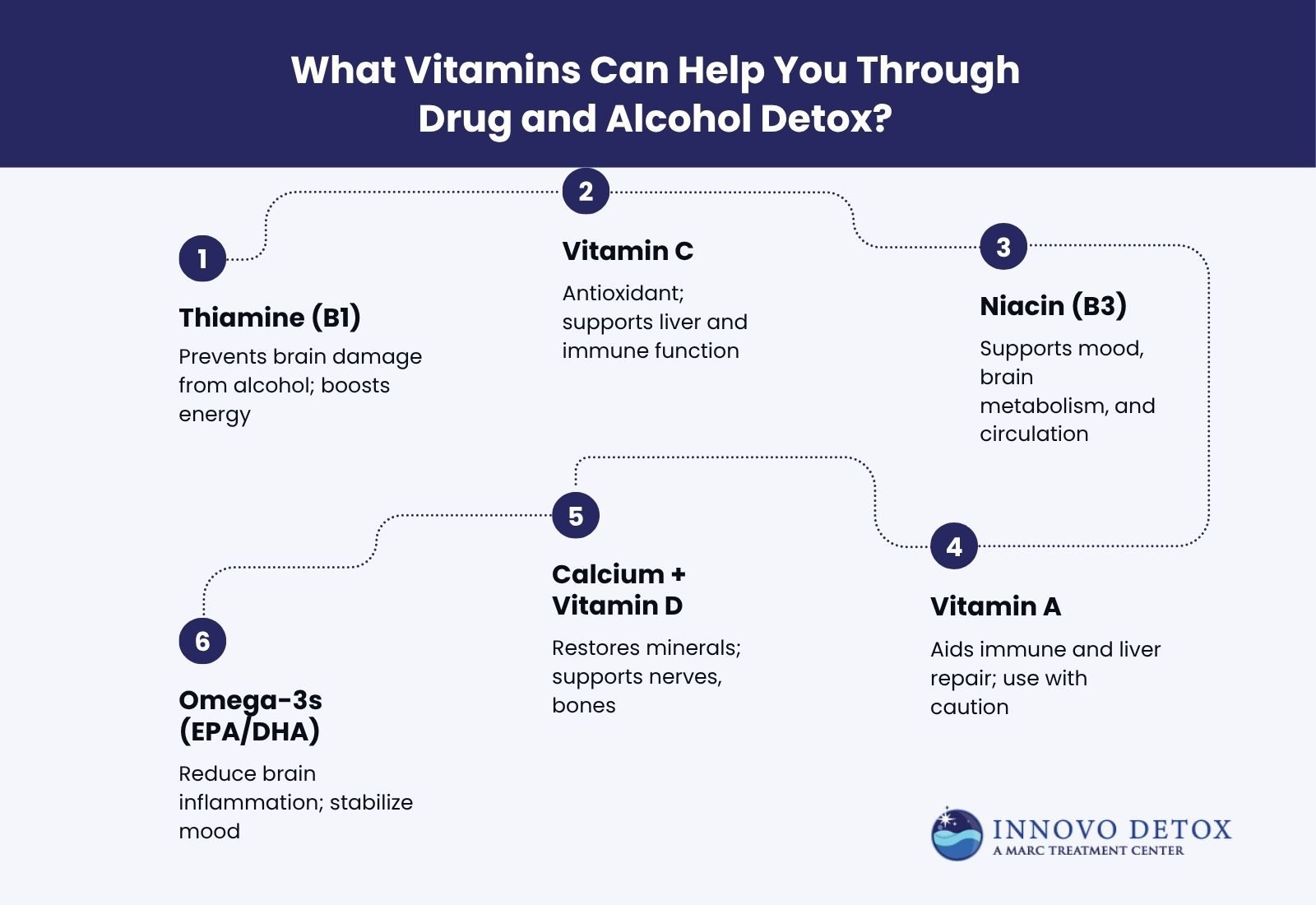
The following are the vitamins that can help you through drug and alcohol detox:
1. Vitamin B1 (Thiamine)
Thiamine (vitamin B1) is essential for converting carbohydrates into energy in the brain and body. It is a critical cofactor in several enzymes of energy metabolism. Thiamine is especially important for alcohol and drug detox, because chronic alcohol use causes thiamine deficiency, which leads to Wernicke’s encephalopathy and Korsakoff syndrome, as studied by Martin PR, Singleton CK, Hiller-Sturmhöfel S. et al. 2003, titled “The role of thiamine deficiency in alcoholic brain disease.”
When used in detox, thiamine helps protect neural tissue, supports mitochondrial function, and prevents irreversible brain injury. Clinically, high doses of parenteral thiamine, 200–500 mg, three times daily for several days, are commonly recommended in suspected Wernicke’s cases, as researched by Dervaux A, Laqueille X. et al. 2018, titled “Le traitement par thiamine (vitamine B1) dans l’alcoolodépendance [Thiamine (vitamin B1) treatment in patients with alcohol dependence].”
After stabilization from detox, transition to oral doses such as 250–500 mg/day for weeks to months is typical, according to Dervaux A, et al. 2018. According to a study by Bonnet U et al. 2023 titled “Further evidence of relationship between thiamine blood level and cognition in chronic alcohol-dependent adults: Prospective Pilot Study of an inpatient detoxification with oral supplementation protocol,” improvements in cognition and thiamine blood levels have been observed over about 14 days of supplementation.
In patients undergoing detox, thiamine should be initiated as early as possible, ideally before or at admission, to reduce the risk of permanent neurological damage.
2. Vitamin C (Ascorbic Acid)
Vitamin C is a powerful antioxidant that supports the immune system. It aids in detoxification pathways (e.g., glutathione regeneration) and counters oxidative stress induced by substance use. During drug and alcohol detox, oxidative damage and inflammation are heightened; vitamin C helps neutralize free radicals and support liver detox enzymes.
Although there is less direct clinical trial data on vitamin C in detox settings, it is included in “banana bag” protocols (IV fluid mixtures for withdrawal) to correct deficiencies and support systemic recovery.
The typical range of vitamin C used in clinical settings is about 500 mg to 1,000 mg 2–3 times daily orally, or intravenous use in more severe deficiency states. Always check with medical supervision before initiating high-dose vitamin C.
The effects of Vitamin C tend to support general cellular health rather than immediately relieve withdrawal symptoms. Improvements are gradual over days to weeks as oxidative stress levels decline.
3. Niacin (Vitamin B3)
Niacin (vitamin B3) supports NAD⁺/NADP⁺ production, which is central to energy metabolism and redox balance. In detox settings, it helps address symptoms such as lack of appetite, low mood, and some degree of dysphoria by supporting metabolic processes in the brain.
Mechanistically, niacin enhances blood flow (via vasodilation), supports neuronal energy demands, and helps maintain cellular resilience under stress. Some drug and alcohol detox protocols include niacin in B-complex formulations. Typical oral doses range from 100–500 mg daily in divided doses, though tolerance and liver safety must be monitored closely, especially in patients with compromised hepatic function.
There is less strong clinical evidence specific to niacin in substance detox; its use is adjunctive rather than primary treatment.
4. Vitamin A (Retinol)
Vitamin A supports immune function, epithelial integrity, and visual health. Because the liver stores vitamin A and metabolizes both alcohol and many drugs, heavy substance use depletes liver vitamin A reserves. During detox, replenishing vitamin A helps restore normal hepatic and systemic function.
Mechanistically, vitamin A participates in gene regulation and cellular differentiation, which aids the repair of mucosal linings and supports immune resilience. In detox, moderate doses (e.g., 2,500–10,000 IU per day, depending on baseline deficiency) may be used under medical supervision, especially in individuals with documented deficiency. Care is required to avoid hypervitaminosis A, particularly in liver-impaired patients.
Clinical trials specific to detox settings are limited, so dosing is guided by nutritional standards and liver function monitoring.
5. Calcium (with Vitamin D)
Calcium is vital for bone health, nerve conduction, and cellular signaling. Alcohol and some drugs impair calcium absorption and vitamin D metabolism, placing individuals on detox at risk of osteopenia and neuromuscular dysfunction.
Supplementing calcium (e.g., 500–1,000 mg calcium carbonate or citrate daily) along with vitamin D (e.g., 800–2,000 IU daily) helps restore mineral balance and supports neuromuscular stability during the withdrawal process. Sunlight exposure enhances vitamin D activation, which is necessary for calcium absorption.
Recovery in calcium stores and functional benefit may take weeks to months of consistent supplementation and improved nutritional intake.
6. Omega-3 Fatty Acids (EPA / DHA)
Omega-3 fatty acids are critical components of neuronal cell membranes and exert anti-inflammatory, neuroprotective, and mood-regulating effects. In detox and recovery, omega-3s help stabilize brain signaling, reduce inflammation caused by substance-induced neural stress, and mitigate relapse risk.
Mechanistically, EPA and DHA modulate neurotransmission, membrane fluidity, and the synthesis of anti-inflammatory lipid mediators. In animal models, supplementation prevented synaptic damage induced by chronic alcohol, according to a study by Shi Z et al. 2018, titled “Fish oil treatment reduces chronic alcohol exposure induced synaptic changes.”
In humans, one randomized controlled trial by Pauluci R et al. 2022, titled “Omega-3 for the Prevention of Alcohol Use Disorder Relapse: A Placebo-Controlled, Randomized Clinical Trial,” in patients transitioning out of inpatient alcohol care found that omega-3 supplementation reduced the number of drinking days at 60 and 90 days post-discharge, though this effect attenuated by 6 months.
Typical dosages studied for psychiatric or substance-related effects range from 1,000 to 3,000 mg combined EPA + DHA daily, but safety up to 5 g/day has been reported in psychiatric trials, according to a study by Bozzatello et al. 2016, titled “Supplementation with Omega-3 Fatty Acids in Psychiatric Disorders: A Review of Literature Data.” Effects on mood and craving begin within weeks, though long-term benefits require sustained supplementation.
Can unhealthy foods make detox worse?
Yes, eating unhealthy foods like processed snacks, sugary treats, and fast food makes detox more difficult. These foods overload the body with sugars, fats, and additives that strain the liver, impair brain function, and disrupt mood regulation.
Unhealthy triggers include cravings, dehydration, fatigue, digestive issues, and even mood disorders like anxiety and depression. Because sugar and processed carbs stimulate dopamine and serotonin in ways similar to drugs and alcohol, they increase the risk of relapse during detox. Avoiding these foods supports more effective healing.
What foods are served during detox at a treatment center in Pennsylvania?
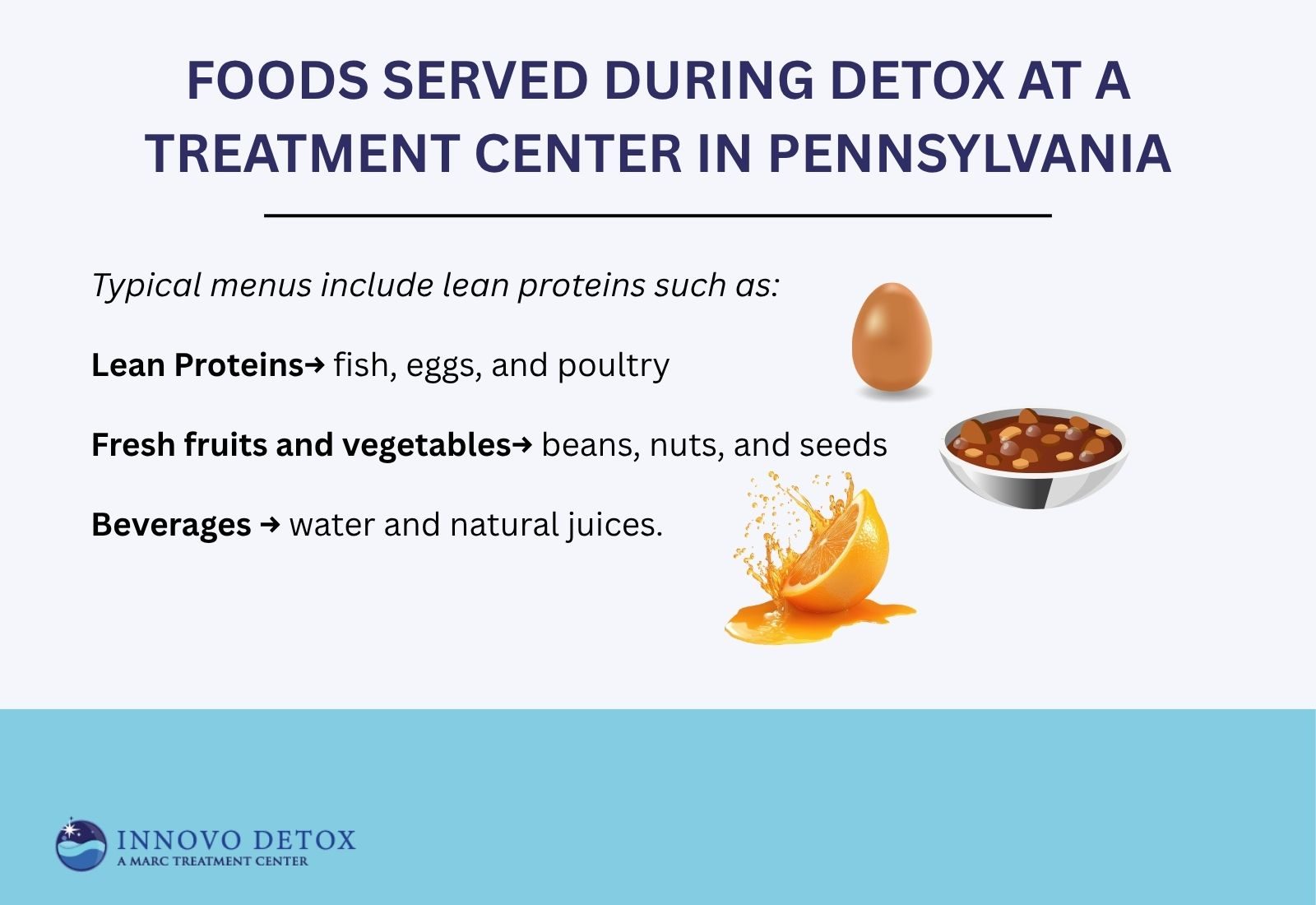
Detox centers in Pennsylvania provide balanced, nutrient-rich meals designed to restore physical and mental health. Typical menus include lean proteins such as fish, eggs, and poultry; fresh fruits and vegetables; beans, nuts, and seeds; and beverages like water and natural juices. These foods supply essential vitamins and minerals, help reduce sugar cravings, stabilize mood, strengthen the immune system, decrease inflammation, and support overall detox recovery.