Shame and guilt are two of the most powerful emotional barriers individuals face during addiction and recovery. These emotions not only deepen psychological distress but also reinforce the destructive cycle of substance use. In Pennsylvania, where approximately 300,000 adults struggle with substance use disorders annually, addressing guilt and shame is essential for breaking the relapse loop and promoting sustainable healing.
Understanding how these emotions interact with addiction helps uncover why recovery triggers feelings of remorse, isolation, and self-blame. Through therapy, family involvement, and detox support, individuals learn to transform guilt into responsibility and shame into self-compassion.
Exploring the connection between family dynamics, mental health, and detox treatment, this guide explains how professional intervention helps rebuild self-worth, reframe negative thought patterns, and foster emotional resilience. Recovery evolves from simply quitting substances to achieving genuine inner healing and long-term well-being by overcoming guilt and shame.
How Do Guilt and Shame Drive the Cycle of Addiction?
Guilt and shame drive the cycle of addiction by creating emotional pain that fuels continued substance use. Those in active addiction act in ways that violate their values, leading to guilt about their actions and shame about their identity.
In response to their internalized guilt and shame, they turn to drugs or alcohol to numb these painful emotions. This perpetuates a vicious feedback loop of emotional distress and addictive behavior.
Each relapse deepens both guilt and shame, reinforcing a sense of hopelessness. This pattern strengthens dependency as individuals seek short-term relief from emotions that ultimately keep them trapped in addiction.
What Is the Difference Between Guilt and Shame in Addiction?
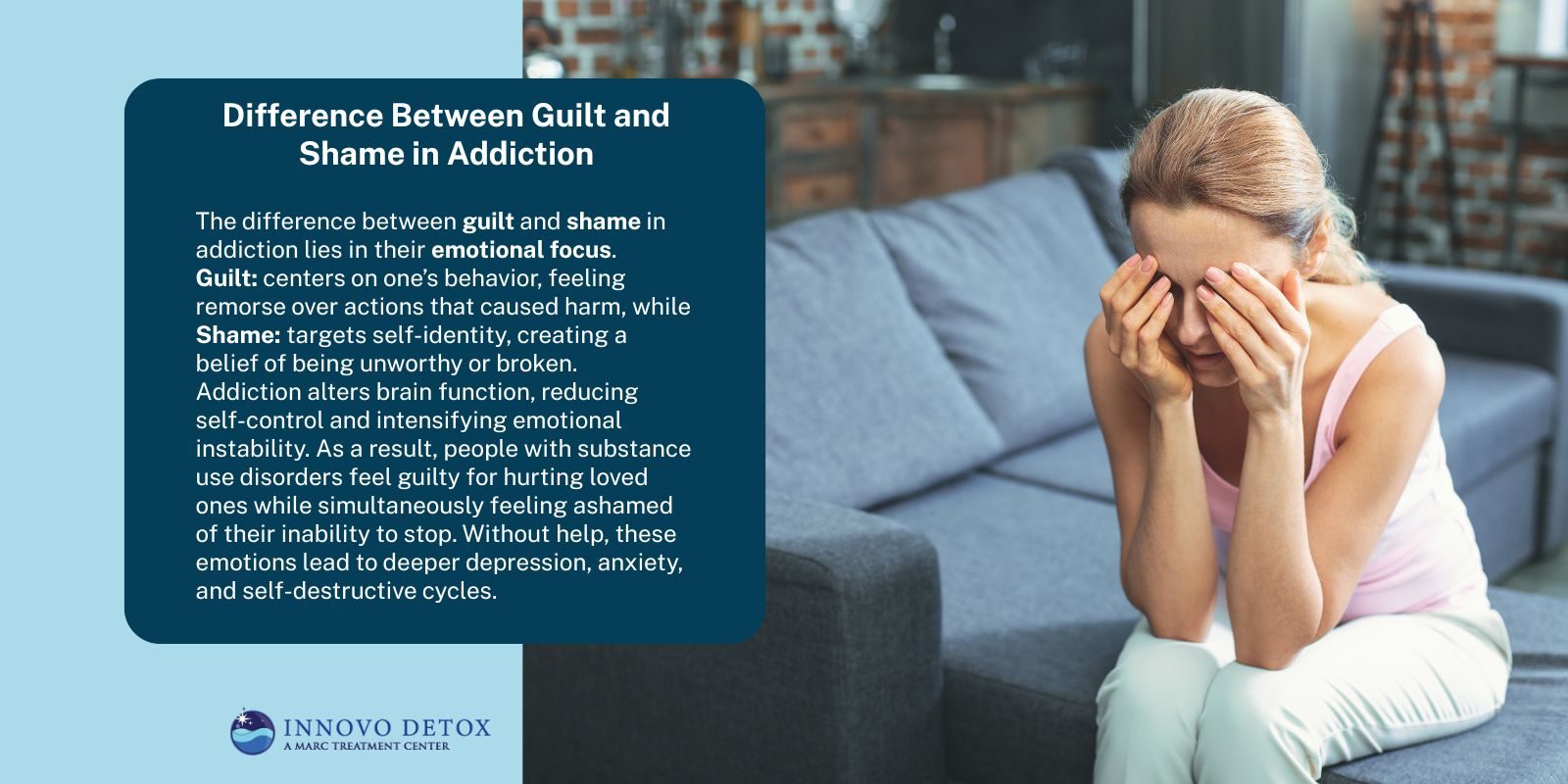
The difference between guilt and shame in addiction lies in their emotional focus. Guilt centers on one’s behavior, feeling remorse over actions that caused harm, while shame targets self-identity, creating a belief of being unworthy or broken.
Addiction alters brain function, reducing self-control and intensifying emotional instability. As a result, people with substance use disorders feel guilty for hurting loved ones while simultaneously feeling ashamed of their inability to stop. Without help, these emotions lead to deeper depression, anxiety, and self-destructive cycles.
How Do Guilt and Shame Affect Mental Health During Addiction?
Guilt and shame affect mental health during addiction by amplifying negative self-perception and emotional distress. The toxic emotional environment makes recovery harder to initiate and sustain. The belief of being “beyond redemption” becomes one of the greatest barriers to seeking treatment.
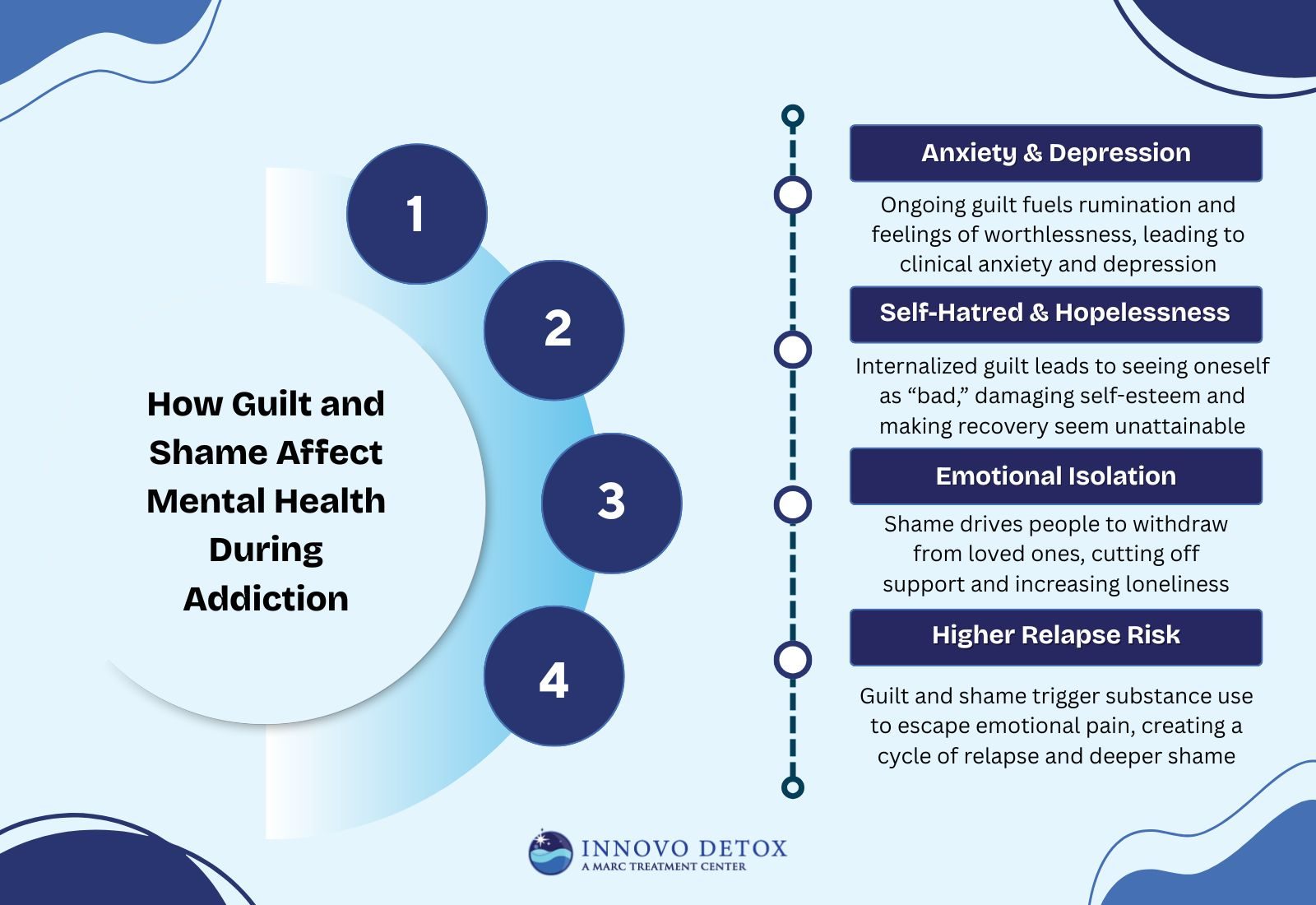
Guilt and shame affect mental health during addiction in the following ways:
- Severe anxiety and depressive symptoms: Persistent guilt and shame cause chronic emotional strain that evolves into clinical anxiety and depression. Individuals experience constant rumination, intrusive thoughts about past mistakes, and feelings of worthlessness, which gradually weaken motivation to seek help or stay sober.
- Internalized self-hatred and hopelessness: When people internalize their guilt, they begin to see themselves as inherently bad rather than as individuals who made mistakes. This self-directed hatred erodes self-esteem and creates a sense of hopelessness that makes recovery feel impossible.
- Emotional isolation from family and peers: Overwhelmed by shame, many people withdraw from loved ones to avoid judgment or confrontation. This isolation cuts off emotional support, reinforcing loneliness and deepening the psychological impact of addiction.
- Increased relapse vulnerability: The emotional weight of guilt and shame becomes so unbearable that individuals turn back to substances for relief. This leads to a destructive cycle where the attempt to numb emotions only generates more guilt and shame after relapse.
Why Do Guilt and Shame Reappear in Early Recovery?
Guilt and shame reappear in early recovery because sobriety removes the numbing effect of substances, forcing individuals to confront unresolved emotions. Without drugs or alcohol as emotional shields, memories of past harm become overwhelming.
These emotions serve as relapse triggers. However, within a structured treatment setting, such as inpatient rehab or intensive outpatient therapy, individuals safely process these emotions, understand their origins, and develop healthier coping mechanisms for long-term recovery.
How Does Treatment Help Heal Guilt and Shame?
Treatment helps individuals heal from guilt and shame by teaching them to process emotions without self-punishment. In recovery, healing comes not from denying the past but from understanding it. Therapy transforms guilt into accountability and shame into motivation for change.
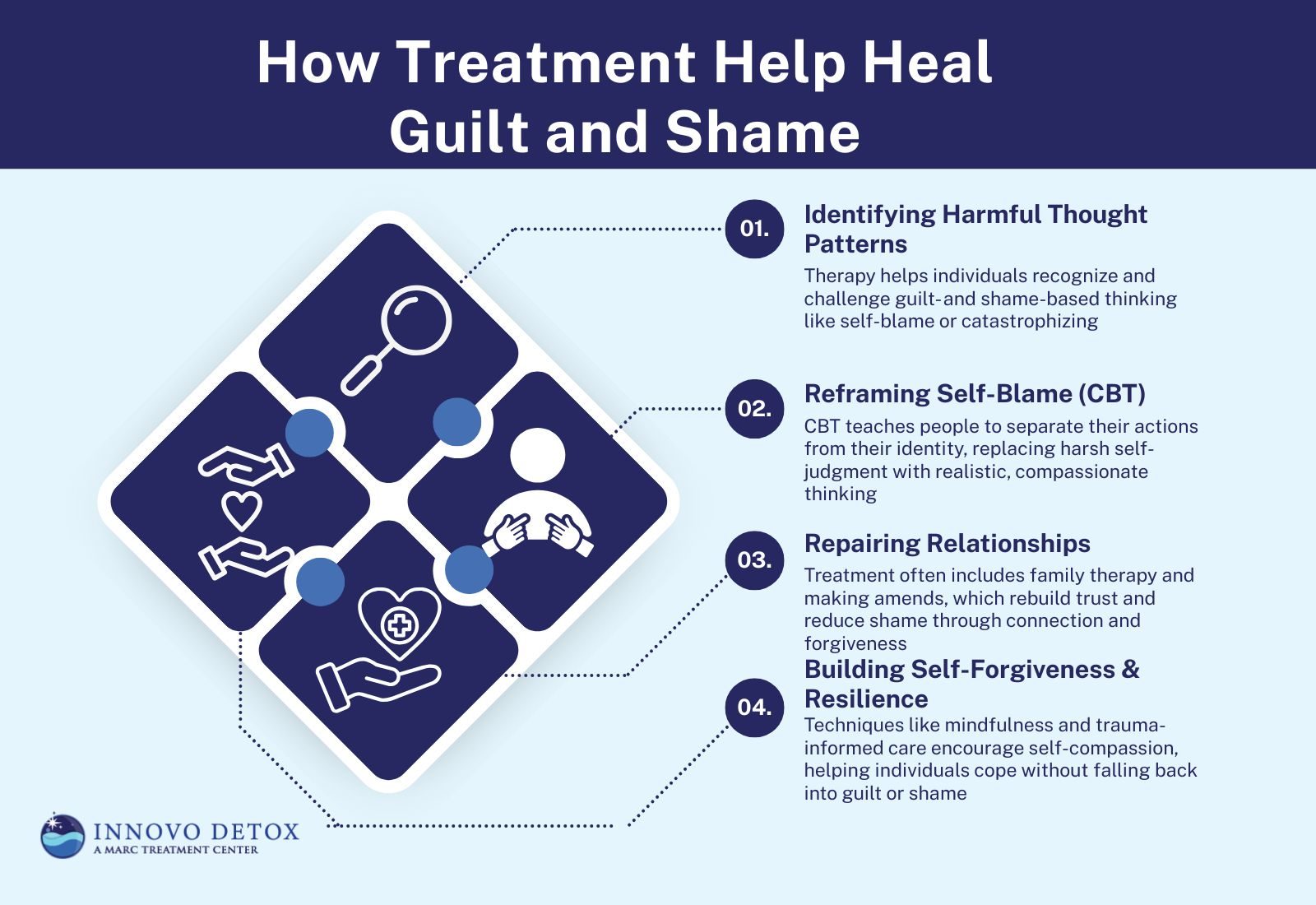
Treatment helps heal guilt and shame in the following ways:
- Identify guilt- and shame-based thinking patterns: Therapists help individuals recognize distorted thought patterns, such as excessive self-blame or catastrophizing, that reinforce guilt and shame. Awareness of these patterns is the first step toward changing how one reacts to negative emotions and past mistakes.
- Reframe self-blame through cognitive-behavioral therapy (CBT): CBT guides individuals in challenging irrational beliefs about their worth or responsibility for events beyond their control. Realistic ones, clients learn to separate their behavior from their identity by replacing self-critical thoughts with balanced ones.
- Rebuild damaged relationships through communication and amends: Many treatment programs include family therapy and guided communication exercises that allow individuals to make amends, rebuild trust, and repair emotional connections. This process reduces shame by fostering forgiveness and empathy from both sides.
- Develop self-forgiveness and emotional resilience: Through mindfulness, trauma-informed care, and positive psychology, individuals learn to practice self-compassion. Developing emotional resilience helps them face future challenges without reverting to guilt-driven or shame-fueled coping mechanisms.
How Does Stigma Around Addiction Deepen Feelings of Shame?
Stigma around addiction deepens feelings of shame by framing addiction as a moral weakness instead of a medical illness. This social judgment isolates individuals and prevents them from seeking help. Recognizing addiction as a chronic, treatable disorder, similar to heart disease or diabetes, reduces stigma and encourages early intervention.
When families, communities, and professionals replace judgment with empathy, individuals in recovery can begin to rebuild their sense of worth and belonging.
How Do Family Dynamics and Detox Influence the Recovery Process?
Family dynamics and detox influence the recovery process by shaping emotional stability, trust, and accountability during early sobriety. A supportive and understanding family environment encourages openness and healing, while conflict or blame can worsen guilt and emotional distress.
Involving families in therapy helps rebuild healthy communication patterns and creates a unified foundation for recovery. Addressing both family dynamics and detox together strengthens emotional recovery and reduces relapse risk.
How Can Someone Move Beyond Guilt and Shame Toward Lasting Recovery?
Someone can move beyond guilt and shame toward lasting recovery by facing their emotions with honesty, accepting responsibility, and seeking professional help. Healing requires courage to confront the past, make amends, and adopt new behaviors aligned with recovery goals.
Through continuous therapy, support groups, and emotional work, individuals transform destructive emotions into sources of strength and self-awareness. Recovery becomes not just freedom from substances but a journey toward self-forgiveness and personal growth.
How Does Detox Treatment Address Shame and Guilt in Early Recovery?
Detox treatment addresses shame and guilt in early recovery by creating a structured and compassionate environment where individuals begin to separate their identity from their addiction. During medical detox, patients receive not only physical stabilization but also emotional support from clinicians trained to manage the psychological weight of withdrawal.
Shame and guilt intensify when substances are removed and emotions surface; however, detox professionals use counseling, motivational interviewing, and trauma-informed care to help patients process these feelings safely. This early therapeutic intervention prevents emotional overwhelm from triggering relapse and lays the foundation for further recovery work.
Detox treatment serves as the first step toward healing guilt and shame, empowering individuals to rebuild their self-worth and prepare for deeper therapeutic recovery by normalizing emotional vulnerability and promoting self-compassion.
What Causes Guilt and Shame in Addiction?
Guilt and shame in addiction are caused by the awareness of harm done to oneself or others, compounded by social stigma and the inability to stop using despite negative outcomes.
Can Guilt Be a Positive Force in Recovery?
Yes, guilt can be a positive force in recovery. When processed through therapy, guilt becomes a motivator for personal responsibility and lasting behavioral change. However, unaddressed guilt leads to emotional distress or relapse.
How Can Someone Overcome Shame in Recovery?
Overcoming shame in recovery requires professional support, self-compassion, and community connection. Participating in group therapy, learning self-acceptance, and replacing self-judgment with accountability are key steps toward emotional healing.